

Do you ever sit down to work and realize you have no idea where the last two hours went? Or maybe you finish a task but can’t seem to start the next one. You stare at your screen, check your phone, refill your water, and before you know it, fifteen minutes have disappeared. This problem has a name: context switching. And there is a surprisingly simple fix for it called interstitial journaling.
Interstitial journaling is the practice of writing a few sentences every time you switch between tasks. You note what you just finished, how you feel, and what you plan to do next. It takes less than three minutes each time. But the impact on your focus and productivity can be significant. In this guide, we will explain how interstitial journaling for productivity works, how to start, and which tools make it even easier.
Key Takeaways
- Interstitial journaling means writing brief notes between tasks to clear mental clutter and reset your focus.
- It reduces context switching costs, improves self-awareness, and creates a natural record of your workday.
- All you need is a notebook or simple note-taking app to get started today.
What you will learn in this video:
- What interstitial journaling is and why it helps with ADHD and focus issues
- How writing between tasks reduces mental clutter and decision fatigue
- A practical walkthrough of the method with real examples
- Why this approach works better than traditional to-do lists for many people

What Is Interstitial Journaling and How Does It Work?
The word “interstitial” means “in the spaces between.” Interstitial journaling happens in the gaps between your tasks. Instead of jumping straight from one project to the next, you pause for a moment and write.
A typical entry looks something like this: “10:15 AM. Just finished the quarterly report draft. Feeling mentally tired but satisfied. Next I need to reply to Sarah’s email about the project timeline. Starting now.”
That is it. No fancy prompts. No elaborate reflection. Just a timestamp, what you did, how you feel, and what comes next. The whole process takes about two minutes.
This technique was popularized by Tony Stubblebine, the CEO of Medium. He found that traditional to-do lists failed him because they did not address the mental friction of switching between tasks. Interstitial journaling fills that gap by giving your brain a structured transition point.
Why Interstitial Journaling for Productivity Actually Works
Research on context switching shows that it takes an average of 23 minutes to fully refocus after an interruption. That number comes from a well-known study by Gloria Mark at the University of California, Irvine. Every time you switch tasks without a mental reset, you carry residual thoughts from the previous task into the new one.
Interstitial journaling reduces this residue. By writing down what you just finished, you give your brain permission to let it go. By writing what comes next, you prime your mind for the new task. This two-step process creates a clean mental break that shortens your refocus time.
There are several other benefits that regular practitioners report. You become more aware of how you spend your time. You notice patterns like which tasks drain you and which ones energize you. You create a daily record that helps you plan better tomorrow. And you reduce the mental load of holding everything in your head.
How to Start Interstitial Journaling in 5 Simple Steps
Getting started is easier than you might expect. You do not need special software or a complicated system. Here is how to begin today.
Step 1: Choose your tool. A physical notebook works great. A plain text file on your computer works too. Some people use note-taking apps like Apple Notes, Notion, or Obsidian. The key is picking something you can open instantly without friction.
Step 2: Start your first entry in the morning. Write the time, how you feel, and what your first task will be. For example: “8:30 AM. Feeling rested. Starting with email triage for 20 minutes.”
Step 3: Write again every time you switch tasks. Before you start something new, take 60 to 90 seconds to jot down what you just finished and what comes next. Include a brief note about your energy level or mood if it feels relevant.
Step 4: Do not overthink it. Your entries do not need to be profound or well-written. Short and honest beats long and polished every time. The goal is speed, not eloquence.
Step 5: Review at the end of the day. Spend three minutes reading back through your entries. Notice what went well, what drained you, and where time slipped away. This review is where the biggest insights come from.

If you prefer a physical notebook for your interstitial journaling practice, a high quality option makes the habit more enjoyable and sustainable.
LEUCHTTURM1917 Medium A5 Hardcover Notebook

Source: amazon.com
251 numbered pages, hardcover, lies flat when open
The Wellthie One Review
The Leuchtturm1917 is a favorite among journaling enthusiasts for good reason. It lies flat when open, which makes writing comfortable at any desk. The numbered pages help you reference past entries quickly. The paper is thick enough to prevent bleed-through with most pens. We especially like the built-in table of contents section, which is perfect for logging which pages cover which days. For interstitial journaling, this notebook strikes the right balance between quality and practicality.
LEUCHTTURM1917 Notebook Attributes
- 251 numbered pages with table of contents
- Hardcover design that lies flat when open
- Thread-bound for durability and smooth page turning
- Includes stickers for labeling, two ribbon bookmarks, and an expandable pocket
Interstitial Journaling vs Traditional To-Do Lists
Traditional to-do lists tell you what to do. But they do not help you actually do it. A list of ten tasks can feel overwhelming before you even start. And checking items off does not address the mental friction between tasks.
Interstitial journaling works differently. It does not replace your to-do list. It sits alongside it. Your to-do list tells you what needs doing. Your interstitial journal helps you move between those items with less friction and more awareness.
Many people who try this method report that they accomplish more with less stress. That is because they spend less time stalling between tasks and more time in focused work. The journal entries also create accountability. When you write “Starting the presentation now,” you are making a small commitment to yourself.
If you have tried other productivity methods like the two minute rule for procrastination or building a dopamine menu for productivity, interstitial journaling pairs well with all of them. It adds a reflective layer that other methods often miss.

For those who prefer a structured daily planner with dedicated space for task tracking and reflection, a well-designed planner can support your interstitial journaling habit.
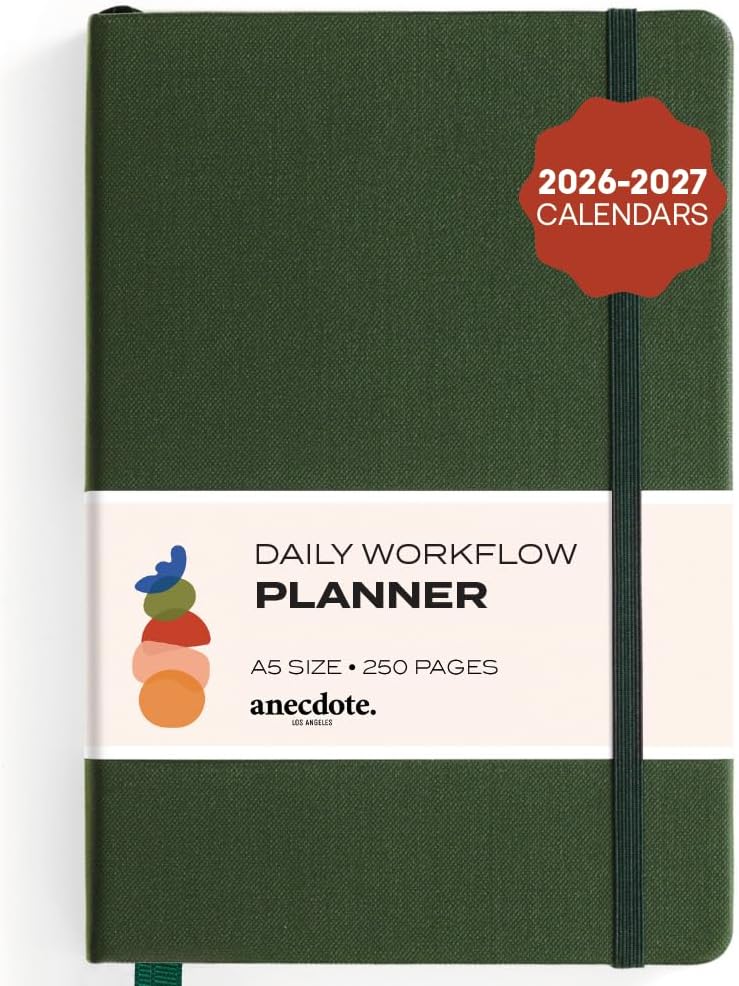
Anecdote Daily Planner with 2026-2027 Calendar
Source: amazon.com
26-week undated planner, one page per day, hardcover
The Wellthie One Review
The Anecdote Daily Planner gives you one full page per day. That is generous space for interstitial entries alongside your task list, priorities, and notes. We like the undated format because you can start any time without wasting pages. The layout includes sections for goals, schedule blocks, and free writing. The hardcover holds up well in a bag or backpack. If you want more structure than a blank notebook but more flexibility than a rigid planner, this hits a sweet spot.
Anecdote Daily Planner Attributes
- One full page per day with room for tasks, notes, and journaling
- Undated 26-week format so you can start any time
- Includes 2026-2027 calendar reference pages
- Compact 8.5 by 5.2 inch hardcover design
Tips for Making Interstitial Journaling a Lasting Habit
Like any new habit, interstitial journaling takes a bit of effort at first. Here are some tips to help it stick.
Keep your journal within arm’s reach at all times during work. If you have to get up to find it, you probably will not use it. A notebook on your desk or a pinned note on your computer works best.
Set a gentle reminder. Some people use a recurring alarm every 45 to 60 minutes as a prompt to check in. Others prefer to journal only at natural transition points. Find what works for your rhythm.
Do not aim for perfection. Some entries will be one sentence. Others might be a paragraph. Both are fine. The consistency matters more than the quality of any single entry.
Combine it with a time stamp. Writing the time alongside each entry turns your journal into a time log. Over a week, you will see exactly how you spend your hours. This data alone can be eye-opening.
The Best Tools for Interstitial Journaling
You can practice interstitial journaling with any writing tool. But certain tools make the experience smoother. A good pen removes friction and makes the physical act of writing more enjoyable.
PILOT G2 Premium Retractable Gel Pens, Fine Point, 4-Pack

Source: amazon.com
Smooth gel ink, fine point, refillable, America’s top selling gel pen
The Wellthie One Review
The Pilot G2 is a pen that earns its reputation. The gel ink flows smoothly without skipping or smearing. The fine point tip produces clean, precise lines that are easy to read later. We like that it is refillable, which reduces waste and saves money over time. For interstitial journaling, a pen that writes effortlessly removes one more barrier between you and the page. The retractable design means no cap to lose or fumble with during a quick task transition.
PILOT G2 Pen Attributes
- Smooth gel ink that dries quickly to prevent smearing
- Fine point (0.7mm) for clean, readable handwriting
- Refillable design with widely available ink cartridges
- Comfortable rubber grip for extended writing sessions

Common Mistakes to Avoid with Interstitial Journaling
The biggest mistake is making entries too long. If you spend five minutes writing between every task, you are journaling instead of working. Keep entries to two or three sentences. Speed is the point.
Another common mistake is skipping the end-of-day review. The entries themselves are helpful in the moment. But the real insights come from looking back. Even a three-minute review at the end of the day teaches you something about your work patterns.
Some people also make the mistake of using a complicated app with tags, categories, and formatting options. This adds friction that defeats the purpose. Simple is better. A plain notebook or basic text file beats a fancy system every time.
Final Thoughts on Interstitial Journaling for Productivity
Interstitial journaling is one of the simplest productivity techniques you can try. It costs nothing, requires no special tools, and takes less than three minutes per entry. Yet it addresses one of the biggest hidden drains on your focus: the messy transitions between tasks.
If you have ever felt like your day slipped away without much to show for it, this method gives you a way to reclaim those lost minutes. Start tomorrow morning with one entry. Write the time, how you feel, and what you plan to do first. Then do it again when you finish. Within a week, you will have a clear picture of how you actually spend your time. And that awareness alone can change everything.
This post may contain affiliate links, which means we may receive a small commission, at no cost to you, if you make a purchase through a link.


