
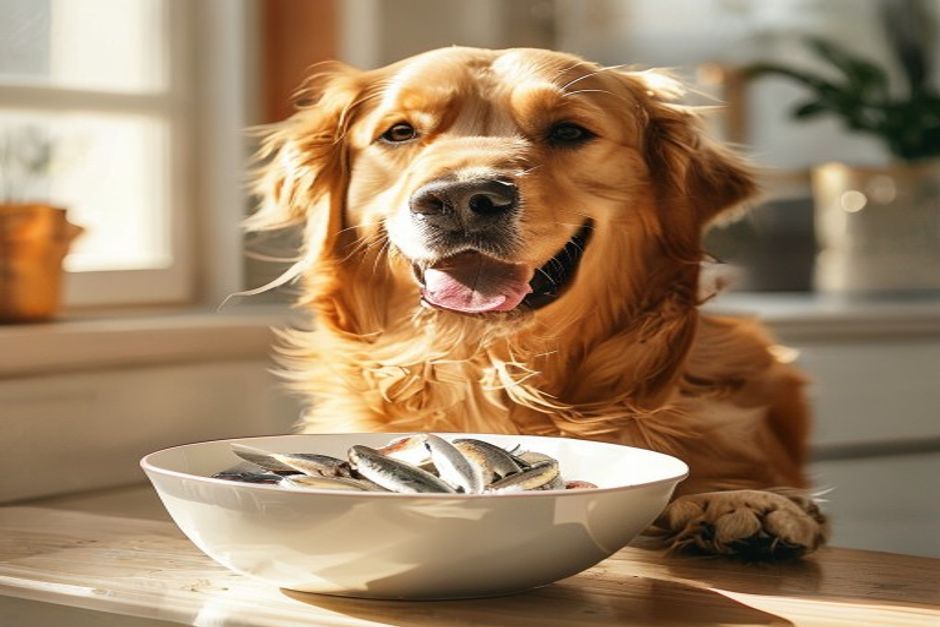
Sardines for dogs are one of the easiest, most affordable food toppers you can add to your pup’s bowl. These small ocean fish pack high doses of omega-3 fatty acids, vitamin D, and natural protein in a single serving. Many holistic vets recommend sardines a few times a week for dogs with itchy skin, stiff joints, or dull coats, and the simple addition can make a noticeable difference within a few weeks.
I started giving my dog sardines when his coat looked dull after a long winter of dry indoor heat. Within about three weeks, his fur was shinier and the dandruff that always showed up on his belly was almost gone. The cost worked out to less than 50 cents a serving. He now does a happy little spin every time he hears the can opener.

Key Takeaways
- Sardines are rich in omega-3 fatty acids that may support skin, coat, joint, and brain health in dogs.
- Choose sardines packed in water with no salt added, never sardines in oil with seasoning or sauce.
- Most dogs do well with sardines two to three times per week as a food topper, not a meal replacement.
- Start small to watch for tummy upset, then build up to a full serving based on your dog’s weight.
Why Are Sardines Good for Dogs?
Sardines are tiny fish at the bottom of the food chain. That means they accumulate fewer toxins like mercury compared with larger fish. They are also packed with omega-3 fatty acids, specifically EPA and DHA, the two forms most useful for dogs. According to the American Kennel Club’s nutrition guide, sardines can be a good source of protein, healthy fats, and minerals when offered in moderation.
Studies suggest that omega-3s may support skin and coat health, joint comfort, and even cognitive function in older dogs. Sardines also deliver vitamin D, vitamin B12, calcium (from the soft, edible bones), and the antioxidant CoQ10. That is a lot of nutrition packed into a few bites.
Watch: The Benefits of Sardines for Dogs
What you will learn in this video:
- Why sardines are especially helpful for senior dogs and dogs with stiff joints.
- The specific omega-3 fatty acids in sardines and what they do for skin and coat.
- How sardines compare to fish oil capsules for cost and absorption.
- Simple guidelines on how often to feed sardines to a healthy dog.
How Many Sardines Can a Dog Eat?
Portion size depends on your dog’s weight. Use the chart below as a general starting point. Always cut large sardines into bite-size pieces for small dogs.
| Dog Weight | Sardines per serving | Servings per week |
|---|---|---|
| Under 15 pounds | Half a sardine | 2 times |
| 15 to 30 pounds | 1 sardine | 2 to 3 times |
| 30 to 60 pounds | 1.5 to 2 sardines | 3 times |
| 60 pounds and up | 2 to 3 sardines | 3 times |
If your dog is new to sardines, start with half the amount listed above for the first week. Watch for any change in stool or any signs of an upset stomach. Most dogs handle sardines beautifully, but every pup is different.
What Kind of Sardines Are Safe for Dogs?
Look for the simplest option you can find. The label should read “sardines packed in water” with nothing else, or sardines packed in spring water with no salt added. Avoid sardines in oil, especially soybean or sunflower oil, which adds calories your dog does not need. Skip flavored varieties, anything with tomato sauce, mustard, hot sauce, or seasonings.
Wild Planet Sardines in Water, No Salt Added

Source: amazon.com
A 12-pack of wild-caught sardines packed in water with no salt added.
The Wellthie One Review
This is the can I buy on repeat. The “no salt added” version is the only kind I trust for dogs. Wild Planet sardines are sustainably caught and the bones are soft enough to mash with a fork. The 12-pack works out to less than 50 cents a serving for a medium dog. I keep a stack in the pantry, no refrigeration required until you open them.
Wild Planet Sardines Attributes
- Wild-caught Atlantic sardines, sustainably sourced
- Packed in water with no salt added
- Non-GMO and BPA-free can lining
- Pack of 12 cans, shelf-stable for months
How to Serve Sardines as a Dog Food Topper
Serving sardines is the easy part. Drain the water, mash the fish with a fork, then spoon the right portion over your dog’s regular food. Most dogs eat them right away. Picky pups may need a couple of days to get used to the smell.
Tips for Smoother Mealtimes
- Mash the bones into the meat to spread the calcium evenly.
- Refrigerate any leftover sardines in a glass container for up to 2 days.
- Open a can in the morning and split it across two meals if your dog is small.
- Wash food bowls daily with warm soapy water since fish smell lingers.

Sardine Treats: A Simple Way to Train and Reward
If you do not want fish smell on your hands every meal, dehydrated or freeze-dried sardines are the perfect alternative. They have all the omega-3 benefits of canned sardines without the mess. They also store well, travel easily, and break apart cleanly so you can use them as training treats.
Single ingredient treats are also great for dogs with food sensitivities. There are no fillers, no preservatives, no artificial flavors, just whole dehydrated sardines. Many dogs go nuts for the smell and crunch.
Granville Island Pet Treatery Dehydrated Sardines

Source: amazon.com
Single-ingredient dehydrated sardines for use as treats or food topper.
The Wellthie One Review
These treats are a clean upgrade from the typical training cookie. The single-ingredient label means there is nothing weird hiding in the bag. They snap easily into smaller pieces, which makes them last longer than you would think. I bring them on hikes for instant recall rewards. Just keep them in a sealed container, the fish smell does spread.
Granville Sardines Attributes
- Single ingredient: dehydrated sardines, nothing else
- Grain free and gluten free
- Easy to break into training-size pieces
- Works for both dogs and cats
Are There Any Risks to Feeding Dogs Sardines?
For most dogs, sardines are safe and well tolerated. Still, there are a few situations where you should be careful. Sardines are calorie-dense, so add them to your dog’s diet by replacing some of their regular food, not by adding on top. Otherwise weight gain can sneak up.
If your dog has pancreatitis, kidney disease, or any chronic condition, ask your vet before introducing oily fish. Dogs allergic to fish should avoid sardines entirely. Watch for itching around the face, vomiting, or loose stools after a new food, and stop right away if anything looks off.
Choose only “no salt added” varieties. Regular canned sardines often contain too much sodium for a dog’s smaller body. Salt over time can stress the kidneys and contribute to dehydration.

The Right Bowl Helps With Cleanup
Fish smell sticks. Stainless steel bowls clean up better than plastic, which can hold odors and even bacteria over time. Plastic bowls also scratch easily, and those tiny scratches can trap food residue and cause skin reactions on a dog’s chin. A simple stainless steel bowl with a non-slip rubber bottom is one of the best small upgrades you can make to your pup’s daily routine.
Amazon Basics Stainless Steel Non-Skid Dog Bowls

Source: amazon.com
A 2-pack of dishwasher-safe stainless steel bowls that handle fish meals with ease.
The Wellthie One Review
This is the bowl set I use for daily meals. Stainless steel does not absorb fish smell, the rubber base keeps it from sliding when my dog gets excited, and both bowls go right into the dishwasher. The 38 ounce capacity is great for medium and large breeds. For small dogs, the same brand makes a smaller size that holds about a cup.
Stainless Steel Bowl Attributes
- Set of 2 stainless steel bowls
- Non-slip rubber base
- Dishwasher safe and rust resistant
- 38-ounce capacity, fits medium to large dogs
How Sardines Fit With Other Natural Pet Care
Sardines work beautifully alongside other gentle, whole-food upgrades to your dog’s care routine. If your pup has digestive sensitivity, our guide on slippery elm for dogs with upset stomach walks through how to soothe a fussy belly. If your dog struggles with dry skin or hot spots, you may also enjoy the coconut oil for dog paws guide for natural topical relief.
Real food first, supplements second. Many dog owners are surprised at how much shifts when one or two whole foods like sardines, goat milk, or bone broth are added to a kibble-based diet. For more on that, check out our beginner walkthrough on goat milk for dogs.
How Soon Will You Notice a Difference?
Most dogs show small improvements in coat shine within two to three weeks. Joint comfort, energy, and skin texture often follow within four to six weeks of consistent twice-weekly feedings. Take a quick photo at the start so you can track changes. Your eyes adapt to gradual shifts, and the photo evidence is often more obvious than what you remember.
If you do not see any change after eight weeks, it may not be the right fit for your specific dog, or your dog may already be getting enough omega-3 from their kibble. That is fine. Every pup is unique.
Final Thoughts on Sardines for Dogs
Sardines are one of the simplest, most affordable upgrades you can add to your dog’s bowl. Whole foods like this work because they bring nutrients in the natural balance dogs evolved to use. A small can a couple of times a week can support coat shine, joint comfort, and overall vitality with very little effort and a tiny grocery bill.
Start with a half serving on a quiet weekend. Watch how your dog feels and looks over the next month. If your pup loves it and tolerates it well, you have just added a new tool to your natural pet care kit.
This post may contain affiliate links, which means we may receive a small commission, at no cost to you, if you make a purchase through a link. The information here is educational and is not veterinary advice. Always consult your veterinarian before adding new foods to your dog’s diet, especially if your dog has any chronic condition.


