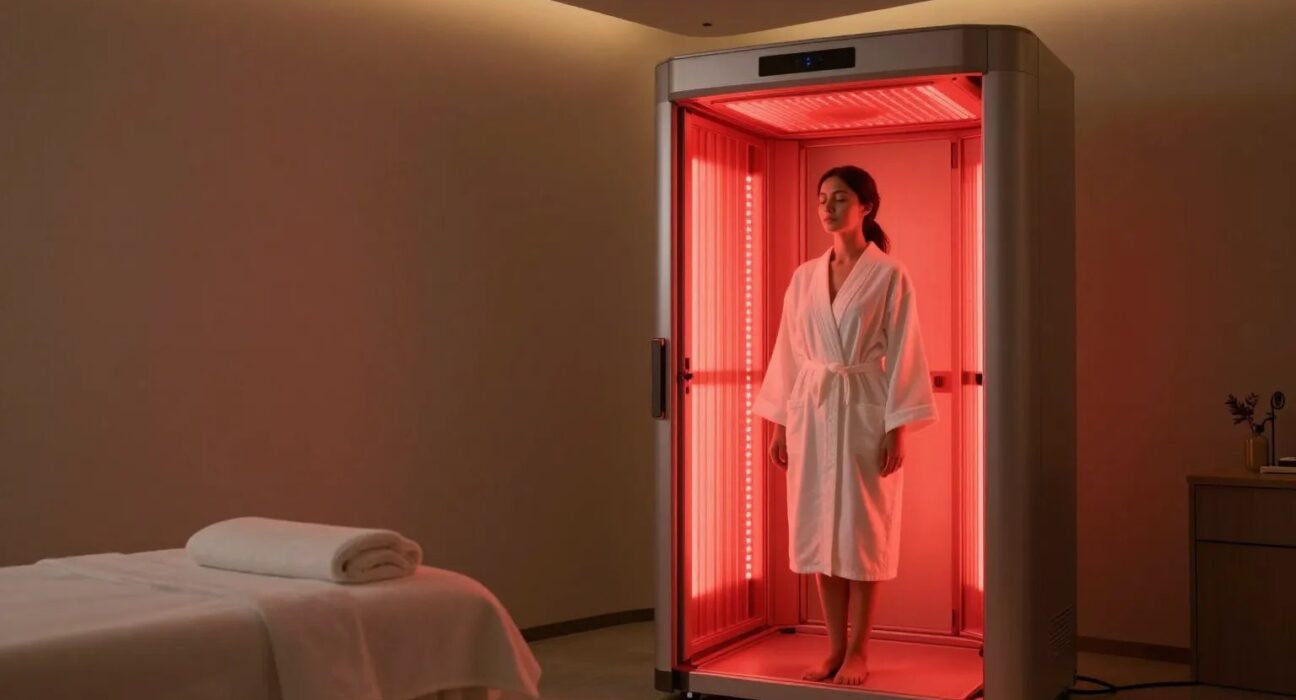
Around 22,000 people look for “red light therapy near me” every month — and most of them are about to book whichever spa or gym pops up first, without knowing that the panel quality varies enormously. One clinic runs a medical-grade array tuned to the wavelengths that actually reach your cells. Another shines a single warm bulb that feels nice and does almost nothing measurable.
The 3-part tool below fixes that. It maps providers near your ZIP code, gives you the device-quality questions to ask before you pay, and walks you through a safe at-home protocol if a good clinic isn’t close. First, a quick note on what to look for — and the best home devices if you’d rather glow on your own schedule.
Find Red Light Therapy Near You
Map providers in your area, get the device-quality questions to ask before you pay, and learn how to use a home device safely.
Enter your ZIP code or city. The tool opens Google Maps with an optimized search for red light therapy and photobiomodulation providers nearby.
Most people in detox or chronic-symptom work eventually hit the same problem: the same symptoms — fatigue, brain fog, gut issues, poor sleep — can come from completely different root causes, and the wrong protocol can run for months before that becomes obvious. The 2-minute What's Draining Your Brain Tool sorts you into one of four toxic load types so the next thing you try has a real chance of actually working.
In your search results, prioritize providers that mention:
- Medical-grade LED panels (not heat lamps or single bulbs)
- Both red (~630–660 nm) AND near-infrared (~810–850 nm)
- A stated irradiance / power density at a set distance
- FDA-cleared devices for the use offered
- Trained staff who explain dose, distance, and session length
Tap each question to see why it matters. A quality red light provider answers all of these without hesitation.
Using a home device? This safe-start protocol gets you a real dose without guesswork. (It does not replace medical care.)
Skip or check with your doctor first if you take photosensitizing medication, are pregnant, or have active cancer. Red light is generally low-risk, but screening matters.


Why does your skin or energy keep lagging?
What red light therapy actually is
Red light therapy — clinically called photobiomodulation — uses specific wavelengths of red and near-infrared light to nudge your cells, not heat them. According to PubMed, the light is absorbed by cytochrome c oxidase inside your mitochondria, which can raise ATP energy production, briefly signal repair pathways, and lower inflammation in stressed tissue (Hamblin, AIMS Biophysics 2017; DOI: 10.3934/biophy.2017.3.337). The catch: it follows a biphasic dose response, so the right amount helps and too much does nothing extra.
What the research shows
What the research actually says
Based on articles retrieved from PubMed, here is what the evidence actually supports:
Red and near-infrared light measurably improved skin
In a randomized controlled trial of 136 volunteers, red and red/near-infrared light significantly improved skin complexion, reduced roughness, and increased ultrasonographically measured intradermal collagen density versus untreated controls (Wunsch & Matuschka, Photomedicine and Laser Surgery 2014; DOI: 10.1089/pho.2013.3616).
The mechanism is mitochondrial, not magic
Red and near-infrared light is absorbed by cytochrome c oxidase in your mitochondria, nudging up ATP production, briefly raising signaling molecules, and lowering inflammation in stressed tissue — with a biphasic dose response, meaning more is not better past a point (Hamblin, AIMS Biophysics 2017; DOI: 10.3934/biophy.2017.3.337).
Clinic or home device: what actually matters
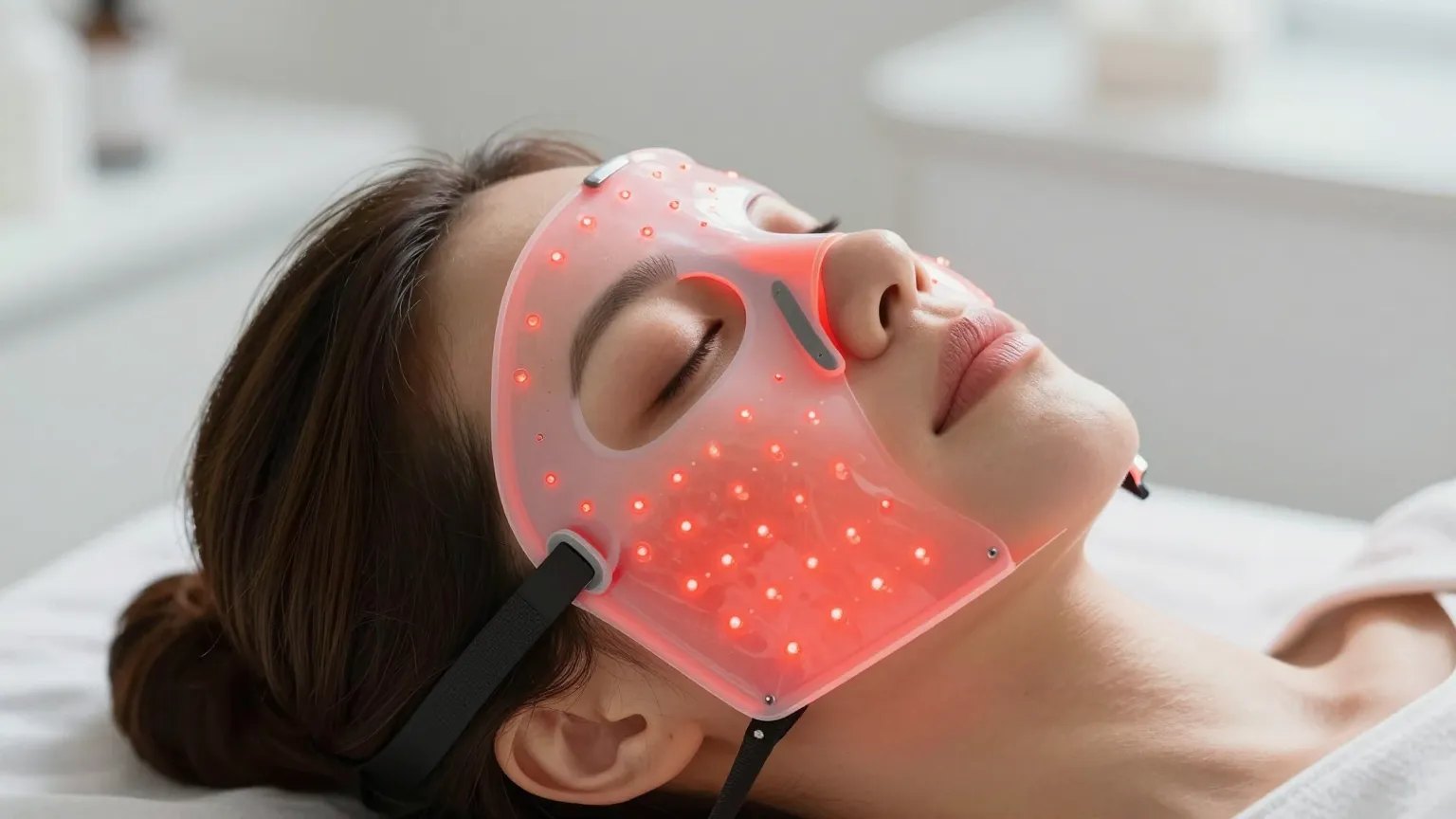
Whether you book a clinic or buy a device, the same three things separate real red light therapy from an expensive warm glow: the wavelengths (you want both red around 630–660 nm and near-infrared around 810–850 nm), the irradiance or power density at the treatment distance, and a stated dose — the distance and time that together determine how much light your skin receives. Clinics win on raw power and trained staff; a good home mask or panel wins on convenience and cost. Use the checklist in the tool above for either path.
The bigger picture most red light articles skip
Frequently asked questions
How do I find good red light therapy near me?
Use the finder above to open a credential-aware Google Maps search, then vet each provider with the device-quality checklist. Prioritize medical-grade LED panels that use both red (~660 nm) and near-infrared (~850 nm) light and can state their irradiance and session dose.
Is red light therapy at a clinic better than a home device?
Clinics often have larger, higher-power panels and trained staff, which helps for pain or larger areas. A quality home mask or panel can match clinic results for skin and convenience if it uses the right wavelengths and you stay consistent. The checklist above applies to both.
What should a red light therapy device have?
Both red (~630–660 nm) and near-infrared (~810–850 nm) wavelengths, a stated irradiance (power density), and ideally FDA clearance for the use you want. Avoid single-bulb heat lamps and vague ‘infrared sauna’ claims that don’t list wavelengths.
How often should I use red light therapy?
Most protocols run 3–5 sessions per week over several weeks. Consistency matters more than long single sessions, and there is a point where more light stops adding benefit.
Does red light therapy really work?
For skin and certain pain and inflammation uses, the research is encouraging — a controlled trial showed improved collagen density and skin texture. Results depend on using the right wavelengths and dose consistently.
This article is for general education and is not medical advice. Red light therapy is generally low-risk, but check with a clinician before starting if you are pregnant, take photosensitizing medication, or have active cancer or an unexplained skin change.


