
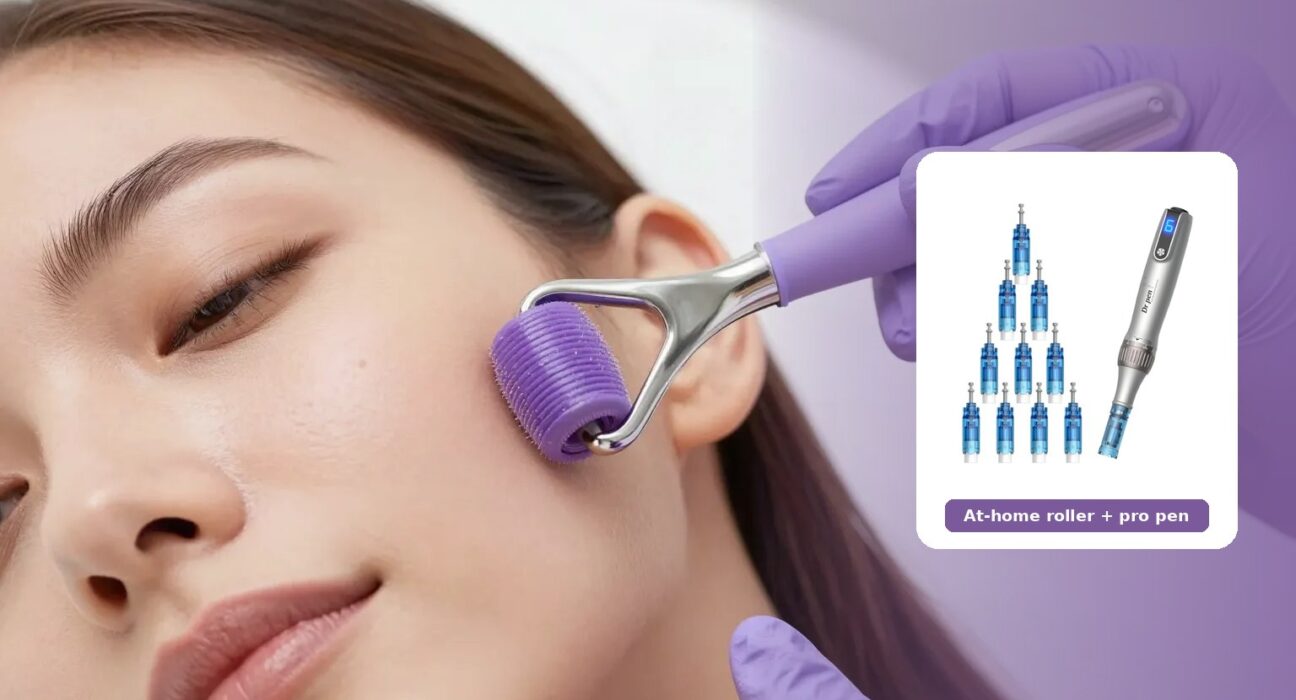
Around 22,000 people a month search for microneedling near them — and the gap between a great result and a damaged-skin regret comes down to who holds the needle. Microneedling can genuinely rebuild collagen, but it is a skin procedure, and depth, sterility, and skill matter enormously.
The 3-part tool below helps you choose well. It maps providers near your ZIP code, gives you the safety questions to ask before booking, and draws a clear line between what’s safe to do at home and what belongs in a clinic. First, the gentle products worth having for at-home care and recovery.
Find Microneedling Near You
Map providers in your area, get the safety questions to ask before you book, and understand what’s safe at home versus in-clinic.
Enter your ZIP code or city. The tool opens Google Maps with an optimized search for microneedling, dermatology, and medical-spa providers nearby.
Most people in detox or chronic-symptom work eventually hit the same problem: the same symptoms — fatigue, brain fog, gut issues, poor sleep — can come from completely different root causes, and the wrong protocol can run for months before that becomes obvious. The 2-minute What's Draining Your Brain Tool sorts you into one of four toxic load types so the next thing you try has a real chance of actually working.
In your search results, prioritize providers that mention:
- A licensed provider, ideally with medical oversight
- Single-use, sterile needle cartridges
- Both traditional and RF microneedling options
- A consultation that assesses your skin and goal
- Experience across skin tones (to avoid pigment issues)
Tap each question to see why it matters. A safe, skilled provider answers all of these without hesitation.
Wondering what’s safe to do yourself? Here’s the clear line between a cosmetic at-home roller and a medical procedure.
At-home microneedling carries real risks — infection, irritation, and scarring — if done too deep or unhygienically. This is general education, not a substitute for a licensed provider or dermatologist.


Why does your skin keep struggling?
What microneedling actually does
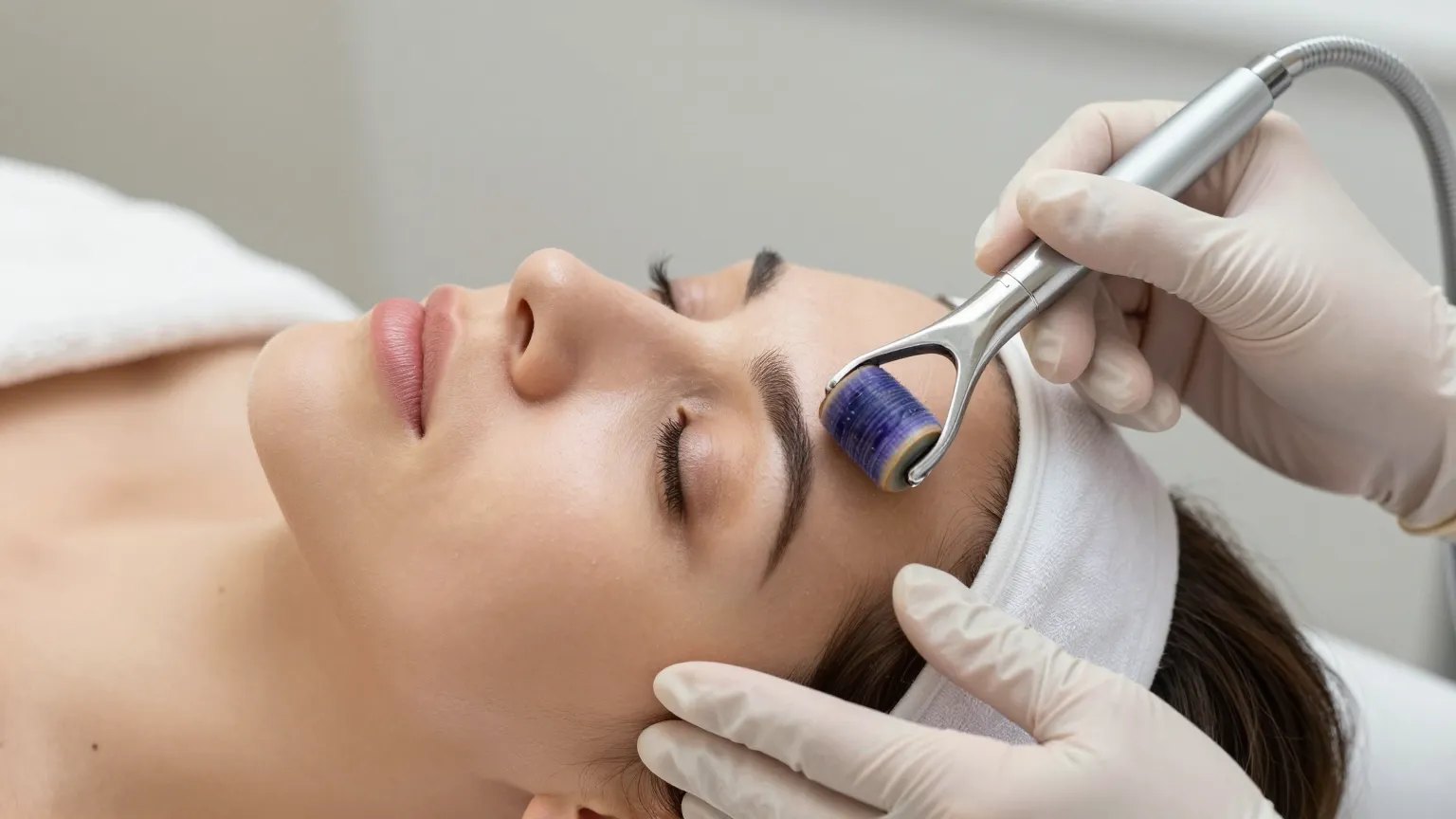
Microneedling uses fine needles to create controlled micro-channels in the skin. According to PubMed, those tiny wounds trigger a release of growth factors and prompt your skin to build new collagen, which is why it helps with scars, texture, and photodamage — while keeping the epidermis relatively intact, so downtime stays short (Hou et al., Dermatologic Surgery 2017; DOI: 10.1097/DSS.0000000000000924). The depth of those channels is exactly why a professional setting matters for anything beyond a surface glow.
What the research shows
What the research actually says
Based on articles retrieved from PubMed, here is what the evidence says about microneedling:
It works by triggering your own collagen
A comprehensive review found microneedling creates controlled micro-wounds that release growth factors and induce collagen, with demonstrated benefit for scars, acne, photodamage, and skin rejuvenation; serious adverse events are uncommon, while temporary redness and post-inflammatory pigment changes are the most common side effects (Hou et al., Dermatologic Surgery 2017; DOI: 10.1097/DSS.0000000000000924).
Results build slowly — expect a series
A review of radiofrequency microneedling found the collagen remodeling is slow and progressive, continuing to improve even six months after treatment, and can be used safely across darker skin types — underscoring why one session is rarely enough (Tan et al., Dermatologic Surgery 2021; DOI: 10.1097/DSS.0000000000002972).
At-home vs in-clinic: where to draw the line
Here is the dividing line, and it is mostly about depth. A tiny 0.25 mm roller at home is a cosmetic tool that mildly stimulates the surface and helps serums absorb — low risk when it’s clean and gentle. Real correction of acne scars, deeper wrinkles, or pigment needs medical-depth needling, and that belongs in a clinic with sterile, single-use cartridges and a provider who can match the depth to your skin. Trying to reach clinic depths at home is exactly where infections and scarring happen.
The bigger picture most microneedling articles skip
Frequently asked questions
How do I find good microneedling near me?
Use the finder above to open a Google Maps search for dermatology offices and medical spas, then vet each with the safety checklist. Prioritize licensed providers (ideally with medical oversight) who use single-use sterile cartridges and assess your skin first.
Is at-home microneedling safe?
Only shallow, cosmetic-depth rollers (about 0.25 mm) used on clean skin with strict hygiene are reasonable at home, and mainly for mild glow and product absorption. Deeper needling for scars or wrinkles should be done by a licensed provider — doing it yourself risks infection and scarring.
How much does microneedling cost and how many sessions?
Costs vary by provider and whether it’s traditional or RF microneedling. Most concerns need a series of three to six sessions spaced weeks apart, because collagen builds gradually over months.
Does microneedling really work?
Yes, with realistic expectations. Research shows it induces collagen and helps scars, texture, and photodamage, with results developing over months. It is a series, not a one-time fix.
What’s the downtime after microneedling?
Expect redness like a mild sunburn for one to three days, with strict sun protection and gentle, active-free skincare during recovery. Deeper or RF treatments may have a little more downtime.
This article is general education, not medical advice. Microneedling is a skin procedure with real risks if done improperly. See a board-certified dermatologist for scarring, pigment concerns, active skin conditions, a history of keloids, or if you are pregnant.


