
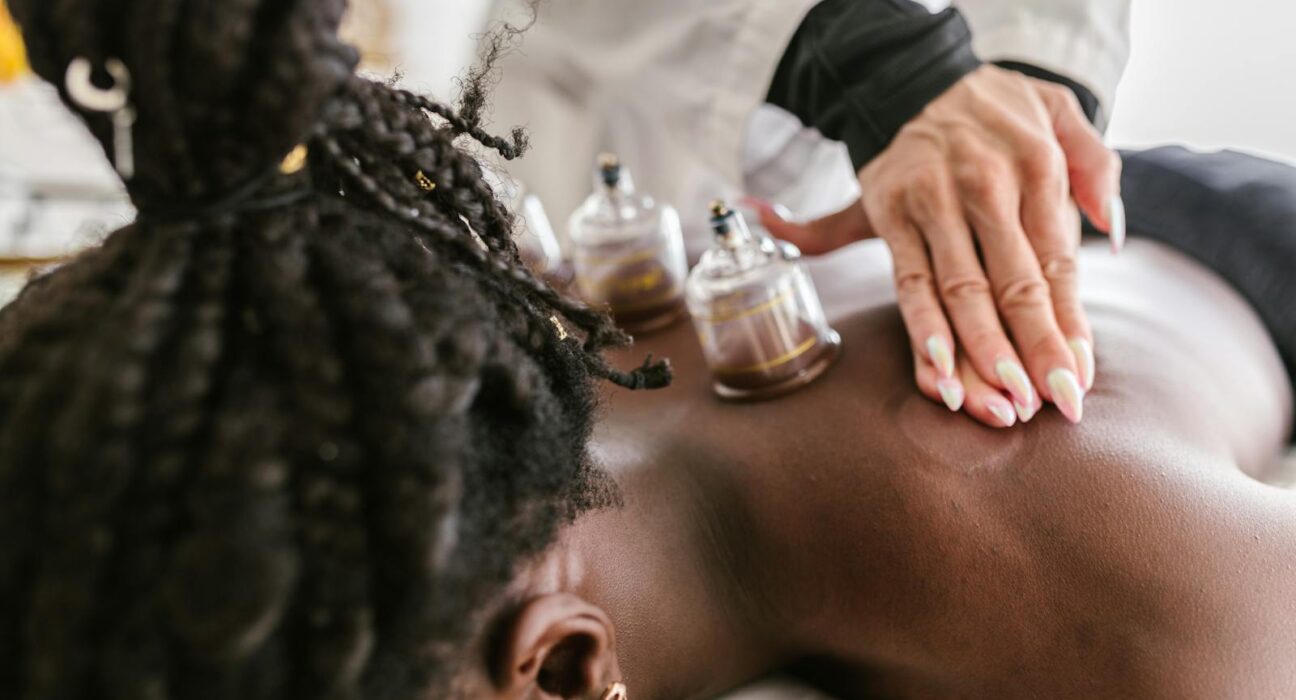
Around 14,800 people search for a cupping therapist near them every month. The treatment is exploding in popularity since Olympic athletes started showing up to events with circular marks on their backs, but the difference between a licensed acupuncturist doing real cupping and a spa offering 30-minute relaxation cups is enormous. One mobilizes fascia, restores blood flow, and produces real recovery. The other is a pleasant hour with no measurable benefit.
The tool below maps licensed cupping practitioners near your ZIP code, gives you the 8 credential questions to ask before booking, and walks through the at-home silicone-cup starter protocol you can run for 30 days as a baseline test before booking anyone.
Find A Licensed Cupping Practitioner Near You
Map credentialed cupping practitioners near your ZIP code, get the 8 questions to ask before booking, and learn the at-home silicone-cup protocol so you can test the technique on yourself first.
Enter your ZIP code or city. Opens Google Maps with a search optimized for licensed acupuncturists and credentialed cupping practitioners, not spa relaxation rooms.
In your map results, prioritize listings that say:
- "Licensed acupuncturist" (LAc) or "Doctor of Acupuncture" (DAcCM, DACM)
- "NCCAOM certified" (national acupuncture board)
- "Traditional Chinese Medicine" (TCM) practice
- "Fire cupping" (traditional method) for serious muscle work
- "Sports cupping" or "myofascial cupping" credentials
Tap each question to see why it matters. Ask all 8 before booking. A real cupping practitioner welcomes these questions and explains their methodology clearly.
If you are healthy and curious, an at-home silicone cup set runs about 20 dollars on Amazon and lets you test the technique on yourself for 30 days before committing to a practitioner. This is not a replacement for professional work on serious muscle issues, but it is a low-cost way to see if cupping is right for your body before paying for sessions.
Mold and mycotoxin work is brutal when it's actually mold and frustrating when it isn't. The same brain fog, fatigue, and inflammation show up across all four toxic load types, which is why so many people spend months on the wrong protocol before that becomes obvious. The 2-minute What's Draining Your Brain Tool helps confirm or rule out mold as your dominant load before you commit to the next phase of work.
Skip at-home cupping if you have blood clotting disorders, are on blood thinners, have varicose veins in the area you would treat, have skin lesions or active infection, or are pregnant. For any of these, consult with a licensed practitioner before any cupping at home or professional.
Persistent Muscle Knots Often Point To Toxic Load
Muscle knots that come back week after week, no matter how much cupping or massage you do, are usually a signal that something is keeping them inflamed from inside. Heavy metals deposit in muscle fascia and create chronic micro-inflammation. Mold biotoxins activate mast cells in muscle tissue. Parasite-driven mineral depletion leaves muscles in chronic spasm because magnesium is being consumed elsewhere. The 90 second Toxic Load Assessment finds which one is driving yours.
Use The Toxic Load AssessmentWhat Cupping Therapy Actually Does
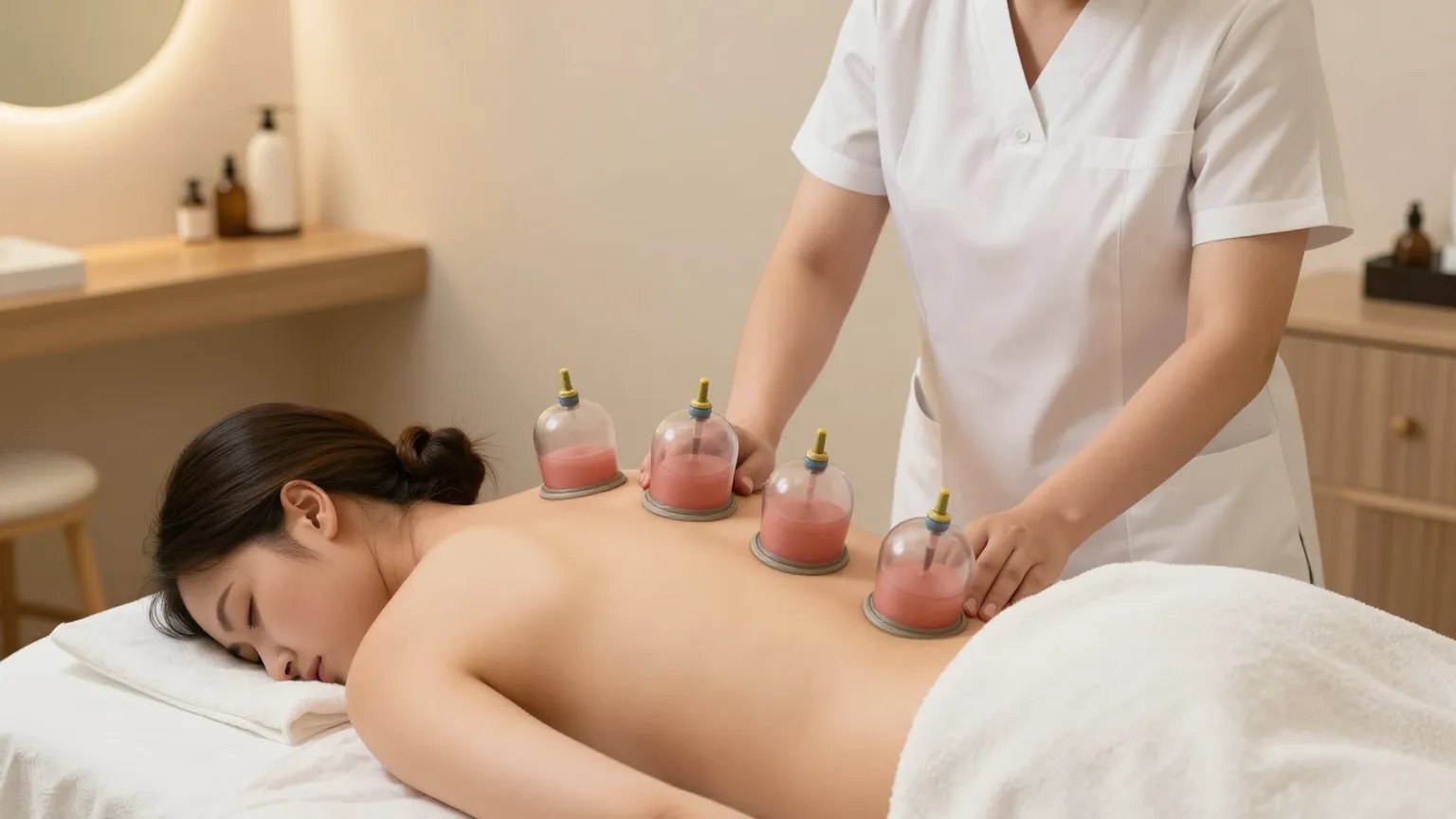
Cupping creates negative pressure on the skin, which draws blood, lymph, and stagnant metabolic waste from underlying muscle and fascia toward the surface. The circular marks left behind are not bruises in the medical sense. They are circular pools of mobilized fluid in the superficial tissue, which the body then clears through the lymph system over 4 to 10 days.
The clinical effects: increased blood flow to chronically tight muscles, fascial release that manual massage cannot easily reach, mobilization of trigger points, mild systemic anti-inflammatory effect through the lymph clearance pathway. The treatment has 3,000 years of traditional use in China and a growing body of modern research, especially for chronic neck and back pain.
Who Cupping Helps Most
Athletes and active people with recurring muscle tightness. Especially for the upper traps, lower back, hamstrings, calves. Olympic-level use is well documented.
Chronic neck and shoulder pain from desk work. Cupping addresses the fascial tightness that develops from sustained forward-head posture in a way that targeted stretching alone cannot.
Post-surgery recovery (after the surgical site has fully healed). Helps mobilize scar tissue and restore blood flow to areas that became sluggish during the recovery downtime.
Plantar fasciitis and IT band syndrome. Both respond to combined cupping plus stretching better than to stretching alone.
Stress-driven muscle tension. The mild parasympathetic activation during a cupping session helps the nervous system unwind, which is why many people fall asleep mid-session.
Who Should Skip Cupping
Anyone on blood thinners (warfarin, eliquis, etc.). The negative pressure can cause significant subcutaneous bleeding.
Pregnant women in the abdominal and lower back areas. Other areas may be acceptable with practitioner clearance.
Active skin infection, eczema flare, or open wounds in the area.
Severe varicose veins.
Bleeding disorders. Hemophilia, severe thrombocytopenia, etc.
Children under 12 (with rare exception by trained pediatric practitioner).
What Cupping Costs
Licensed acupuncturist initial session (60 minutes): 95 to 180 dollars
Follow-up cupping session (30 to 45 minutes): 65 to 120 dollars
Sports cupping at a chiropractor or PT (cash): 60 to 110 dollars
Cupping at a wellness spa (no clinical license): 50 to 100 dollars (relaxation only)
At-home silicone cup set: 15 to 35 dollars one time, reusable indefinitely
Insurance coverage is improving but inconsistent. Some HSA and FSA accounts cover cupping when performed by a licensed practitioner.
Castor oil works well as the glide medium for cupping (and for the recovery treatment you can do on the same days you cup). UpNature is USDA Organic certified, hexane-free, cold pressed, and packaged in glass. The same bottle covers your at-home cupping oil needs and the castor oil pack protocol over the liver if you also work on detoxification:
ELERA Silicone Cupping Therapy Set (Beginner-Friendly, Massage-Glide Cups)

UpNature Organic Castor Oil (USDA Certified, Hexane Free, Glass Bottle)

Cupping mobilizes lymph, but the muscle tissue itself often needs magnesium support to fully release. Topical magnesium chloride sprayed on the muscles you cupped (after a warm shower, before bed) helps the tissue rebuild and relaxes any post-treatment soreness. Ancient Minerals Zechstein Sea-sourced is the cleanest option:
Ancient Minerals Magnesium Oil Spray (Zechstein Source)

Related Reading
- What Does Cupping Therapy Do? (Suction Therapy Explained)
- Red Light Therapy Near Me: Find a Quality Clinic + Best Devices
- Scalp Massage Near Me: Find a Good Provider + At-Home Routine
- Microneedling Near Me: Find a Safe Provider
- How Long Do Cupping Marks Last?
- Lymphatic Drainage Massage Near Me: Find A Practitioner Tool
- Why Do My Legs Always Feel Tired? Circulation, Lymph + Mineral Map
- What Toxins Are Released After Massage + Reaction Tracker Tool
- Castor Oil Pack for Liver: A Beginner Guide
Frequently Asked Questions
How much does cupping therapy cost near me?
A licensed acupuncturist's initial cupping session costs 95 to 180 dollars in 2026. Follow-ups run 65 to 120 dollars. Sports cupping at a chiropractor or PT clinic runs 60 to 110 dollars. Cupping at a wellness spa (no clinical license) runs 50 to 100 dollars but is relaxation-only, not therapeutic. An at-home silicone cup set is 15 to 35 dollars one time and reusable.
Does cupping really work for chronic pain?
Yes, with appropriate expectations. Cupping has reasonable clinical evidence for chronic neck pain, lower back pain, plantar fasciitis, IT band syndrome, and post-workout muscle recovery. Effects are typically temporary (3 to 14 days per session), which is why a series of 4 to 8 sessions tends to produce better and longer-lasting results than a single session. It does not cure structural problems like herniated discs or osteoarthritis, but it can significantly reduce the muscular compensation patterns those conditions create.
Are the cupping marks bruises and are they dangerous?
The marks are not bruises in the medical sense. There is no underlying tissue damage. They are circular pools of mobilized blood, lymph, and metabolic waste drawn to the surface by suction, which the body clears through the lymphatic system over 4 to 10 days. The marks are not painful after the session ends (mild tenderness for a few hours is normal). Lighter marks usually indicate healthier underlying tissue, darker marks indicate more chronic stagnation. They are not dangerous in healthy adults.
Can I do cupping at home or do I need a professional?
Both work, for different purposes. At-home silicone cupping is fine for general muscle tightness, recovery from workouts, and self-experimentation. A licensed practitioner is worth the money for: chronic conditions that have not responded to self-care, post-surgical scar tissue mobilization, complex trigger point work, and any cupping involving the front of the body or face. The at-home protocol in the tool above is a good 30-day baseline before deciding whether to book a professional.


