
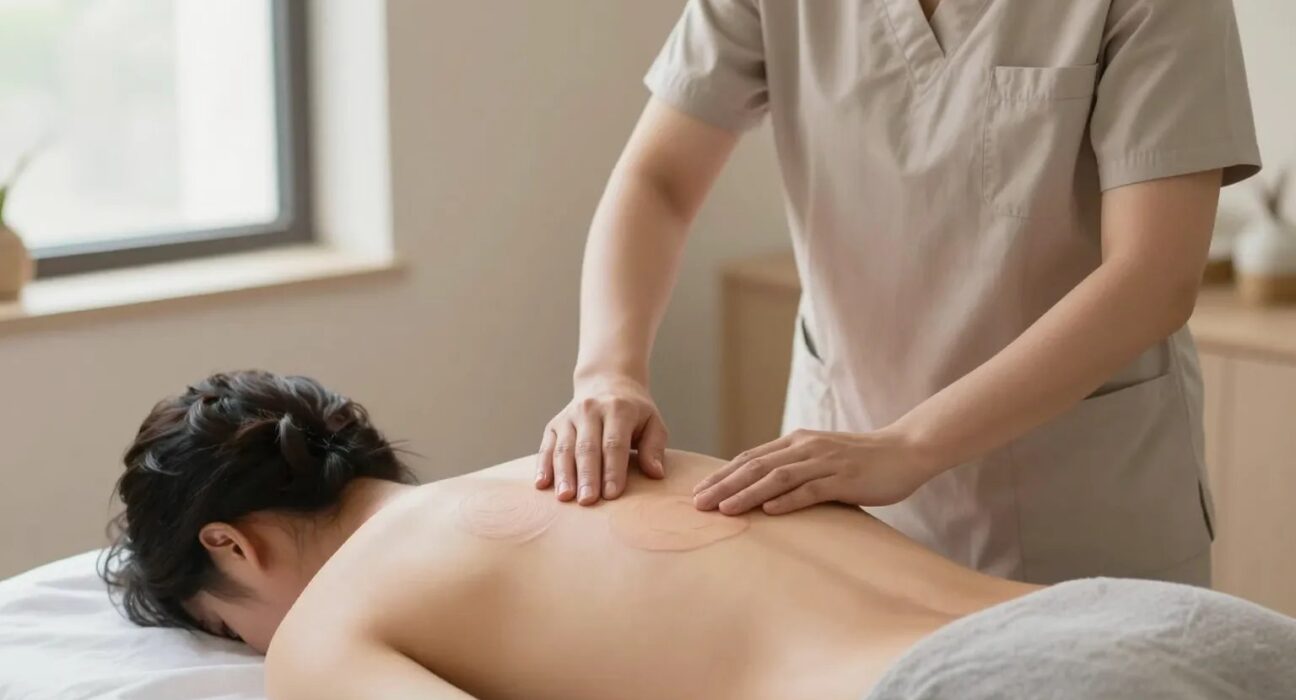
Those dramatic circular marks make cupping look intense — so it’s a fair question: is cupping dangerous, and what are the real side effects? The clear answer is that for most healthy people working with a trained practitioner, cupping is low-risk, and the marks you see are temporary. But it isn’t right for everyone, and a few specific situations genuinely call for caution.
Below you’ll find a quick safety check, the real (and usually minor) side effects, who should be careful or avoid cupping altogether, and what the research actually says — so you can decide whether cupping is safe for you before you book.


Why does the tension keep coming back?
The real side effects of cupping (and how common they are)
Most cupping side effects are minor and expected. The famous round marks are simply blood the suction pulled toward the surface of the skin — not impact bruises — and they typically fade within a few days to a week. Beyond the marks, the most common effects are mild soreness in the treated area, temporary skin irritation or itchiness, and occasionally feeling a little lightheaded during a session.
Most people in detox or chronic-symptom work eventually hit the same problem: the same symptoms — fatigue, brain fog, gut issues, poor sleep — can come from completely different root causes, and the wrong protocol can run for months before that becomes obvious. The 2-minute What's Draining Your Brain Tool sorts you into one of four toxic load types so the next thing you try has a real chance of actually working.
Less common but worth knowing about: blisters or skin breakdown if suction is too strong or held too long, skin infection (the main concern with wet cupping, which uses tiny incisions), and burns with traditional fire cupping if the technique is careless. These are the side effects that separate a good practitioner from a risky one — they come from technique and hygiene, not from cupping itself.

Who should be cautious with cupping — or avoid it
Cupping deliberately moves blood toward the skin, so the situations that call for caution mostly involve bleeding, healing, or fragile skin. Be careful (and check with your clinician first) if you take blood thinners or daily aspirin, have a bleeding or clotting disorder, or bruise very easily — you can mark heavily and heal slowly.
Get medical clearance before cupping if you’re pregnant or trying to conceive, have diabetes or heal slowly, take immune-suppressing medication, or manage a heart condition or other chronic illness. And never cup directly over broken, inflamed, sunburned, or infected skin, an active rash or eczema flare, an open wound, moles, or varicose veins — choose a healthy area or wait until the skin has fully healed. The safety check above walks you through your own situation in under a minute.
What the research actually says
What the research actually says
Based on articles retrieved from PubMed, here is the safety picture — cupping is generally well-tolerated, but it is not side-effect-free:
Side effects are usually minor — but more common than doing nothing
A meta-analysis of 18 randomized trials found that adverse events were more frequent among people treated with cupping than among those who received no treatment, though they were generally mild and the difference versus sham or other active treatments was not statistically significant (Cramer et al., The Journal of Pain 2020; DOI: 10.1016/j.jpain.2020.01.002). In plain terms: expect marks and the occasional bit of soreness or skin irritation.
Serious harm is rare with trained providers
A systematic review of 23 randomized trials comparing cupping with acupuncture concluded both are ‘potentially safe,’ with no serious adverse events related to cupping reported across the included studies (Zhang et al., Chinese Medicine 2017; DOI: 10.1186/s13020-017-0142-0). The biggest real-world risks — burns from fire cupping and infection from wet cupping — come from poor technique and hygiene, not the method itself.
How to keep cupping as safe as possible
If you’ve cleared your own situation, a few simple habits keep the risk low. Choose a trained, licensed practitioner and a clean setup; start with shorter sessions and moderate suction rather than the strongest pull; let marks fade fully between sessions instead of stacking them; and stay well hydrated before and after. If you’re trying it at home, gentle squeeze-to-suction silicone cups with a glide oil give you the most control and the least chance of over-marking one spot. Skip wet cupping unless a qualified provider performs it with sterile, single-use equipment.
The question most cupping articles skip
Frequently asked questions
What are the side effects of cupping?
The most common side effects are the round marks themselves (pooled blood that fades in a few days to a week), mild soreness, and temporary skin irritation or itchiness. Less common are blisters, skin infection, or lightheadedness during a session. With fire cupping there is a small burn risk, and with wet cupping (which uses tiny incisions) there is an infection risk if hygiene is poor.
Is cupping dangerous?
For a healthy person treated by a trained, hygienic practitioner, cupping is considered low-risk and serious harm is rare. The real dangers come from specific situations — cupping someone on blood thinners, over broken or infected skin, during pregnancy without clearance, or with poor hygiene in wet cupping. That’s why screening your own situation first matters.
Who should not do cupping?
Be cautious or avoid cupping if you take blood thinners, have a bleeding or clotting disorder, bruise very easily, are pregnant (without medical clearance), have diabetes or slow wound healing, take immune-suppressing medication, or have a skin condition, rash, wound, sunburn, moles, or varicose veins in the area to be cupped. Check with your clinician first in any of these cases.
Are the cupping marks bruises, and are they dangerous?
The marks are not impact bruises — they’re blood the suction drew toward the skin’s surface. They’re generally harmless and fade within about a week. Darker marks aren’t a sign of a ‘better’ session, and marks that blister, break the skin, or refuse to fade should be checked by a clinician.
Is wet cupping more dangerous than dry cupping?
Wet cupping (hijama) carries more risk because it involves tiny skin incisions, which adds an infection and bleeding risk that dry cupping doesn’t have. If you choose wet cupping, it should only be done by a qualified provider using sterile, single-use equipment in clean conditions.
This article is general education, not medical advice. Cupping is low-risk for most healthy people with a trained provider, but check with a clinician first if you take blood thinners, are pregnant, have a bleeding or skin condition, diabetes, or a chronic illness. If a cupping mark blisters, breaks the skin, or does not fade within a week, have it evaluated.


