Around 2,400 people search for hydroxyapatite toothpaste benefits every month, and the search is growing year over year as the fluoride-free movement matures. Hydroxyapatite (HA) is the mineral your enamel is actually made of, which means brushing with it lets your teeth absorb the same material they are losing to acid wear, sugar, and stress. The science is solid, the product category is exploding, and the natural-first audience has fully embraced it as the fluoride alternative that actually works.
This guide covers the 7 documented benefits, the difference between nano and micro hydroxyapatite, how it compares to fluoride, and which formulation fits your specific case. The Picker Tool further down points you to the right brand based on your top oral concern.
Find My Hydroxyapatite Toothpaste Tool
Tap every statement that matches your situation. The tool picks the right formulation between two clean options and explains why.
Enamel That Keeps Eroding Has An Upstream Driver
Hydroxyapatite remineralizes enamel from the outside. But if enamel keeps eroding faster than the toothpaste can repair, the driver is usually systemic. Heavy metal load weakens dentin from the inside, mold biotoxins inflame the gum line and accelerate decay, mineral-stealing parasites strip the calcium and phosphorus the enamel needs, and chronic adrenal depletion drops saliva production (the body builtin remineralization fluid). The 90 second Toxic Load Tool finds which one is driving yours.
Use The Toxic Load ToolWhat Hydroxyapatite Actually Is
Hydroxyapatite (HA) is a calcium phosphate mineral with the chemical formula Ca10(PO4)6(OH)2. Roughly 97 percent of your enamel is made of it. Your bones are also made of it (around 70 percent). So when you brush with HA toothpaste, you are giving your teeth the same building block they are constantly losing to acid wear, sugar exposure, and the daily friction of brushing itself.
HA toothpaste was originally developed by NASA in the 1970s to remineralize astronauts’ enamel in zero gravity (where saliva does not pool around teeth to deliver minerals naturally). Japan approved it for general use in 1980, and it has been the dominant fluoride alternative there for 40 years. The US natural market caught up after 2018 when several patents expired.
Parasite work helps some people enormously and leaves others wondering why nothing changed after a full cleanse. The usual reason is that the dominant toxic load wasn't actually parasites — heavy metals, mold, or chronic adrenal drain was sitting underneath, and parasite protocols can't reach what isn't the bottleneck. Before another round, it's worth knowing which load is actually yours. The 2-minute What's Draining Your Brain Tool sorts you into one of four root causes so you stop chasing the wrong cleanse.
7 Documented Benefits Of Hydroxyapatite Toothpaste
1. Active remineralization (not just protection)
Hydroxyapatite particles bind to the enamel surface and integrate into the existing crystal lattice. Fluoride works differently: it makes existing enamel more acid-resistant, but it does not add material. HA actively rebuilds what acid wear, age, and brushing have eroded. Studies in the Journal of Clinical Dentistry have shown measurable enamel thickness increase after 12 weeks of daily HA brushing.
2. Reduced sensitivity (often within 2 weeks)
Tooth sensitivity to hot, cold, sweet, and acidic foods comes from exposed dentin tubules at the gum line. HA particles plug those tubules mechanically, blocking the fluid movement that triggers nerve pain. Most patients report meaningful sensitivity reduction within 14 to 21 days of daily use. The Boka Sensitive formulation adds potassium nitrate for faster relief during the build-up window.
3. Whitening without abrasion
Most whitening toothpastes work by mechanical abrasion (silica, baking soda, charcoal) that scrubs surface stain off and over time thins enamel. HA toothpaste whitens by filling microscopic enamel erosions with reflective white mineral, which makes the surface scatter light more uniformly. The whitening effect is gentler and slower than peroxide-based products (1 to 2 shades over 6 to 8 weeks) but does not damage enamel.
4. Fluoride-free with comparable cavity protection
The 2020 systematic review in BMC Oral Health concluded that 10 percent hydroxyapatite toothpaste was non-inferior to 500 ppm fluoride toothpaste for cavity prevention in children. For adults the data is mixed but generally favorable. For patients avoiding fluoride for personal philosophy reasons (thyroid concerns, fluorosis history, dental work compatibility), HA provides a clinically reasonable alternative.
5. Safer if swallowed
HA is bio-identical to bone material. The body recognizes it and absorbs it as a normal mineral source. Fluoride at toothpaste concentrations is mildly toxic if swallowed in significant amounts (the warning label on fluoride toothpaste tubes exists for a reason). For young children still learning to spit, HA toothpaste removes one of the more common pediatric ingestion concerns.
6. Compatible with existing dental work
HA does not interact with composite fillings, crowns, or bonding agents. It does not stain composite work the way some natural toothpaste ingredients (turmeric, charcoal heavy) can. Patients with extensive dental restorations specifically benefit because HA maintains a uniform appearance across natural and restored teeth.
7. Reduces plaque adhesion
HA-coated enamel is mechanically smoother than uncoated enamel, which makes it harder for plaque biofilm to adhere. Multiple studies have shown 20 to 30 percent reduction in plaque accumulation after 8 weeks of HA brushing. This is the secondary cavity-prevention mechanism beyond direct remineralization.
Nano Vs Micro Vs Non-Nano Hydroxyapatite
HA particle size matters because it determines whether the mineral can actually penetrate enamel erosions or just sits on the surface.
Nano-hydroxyapatite (nHA): 10 to 50 nanometer particles. Small enough to enter the microscopic erosions in enamel where larger particles cannot reach. Most clinical research uses nano-HA. Boka, Apagard, and most Japanese brands use this size.
Micro-hydroxyapatite (mHA): 50 to 500 nanometer particles. Larger, sits more on the surface, less penetration. Some brands use this size to differentiate, but the clinical evidence for remineralization is stronger with nano.
Non-nano hydroxyapatite: particles above 100 nanometers. Some natural-first patients and parents specifically prefer non-nano because nano-particle absorption through tissue (not just teeth) is still under active research. ORL is a popular non-nano option.
For most healthy adults with intact enamel, nano-HA gives the best remineralization. For patients who are nano-cautious (especially during pregnancy or for young children), non-nano is the conservative choice.
Who Should Switch To Hydroxyapatite
Strong fit: sensitive teeth, early enamel demineralization, white spots from orthodontics, fluoride-free preference, thyroid conditions, history of dental fluorosis, multiple amalgam fillings, anyone with reflux or eating disorder history (thin enamel).
Mixed fit: moderate cavity history without other risk factors. HA prevents new cavities about as well as fluoride at typical concentrations, but patients with aggressive cavity history may want both (HA in the morning, fluoride at night) until the underlying drivers are addressed.
Skip HA for: patients with active cavities deep enough to need clinical fluoride varnish from the dentist. HA toothpaste prevents new cavities but cannot remineralize a cavity that has already broken through enamel. Get the existing cavities addressed first, then HA prevents recurrence.
How To Get The Most From Hydroxyapatite Toothpaste
1. Brush twice daily, morning and before bed. HA needs contact time on the enamel to bind, so brush for the full 2 minutes.
2. Do not rinse aggressively after brushing. Spit out the foam but leave a thin film on the teeth. This gives the HA particles more time to integrate.
3. Avoid eating or drinking for 30 minutes after brushing. The remineralization window happens in the first 30 minutes post-brush.
4. Pair with oil pulling 3 to 4 mornings per week. Oil pulling clears the biofilm, then HA bonds better to clean enamel.
5. Replace toothbrush every 90 days. HA gets less effective when brush bristles are worn flat and cannot reach the gum line erosions.
6. Give it 8 to 12 weeks before judging results. Remineralization is slow. Expect sensitivity reduction first (around week 2 to 3), then visible enamel improvement (week 8 to 12).
The picker tool above routes most adult users with sensitivity, demineralization, or active orthodontics to Boka. Boka uses nano-hydroxyapatite (10-50 nm particles, smallest enough to enter microscopic erosions), and the Sensitive formulation adds potassium nitrate for faster relief during the 14 to 21 day build-up window:
Boka Sensitive Hydroxyapatite Toothpaste (Fluoride-Free)

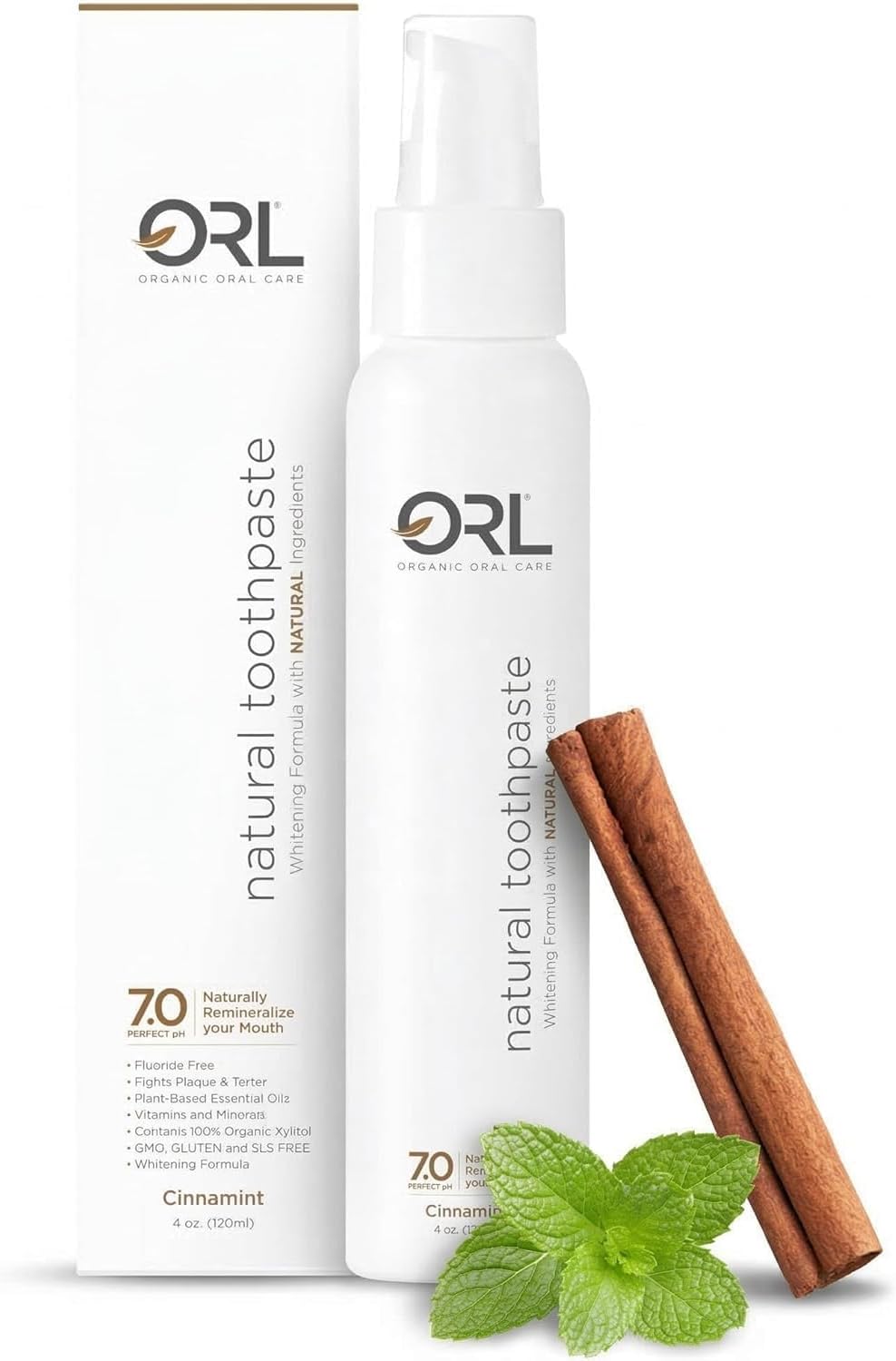
For patients who are nano-particle cautious (especially during pregnancy or for young children), ORL is the conservative non-nano option. ORL adds organic xylitol which starves cavity bacteria, and the cinnamint flavor is herbal rather than typical mint. Made in USA:
ORL Non-Nano Hydroxyapatite Toothpaste (Fluoride-Free)
Related Reading
- Teeth Whitening Near Me + Find A Dentist Tool
- Homemade Clove Toothpaste Recipe + Free Personalizer Tool
- Dental Bridges Near Me + Find A Holistic Dentist Tool
- Dental Crown Near Me + Find A Holistic Dentist Tool
- How To Detox Anesthesia After Dental Surgery
Frequently Asked Questions
Is hydroxyapatite toothpaste as good as fluoride?
For cavity prevention in healthy adults and children, the 2020 BMC Oral Health systematic review found 10 percent hydroxyapatite toothpaste non-inferior to 500 ppm fluoride toothpaste. For patients with active high cavity risk, the data is mixed and some dentists recommend using both (HA morning, fluoride night) until underlying drivers are addressed. For sensitivity, enamel rebuilding, and gentler whitening, HA outperforms fluoride.
Is nano hydroxyapatite safe?
The clinical safety record after 40+ years of use in Japan is strong, and the EU and FDA permit it in toothpaste. The nano-particle question is whether particles small enough to penetrate enamel could also penetrate other tissues. Current evidence says no at the oral hygiene dose. For pregnancy and young children, non-nano versions (like ORL) are the conservative choice.
How long does hydroxyapatite toothpaste take to work?
Sensitivity reduction typically begins within 14 to 21 days of twice-daily use. Visible enamel improvement (whiteness, smoothness) appears around 8 to 12 weeks. Plaque adhesion reduction is measurable by 8 weeks. The full effect compounds over months. Do not judge results at the 1 week mark, the mechanism is slow remineralization not surface bleaching.
Can children use hydroxyapatite toothpaste?
Yes, from the moment they have teeth. Hydroxyapatite toothpaste is significantly safer to swallow than fluoride toothpaste because HA is the same material the body uses to build bones. For children under 6, a pea-sized amount is still appropriate. Many parents specifically switch their children to HA toothpaste to avoid the fluoride ingestion concern.