

You take magnesium glycinate every night before bed. Maybe two capsules. The bottle assured you it would help with sleep, muscle cramps, anxiety, the whole peri-menopause symptom cluster. After six weeks you feel approximately the same. You switched brands. Tried a different form (citrate, malate, threonate). Bumped up the dose. Still nothing meaningful.
Find Your Magnesium Missing Cofactor
Wondering why magnesium is not delivering the sleep, calm, or muscle relief you hoped for? Tap every statement that is true. You get back the specific cofactor you are missing and what to add this week.
Magnesium Resistance Often Tracks With Bigger Patterns
If multiple cofactors are missing simultaneously and you keep adjusting and nothing budges, the issue is usually upstream. Heavy metal load competes for mineral binding sites and consumes magnesium directly. Mold biotoxins drive chronic magnesium loss through inflammation. Parasites consume minerals as their primary metabolism. Chronic cortisol depletion drops magnesium fastest of any mineral. The 90 second Toxic Load Tool finds which one is driving yours.
Use The Toxic Load ToolHere is what’s actually happening: magnesium isn’t a standalone supplement. It’s the activation key for a system that requires three other nutrients to work properly. Take magnesium without vitamin D3, vitamin K2, and active B6 (P5P), and you’re driving a car with one wheel. The engine runs. The car doesn’t go anywhere.
Not sure how much magnesium you need? Use the free 90-second calculator below. It personalizes the dose to your body weight, stress, and symptoms (and tells you which of the 5 forms to take).
Magnesium Dose Calculator
90 seconds. Personalized to your body + symptoms.
For the full breakdown of each input + what to do with the output, see the Magnesium Dose Calculator article.
Key Takeaways
- Magnesium requires three cofactors to function: vitamin D3 (works the system together), vitamin K2 (directs calcium to bones not arteries), and active B6/P5P (enables magnesium absorption and conversion).
- Most of the “magnesium not working” reports come from women taking magnesium in isolation, which is biochemically incomplete.
- The full stack works as a system. Taking all four together is dramatically more effective than higher doses of any one.
- Allow 4 to 6 weeks of the complete stack to judge results. Magnesium status rebuilds slowly because most modern adults are profoundly depleted before they start supplementing.
Check My Drainage Pathway Readiness
Find out if your exit routes are open enough to start mobilizing metals — or if you need more Phase 1 work first.
The Magnesium-Vitamin D3 Loop That Nobody Mentions
All the enzymes that metabolize and activate vitamin D. Both in the liver and in the kidneys. Require magnesium as a cofactor. You can take vitamin D3 faithfully for months and still see almost no rise in your 25-OH-D blood level if magnesium is low. The supplement enters your body, sits in storage form, and never converts to the active form your tissues actually use.
Inverse is also true. Without adequate vitamin D, your gut absorbs significantly less magnesium from any source. So the woman who takes magnesium alone is fighting two losing battles at once: low absorption because D is low, low conversion of D to active form because magnesium is low. You can supplement either one in isolation forever and not move the system.
The fix is simple in principle and almost no one does it: take them together, daily, for at least six weeks before judging results.
Bioavailable Magnesium
Doctor’s Best High Absorption Magnesium Glycinate Lysinate 200mg
Source: amazon.com
Chelated magnesium glycinate is the most bioavailable form for sleep, anxiety, and muscle relaxation. 200mg per serving. 240 tablets covers four months. Andrea’s personal pick for the magnesium base layer. Doctor’s Best has the cleanest third-party tested chelation profile at this price point.
Check Price On Amazon
The K2 Piece. Where Calcium Actually Goes
Vitamin D3 increases calcium absorption from the gut. That part is well-known. What isn’t well-known: vitamin D3 does NOT tell calcium where to go once it’s absorbed. Without vitamin K2, that newly absorbed calcium can deposit in soft tissue. Arterial walls, kidney stones, breast tissue. Instead of bones and teeth where it belongs.
Vitamin K2 specifically activates two proteins (matrix Gla protein and osteocalcin) that transport calcium FROM circulation INTO bone tissue. Without K2, your D3 may technically work for absorption but it’s pulling calcium toward problem locations. This is part of why some women on D3 alone for years end up with surprise findings of arterial calcification or kidney stones. They were supplementing the absorption step without supplementing the direction step.
The cleanest delivery is D3 + K2 (MK7 form) in a single capsule, taken with food that contains fat for absorption. 5000 IU D3 plus 100 mcg K2 daily is the typical adult dose.
D3 and K2 Cofactor Pair
Bronson Vitamin D3 5000 IU + K2 (MK7)

Source: amazon.com
Pairing vitamin D3 with K2 directs the calcium where it belongs (bones and teeth) instead of soft tissue and arteries. Magnesium is required to convert D3 to its active form, so without magnesium your D3 sits unused; without K2 your D3 sends calcium to the wrong places. The trio works as a system, not three independent supplements.
Check Price On Amazon
B6 (P5P). The Activator Nobody Talks About
For any detox or wellness protocol, magnesium is foundational. Most adults are deficient, and recovery depth depends on sleep depth, which magnesium supports directly.

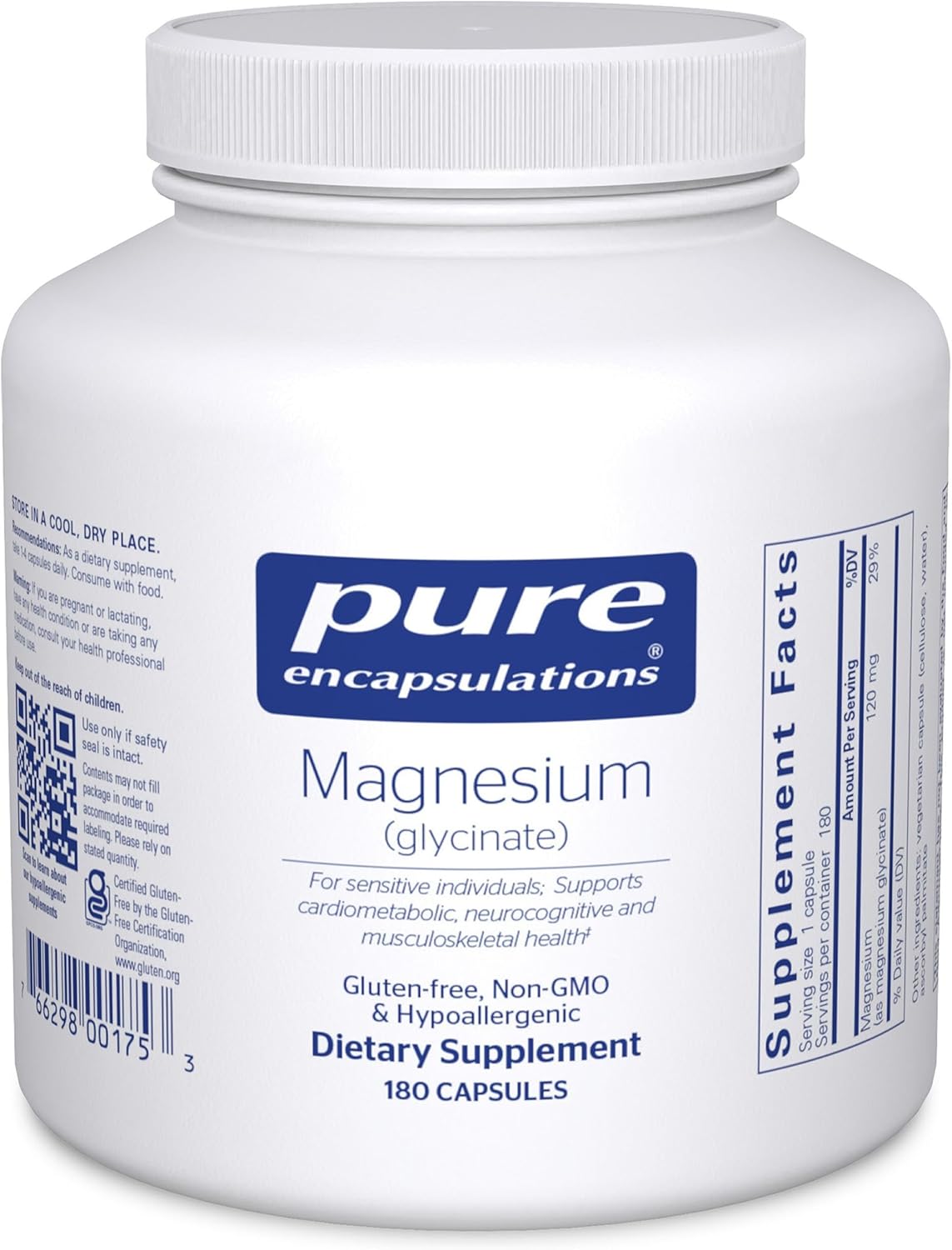
Pure Encapsulations Magnesium Glycinate
400mg before bed. Glycine-bound for non-laxative absorption.
Check Price on AmazonPyridoxal-5-phosphate is the body-ready, activated form of vitamin B6. Standard supplemental B6 (pyridoxine HCl) requires the liver to convert it to P5P. And that conversion is itself magnesium-dependent. If your liver is taxed, your magnesium is low, or you’re over 50, that conversion runs poorly. Taking P5P directly bypasses the conversion bottleneck.
P5P is a cofactor for hundreds of enzymatic reactions, including some that govern magnesium transport into cells. Magnesium can be in your bloodstream and still not get into the cell where it’s needed without P5P. That intracellular gap is part of why women on high-dose magnesium can still have muscle cramps, sleep disruption, anxiety. The magnesium is THERE but it’s not getting WHERE.
Active B6 Cofactor
Pure Encapsulations P5P 50 (Activated Vitamin B6)

Source: amazon.com
Pyridoxal-5-phosphate is the activated, body-ready form of B6. No liver conversion needed. Critical cofactor for magnesium absorption and conversion. One capsule with breakfast supports the trio’s full functional capacity. Pure Encapsulations has the cleanest hypoallergenic formula on the market.
Check Price On AmazonOne Pure Encapsulations P5P 50 capsule with breakfast supports the full system. After 8 weeks of consistent dosing, drop to every other day for maintenance.

Putting the Stack Together
Morning, with breakfast: – 1 capsule magnesium glycinate (200 mg) – 1 capsule vitamin D3 5000 IU + K2 100 mcg – 1 capsule P5P 50 mg
Evening, with dinner: – 1 capsule magnesium glycinate (200 mg). The bedtime dose helps with sleep specifically
Take with food that contains fat (avocado, olive oil, egg yolks, fatty fish). Vitamin D, K2, and B6 all absorb meaningfully better in the presence of dietary fat than on an empty stomach.
Total daily cost across all three products: roughly $1.30 per day when buying the multi-month sizes. Cheaper than coffee.
Leafy Greens. The Quiet Multiplier
None of this works as well if your daily diet is depleted in the food-form versions of these same nutrients. Half a bunch of dark leafy greens daily (spinach, kale, swiss chard, beet greens) delivers food-form magnesium with its natural cofactors, food-form K1 (which converts partially to K2), folate, B6, and trace minerals that capsules cannot fully replicate. The supplements amplify a baseline diet, not replace it.
What Improves in 4 to 6 Weeks (and What Doesn’t)
Activated charcoal is the second foundational support. Use as needed during cleanse windows or when exposure to environmental contaminants is heavy.

Bulk Supplements Activated Coconut Charcoal
Coconut shell sourced. Take 2 hours from food, supplements, and medications.
Check Price on AmazonWeek 1 to 2: faster muscle relaxation after exercise. Less restless-leg sensation. Slightly better sleep onset.
Week 3 to 4: stress tolerance increases. Edge of irritability softens. Anxiety baseline shifts down.
Week 5 to 6: real sleep architecture improvement. Deep sleep percentage increases (visible on any tracker). Morning energy is sustained, not a caffeine-driven spike.
Week 8 onward: blood pressure normalizes (if it was elevated). Migraine frequency drops if you were prone. Period symptoms in perimenopause noticeably reduce.
What this protocol won’t fix: insomnia caused primarily by cortisol dysregulation (different protocol). Restless legs caused by iron deficiency (different protocol). Muscle cramps caused by chronic dehydration or electrolyte imbalance (different protocol). If after 8 weeks of the full stack you’re still struggling, the issue is upstream of magnesium status. Usually adrenals, iron, or thyroid.
The Klinghardt-Pompa Frame
This protocol sits in step five of the Klinghardt-Pompa detox sequence: integrate. Cofactor restoration is what allows the body to actually USE the inputs you’ve been giving it. If you’re early in a detox sequence and still mobilizing heavy metals or parasites, the magnesium stack supports that work without being the primary tool. If you’re past active detox and trying to maintain, the magnesium-cofactor stack IS the maintenance.
The full sequence map lives in the Toxic Load Reset protocol. For the broader anesthesia-and-detox map, the 7 Steps to Clear the Haze piece walks through post-medical-intervention recovery in depth.
For Further Reading
If your skincare has been losing effectiveness alongside the magnesium-not-working frustration, Skincare Stops Working After 50 covers the same “missing cofactor” pattern for the collagen pathway. The biochemistry rhymes. These are all systems issues, not single-nutrient issues.
Disclosure: As an Amazon Associate, I earn from qualifying purchases. Product picks are what I personally use. Dosing is education, not prescription. Weigh both sides, listen to your body, and if you’re on blood thinners (warfarin specifically), discuss with your prescriber before adding K2 because the two interact.
Frequently Asked Questions
Why is my magnesium not working?
The four most common reasons: missing B6 (active form P5P), low vitamin D blocking magnesium activation, gut absorption blocked by leaky gut or low stomach acid, or you bought the wrong form (magnesium oxide is only 4 percent absorbed). The Match Tool above identifies which one is limiting your case.
How long until magnesium works?
With the right form and cofactors, sleep improvement appears in 7 to 10 days, muscle relief in 2 to 3 weeks, and full benefit at 4 to 6 weeks. If you see zero change after 4 weeks, the limiting factor is a cofactor or form issue, not the magnesium itself.
What is the best form of magnesium?
Depends on what you are treating. Glycinate for sleep and calm, threonate for brain fog and focus, malate for muscle pain and fatigue, citrate for constipation. AVOID oxide form (4 percent bioavailable). Most natural-first practitioners pick glycinate as the daily baseline.
Can I take magnesium and vitamin D together?
Yes, and you should. They are interdependent. Vitamin D activation requires magnesium, and magnesium tissue uptake requires vitamin D. Take both together with a fat-containing meal. Add vitamin K2 to direct the calcium that vitamin D mobilizes to bone, not arteries.