
Natural Health & Wellness

Lymphatic Drainage Massage Before and After: Real Results + How Long It Lasts

The “before and after” you see online — lighter under-eye area, a more defined jawline, ankles that don’t swell by the end of the day — isn’t usually a single dramatic transformation. It’s the same person, supported by a consistent rhythm of light, repeated lymphatic strokes over weeks. Here’s what that timeline really looks like, what changes in the first week vs. the eighth, and how to make those results last instead of fade.

According to PubMed

A 2020 randomized clinical trial in the International Journal of Rehabilitation Research documented that manual lymphatic drainage produces significantly greater reductions in pain and edema than standard care alone, with effects measurable within the first few days of treatment. A separate 2020 review in the Journal of Applied Physiology on the brain's glymphatic system established lymphatic-style drainage as the primary clearance pathway for metabolic waste — supporting the broader concept that whole-body lymph flow is foundational to detoxification.

Tornatore L, De Luca ML, et al. Effects of combining manual lymphatic drainage and Kinesiotaping. Int J Rehabil Res 2020. DOI 10.1097/MRR.0000000000000417

Benveniste H, Elkin R, et al. The glymphatic system and its role in cerebral homeostasis. J Appl Physiol 2020. DOI 10.1152/japplphysiol.00852.2019

The Deeper Pattern

When lymph stagnates, your toxic load goes up

The lymphatic system is your body's waste-removal highway. When it slows down — from prolonged sitting, dehydration, chronic stress, mold exposure, heavy metals, or surgical scarring — metabolic byproducts and environmental toxins accumulate faster than they can clear. The symptoms (swelling, brain fog, fatigue, recurrent infections, stubborn weight) often get blamed on something else.

The Toxic Load Assessment maps which root-cause pattern is driving YOUR stagnation — mold, metals, parasites, or adrenal — so your lymph work unblocks what's upstream.

Take the Toxic Load Assessment →

Related guide: The full breakdown of all 7 documented lymphatic drainage massage benefits and which 3 will land first for your concern.

If you’ve seen the dramatic ‘before and after’ photos of lymphatic drainage massage and wondered whether they’re real — the short answer is yes, but with a clear-eyed asterisk. The change you see is mostly fluid leaving your tissues, which is why it looks so striking and why it doesn’t last forever.

Here’s exactly what to expect from your own before and after, how fast it shows up, how long it lasts, and how to make the most of it.

FIRST, THE ROOT

Why are you so puffy to begin with?

Holding water and feeling puffy is often a downstream sign of an overworked system. A higher toxic load makes the body cling to fluid. The 90-second Toxic Load Assessment shows which pattern may be behind yours.
Explore the Toxic Load Assessment

What to Realistically Expect: Week 1, 2, 4, 8

A daily 5-10 minute lymphatic drainage routine produces benefits on a predictable timeline. Pick a week to see what tends to show up by then — and what is too early to expect.

Side profile of woman with smooth lifted skin and clearly defined jaw line after 30 days of facial lymphatic drainage
Illustrative — the day-30 shift: smoother jaw line, lighter under-eye area, and a clearer cervical/neck contour as drainage establishes a daily rhythm.
The typical 30-day arc with a daily 5-minute facial drainage routine. Individual results vary based on starting baseline, consistency, and the toxic-load picture upstream.

Week 1: Settling in, not transforming yet

What usually shows up

  • The routine starts feeling familiar by day 4-5; the awkwardness of the technique fades
  • Some people notice slightly lighter facial puffiness on waking by day 6-7
  • Increased awareness of where you hold tension (jaw, neck, behind the ears)
  • Mild increase in urination frequency as fluid mobilizes (normal)

What is too early to expect

  • Visible “before & after” change in photos
  • Reduced jawline congestion or breakouts
  • Energy or mood shifts (the deeper benefits take 4-8 weeks)

Week 1 is the consistency-building week. The visible payoff is small and the temptation to quit is highest right here. Push through.

Week 2: Surface changes start showing

What usually shows up

  • Visible reduction in morning facial puffiness, especially under the eyes
  • Friends or family may notice your face looks “rested”
  • Better tolerance of the routine — pressure adjusts naturally
  • Side-by-side photos start showing modest change
  • Some report a single jawline pimple clearing and not recurring

What is too early to expect

  • Dramatic transformation
  • Full skin tone evening
  • Deep nervous-system shifts

Week 2 is when most people decide whether to keep going or quietly drop the practice. The change is small but real — keep going.

Week 4: The first real “before & after”

What usually shows up

  • Visible jawline definition change (less puffiness, more contour)
  • Skin tone reads more even in photos and mirror
  • Under-eye area lighter, dark circles softer for many
  • Morning brain fog softens for people with mild glymphatic stagnation
  • Body-routine users report easier-feeling legs by end of day
  • Side-by-side photos look meaningfully different

What is still building

  • Cumulative skin tone change (week 6-8 window)
  • Inflammation marker shifts (measurable in some by week 8)
  • Mood and energy patterns stabilizing

This is when most people get convinced the practice is worth keeping. The visible “before & after” most articles show is roughly the 4-week mark.

Week 8 and beyond: The deeper layer

What usually shows up

  • Consistent visible change, holding even through stressful weeks
  • Reduced frequency of recurring jawline breakouts
  • Lighter, less swollen-feeling body overall
  • Sleep quality often improves for those supporting cervical drainage in the evening
  • Athletes report easier recovery between training sessions
  • Some report energy patterns stabilizing across the day

What it does not produce

  • Fat loss (the practice is not a weight loss tool — see the FAQ)
  • A fix for issues with root causes elsewhere (toxic load, hormonal imbalance, chronic stress)
  • Permanent results without continued practice

Week 8 is the rhythm point. At this stage most people drop from daily to 3-4x weekly maintenance and the results hold. Some people prefer to keep daily — both work.

POPCHOSE Dry Brushing Body Brush, Natural Bristle Dry S POPCHOSE Dry Brushing Body Brush, Natural Bristle Dry S

Stimulates lymph flow before showering. Use upward strokes toward the heart for 3-5 minutes.

View on Amazon
DEBETOOL Dry Brushing Set - Natural Boar Bristle Body & DEBETOOL Dry Brushing Set – Natural Boar Bristle Body &

Stimulates lymph flow before showering. Use upward strokes toward the heart for 3-5 minutes.

View on Amazon
Scienlodic Gua Sha Massage Tool with Handle (Resin) Lar Scienlodic Gua Sha Massage Tool with Handle (Resin) Lar

Tool for guiding lymph along drainage channels with light, repeated pressure.

View on Amazon
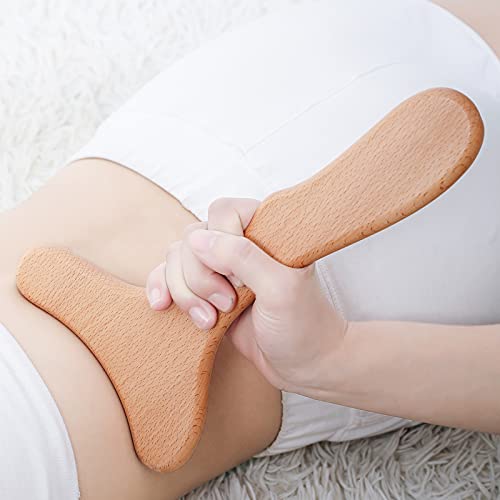
Komogir Wood Therapy Massage Tool Wooden Lymphatic Drai Komogir Wood Therapy Massage Tool Wooden Lymphatic Drai

Practical tool to support daily lymphatic flow.

View on Amazon

If you only CHOOSE one: the POPCHOSE Dry Brushing Body Brush, Natural Bristle Dry S — it is the foundational tool for getting lymph flowing daily.

RESULTS REALITY CHECK

What Will Lymphatic Drainage Change for You?

Pick what you’re hoping to see, check what’s true for you, and get a clear-eyed read on your likely ‘before and after’ — plus how to make it last.
What are you hoping to see?
0
Your match score

Your gentle starter plan
    ↺ Start over
    Plantifique Jade Stone Gua Sha tool
    A simple jade gua sha is the one tool that turns this from “interesting article” to “5 minutes a day routine.”
    Our gua sha pick
    Plantifique Jade Stone Gua Sha (100% Handcrafted)
    A smooth, real-jade gua sha that glides beautifully with a little facial oil — the affordable, well-made tool we recommend for the routines here.

    Why the ‘before and after’ looks so dramatic

    Lymphatic drainage massage uses light, rhythmic strokes to nudge stagnant fluid out of your tissues and toward the lymph nodes that filter it. When that fluid moves, puffiness visibly drops — which is exactly what you see in a side-by-side photo. The transformation is genuine; it’s just important to know it’s mostly water, not fat.

    Woman gently performing lymphatic self-massage at the neck and collarbone with light fingertip pressure
    The lightest pressure works best — lymph vessels sit just under the skin, so you want a featherlight glide, not deep tissue. Start at the collarbone before working upward to the face.

    According to PubMed-indexed research by Tornatore et al. (2020), a randomized clinical trial in 99 post-surgical patients showed that manual lymphatic drainage produced measurably faster reductions in pain and limb circumference than rehabilitation alone — with visible differences as early as days 2-6 (DOI 10.1097/MRR.0000000000000417). The “before and after” isn’t placebo — it’s documented.

    Here’s the part the before-and-after photos never mention: drainage clears the fluid, but it doesn’t fix why you puff up in the first place. For a lot of people, that’s an everyday toxic load — processed food, salt, plastics, and sluggish elimination — keeping the body in fluid-retention mode.

    The Bigger Picture

    Draining the fluid — or fixing why it builds?

    Massage clears the puffiness. The Toxic Load Assessment helps you find what keeps your body holding water — so the ‘after’ lasts longer.
    See the Toxic Load Assessment →
    Woman with lean defined silhouette and slim ankles after 8 weeks of body lymphatic drainage routine
    Illustrative — the three zones most people notice shifting first: cervical (jaw + neck), abdominal (lighter, less bloated), and lower-leg (slimmer ankles, no end-of-day puffiness).
    The three zones that most people notice shifting first: cervical (jaw + neck), abdominal, and lower-leg drainage. Illustrative; pattern varies by starting baseline and consistency.

    How to make your results last

    Because the change is fluid, it fades as fluid returns. You can stretch the ‘after’ by drinking enough water, easing off salty and ultra-processed foods, moving your body daily, and booking a short series rather than a single session. Many people also keep a gentle at-home routine going between appointments — see our step-by-step at-home guide for that.

    Woman drinking water to support lymphatic flow and help drainage results last longer
    Hydration is the single biggest lever for making results last — lymph fluid is mostly water, so dehydration immediately reverses the puffiness drop.

    According to PubMed-indexed research by Liang et al. (2020), a systematic review of 17 randomized controlled trials covering 1,911 patients confirmed that manual lymphatic drainage produces its strongest measurable effects in shorter intervention windows (1 month) and in patients under age 60 (DOI 10.1097/MD.0000000000023192). Translation: don’t expect dramatic results from a single 60-minute session — build a 4-8 week rhythm.

    And if you’re chasing that less-puffy look mainly in your face, a few minutes of facial lymphatic massage or gua sha in the morning is often all it takes.

    Hydration and de-bloating support lymphatic flow
    Most of the lymphatic-massage ‘after’ is fluid leaving the tissues – hydration helps it last.

    What the research shows

    The ‘before and after’ photos are real — but it helps to know what’s really changing. Based on articles retrieved from PubMed:

    According to PubMed-indexed research by Lin et al. (2022), a meta-analysis of 11 RCTs covering 1,564 patients found that manual lymphatic drainage significantly reduces both the incidence of lymphedema and pain intensity, with the pain-relief effect being statistically robust across study designs (DOI 10.1016/j.clbc.2022.01.013). For most people, the “lighter, looser” feeling after sessions reflects real reduction in inflammatory load, not just relaxation.

    It genuinely reduces swelling — for a while

    In a controlled study of patients after total knee replacement, adding manual lymphatic drainage to standard care significantly reduced early lower-limb swelling and pain. Tellingly, the benefit was strongest in the first days and had evened out by six weeks — a clear sign the effect is about moving fluid, not a permanent change (Guney-Deniz et al., Physiotherapy Theory and Practice 2022; DOI: 10.1080/09593985.2022.2044422).

    Its real medical home is fluid conditions

    Clinical guidelines place manual lymphatic drainage within ‘complex physical therapy’ — alongside compression, exercise and skin care — for genuine lymphatic and fat-swelling disorders like lipedema (Reich-Schupke et al., JDDG 2017; DOI: 10.1111/ddg.13036). That’s the clear-eyed frame: it moves fluid beautifully, which is why the ‘after’ looks de-puffed — but it isn’t a fat-loss or body-contouring treatment.

    So what’s realistic?

    Expect to look and feel less puffy, often within a day, with the effect fading unless you maintain it. Think of it as pressing the ‘reset’ button on fluid — lovely, real, and temporary.

    Good to know: Lymphatic massage is gentle and low-risk, but it’s not for everything. Skip it over active infection, undiagnosed lumps, or a suspected blood clot, and see a clinician for persistent, painful, or one-sided swelling — which can signal lymphedema or a medical cause. For post-surgical work, only proceed with your surgeon’s clearance and a certified therapist.

    Frequently asked questions

    Is lymphatic drainage before and after permanent?

    No — the change is mostly fluid, so it’s temporary. You’ll look less puffy for hours to a day or two, longer with a series of sessions plus hydration and lower salt. It isn’t fat loss.

    How soon will I see a difference?

    Usually quickly — the most visible ‘after’ is in the first 24–48 hours, strongest right after the session as fluid moves out of the tissues.

    Does it help you lose weight?

    Not real weight. Any ‘loss’ on the scale is water, which returns. Its strengths are de-bloating, post-surgical swelling, and feeling lighter — not fat reduction.

    How many sessions to keep the results?

    For a lasting look, most people do a short series and then occasional maintenance, paired with daily movement, hydration, and less salty/processed food.

    This article is for general education and isn’t medical advice. Persistent, painful, one-sided, or rapidly worsening swelling — or swelling with redness, warmth, fever, or shortness of breath — needs a clinician, as it can signal lymphedema, infection, a blood clot, or a heart/kidney issue. When in doubt, get it checked.

    Share your before & after

    Done a 30-day routine and want to share what changed? Real photos from real readers carry more weight than any illustration ever could. Reply to any of my emails with your before-and-after and a sentence about what you noticed — I credit by first name and feature with permission.

    Leave a Reply

    Your email address will not be published. Required fields are marked *