

Dry brushing has earned its spot in the wellness world for a simple reason: it feels wonderful, it takes two minutes, and it leaves your skin noticeably smoother. You have probably seen it tied to bold promises about “detox” and lymphatic drainage, too. This guide separates what dry brushing genuinely does from what is mostly tradition, then hands you a personalized routine and the correct stroke pattern so you get the real benefits, safely.
A puffy, heavy, sluggish feeling usually has an upstream cause
Find Your Dry Brushing Routine
 POPCHOSE Dry Brushing Body Brush, Natural Bristle Dry S
Stimulates lymph flow before showering. Use upward strokes toward the heart for 3-5 minutes.
View on Amazon DEBETOOL Dry Brushing Set – Natural Boar Bristle Body &
Stimulates lymph flow before showering. Use upward strokes toward the heart for 3-5 minutes.
View on Amazon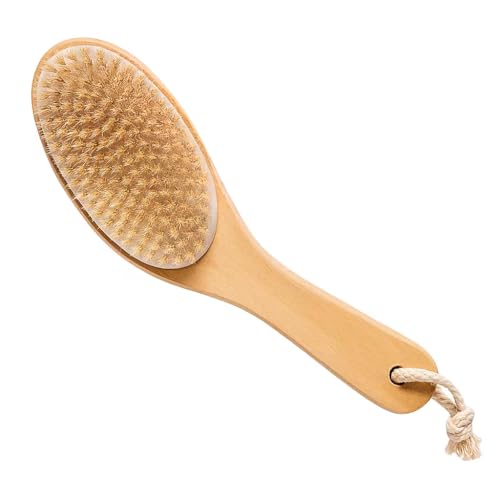 100% Natural Boar Bristle Body Brush with Contoured Woo
Natural bristles in the correct stiffness for daily lymph stimulation without skin irritation.
View on Amazon EcoTools Bath Bristle Brush, Bath Brush with Long Handl
Natural bristles in the correct stiffness for daily lymph stimulation without skin irritation.
View on AmazonIf you only CHOOSE one: the POPCHOSE Dry Brushing Body Brush, Natural Bristle Dry S — it is the foundational tool for getting lymph flowing daily.
According to PubMed
A 2020 randomized clinical trial in the International Journal of Rehabilitation Research documented that manual lymphatic drainage produces significantly greater reductions in pain and edema than standard care alone, with effects measurable within the first few days of treatment. A separate 2020 review in the Journal of Applied Physiology on the brain's glymphatic system established lymphatic-style drainage as the primary clearance pathway for metabolic waste — supporting the broader concept that whole-body lymph flow is foundational to detoxification.
Tornatore L, De Luca ML, et al. Effects of combining manual lymphatic drainage and Kinesiotaping. Int J Rehabil Res 2020. DOI 10.1097/MRR.0000000000000417
Benveniste H, Elkin R, et al. The glymphatic system and its role in cerebral homeostasis. J Appl Physiol 2020. DOI 10.1152/japplphysiol.00852.2019
When lymph stagnates, your toxic load goes up
The lymphatic system is your body's waste-removal highway. When it slows down — from prolonged sitting, dehydration, chronic stress, mold exposure, heavy metals, or surgical scarring — metabolic byproducts and environmental toxins accumulate faster than they can clear. The symptoms (swelling, brain fog, fatigue, recurrent infections, stubborn weight) often get blamed on something else.
The Toxic Load Assessment maps which root-cause pattern is driving YOUR stagnation — mold, metals, parasites, or adrenal — so your lymph work actually unblocks what's upstream.
Take the Toxic Load Assessment →What is dry brushing?
Dry brushing is exactly what it sounds like: sweeping a firm, natural-bristle brush over dry skin, usually right before a shower. It is a form of physical exfoliation that has been practiced for centuries, and it requires nothing more than a brush made of natural fibers like boar bristle, plus two or three minutes.
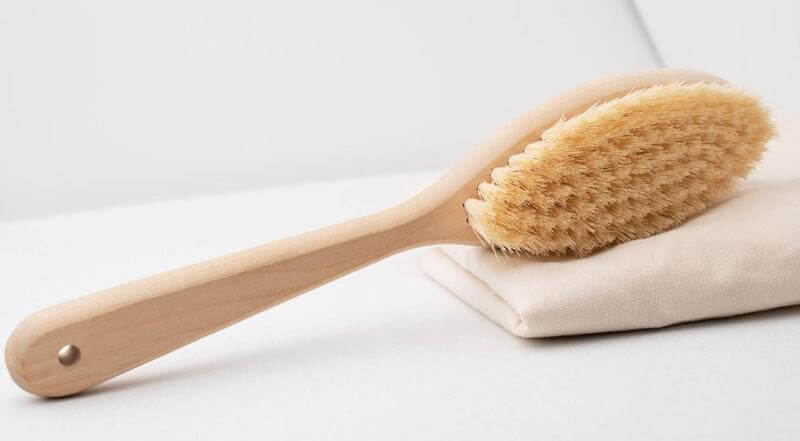
The technique is simple: brush in long strokes over dry skin, always moving toward your heart, then hop in the shower and moisturize afterward for the best results. People reach for it because it leaves skin feeling smooth and looking brighter, and because the brisk sensation is genuinely energizing first thing in the morning.
How to dry brush with the proper technique
Good technique is what separates a pleasant, skin-smoothing habit from an irritating one. Start with a natural boar-bristle brush with a long handle so you have control and reach. The single most important rule: always brush toward your heart, on dry skin, before you shower. Use long, light sweeps rather than hard scrubbing.
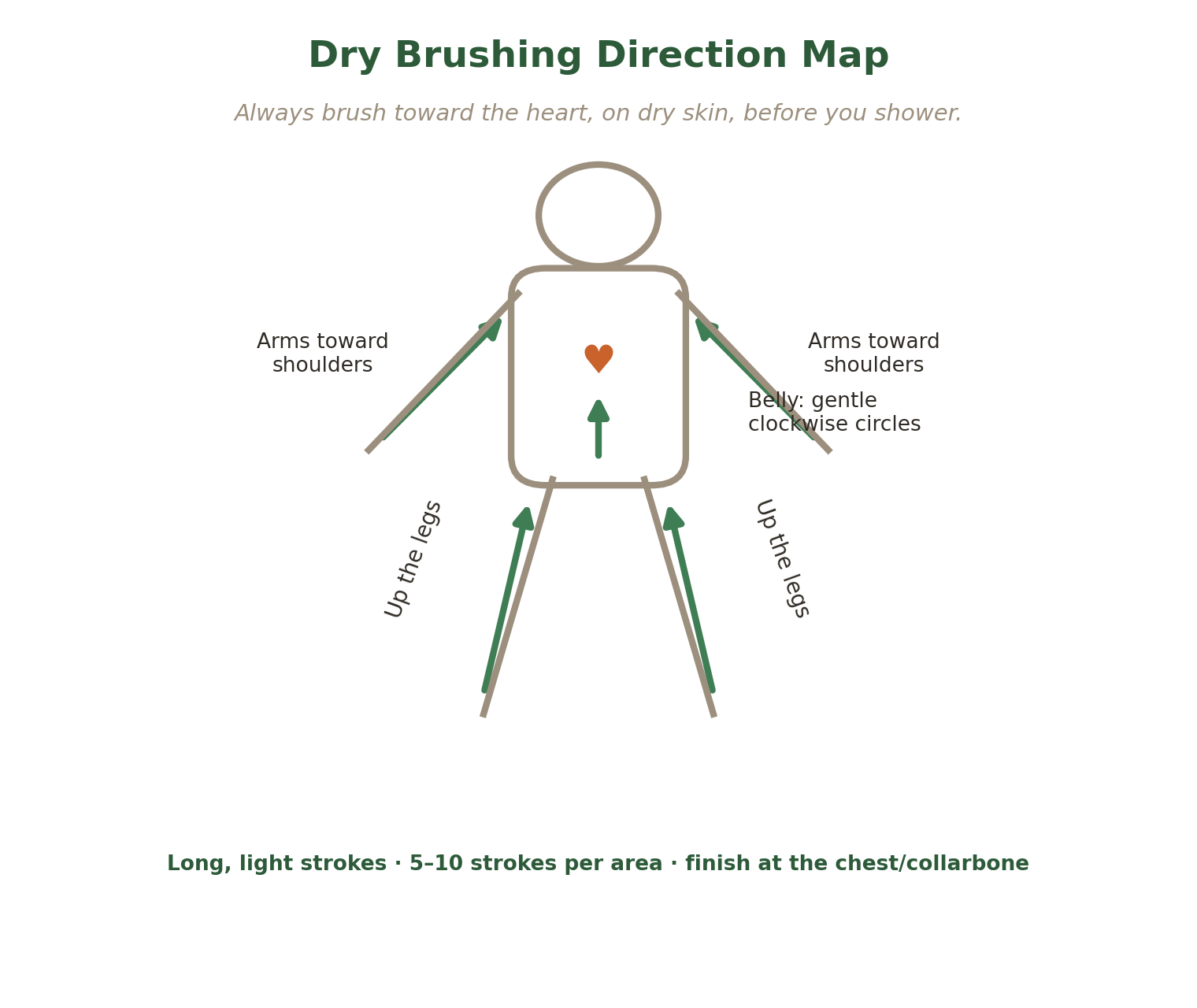
- Start at your feet and work up each leg with long strokes toward the heart.
- Move to your arms, brushing from the hands up toward the shoulders.
- On the belly, use gentle clockwise circles to follow the natural direction of digestion.
- Use light pressure — aim for a soft pink flush, never red, raw, or stinging skin.
- Finish at the chest and collarbone, then shower and apply a good moisturizer.

What the research actually says about dry brushing
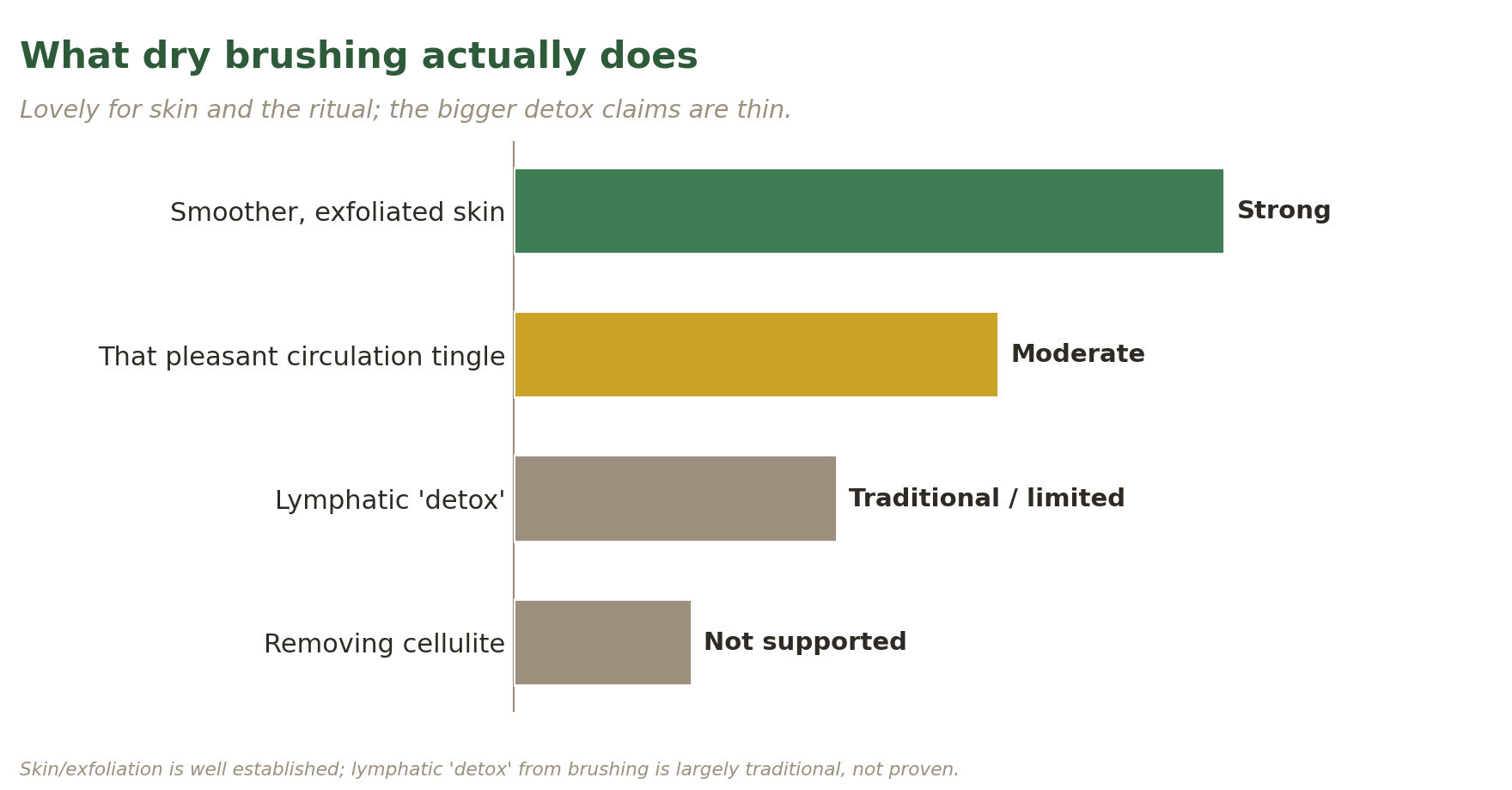
Here is the picture, because you deserve it. The benefit with the strongest support is the simplest one: dry brushing is effective mechanical exfoliation. Sweeping bristles across the skin lifts away dead surface cells, which is why skin looks smoother and brighter and why lotions absorb better afterward. The invigorating, energizing feeling is real too — it comes from stimulating surface circulation and nerve endings.
The bigger claims — that a brush “detoxifies” your lymphatic system or erases cellulite — are where the evidence thins out. The closest well-studied relative of dry brushing is manual lymphatic drainage (MLD), a hands-on therapy performed by trained practitioners. According to research indexed on PubMed, a Cochrane systematic review found that MLD is safe and may offer modest additional benefit for swelling, but mainly in a specific clinical group (people with breast-cancer-related lymphedema), and the evidence was limited and inconsistent (Ezzo et al., 2015, Cochrane Database of Systematic Reviews, DOI). A later systematic review reached the same cautious conclusion, noting conflicting findings and a need for better studies (Thompson et al., 2020, Journal of Cancer Survivorship, DOI), and a 2022 meta-analysis of randomized trials found MLD helped with pain but did not significantly reduce limb volume or improve quality of life (Lin et al., 2022, Clinical Breast Cancer, DOI).
The takeaway: if even careful, hands-on lymphatic massage shows only modest, conditional benefit in clinical studies, it is wise to treat “a dry brush detoxes your lymph” as tradition rather than proven fact. Enjoy dry brushing for what it reliably delivers — smoother skin and an energizing ritual — and let your liver, kidneys, and lymph (helped most by movement, hydration, and sleep) do the actual detox work.
The realistic benefits of dry brushing
- Smoother, softer skin. Exfoliation is dry brushing’s most dependable payoff — it sloughs off dull surface cells.
- Brighter, more even appearance. With dead cells lifted, skin looks fresher and moisturizer sinks in better.
- An energizing, wake-up ritual. The brisk sensation stimulates surface nerves and circulation — many people love it as a caffeine-free morning lift.
- A few mindful minutes of self-care. It is a simple, grounding body-care habit you can do at home for the price of a brush.
- Better prep for shaving or self-tanner. Exfoliated skin shaves more smoothly and takes self-tanner more evenly.
Why lymphatic flow matters (and what really keeps it moving)
Your lymphatic system is the body’s drainage and waste-clearance network, and keeping it flowing well supports immunity and that light, un-puffy feeling. Unlike your blood, lymph has no central pump — it relies on muscle movement, breathing, and hydration to circulate. Dry brushing offers a pleasant surface stimulation, but the heavy lifting comes from walking, deep breathing, drinking enough water, and good sleep.

If you want hands-on support, a professional lymphatic drainage massage is the more evidence-backed route, and you can pair either approach with the broader detox foundations that keep your exit pathways open.
A great dry brush to start with
You do not need anything fancy. A natural boar-bristle set with a long handle (and a softer face brush) covers everything. This well-rated set is a solid, affordable starting point:
Nevlers Natural Boar Body Brush Set with Detachable Cellulite Brush
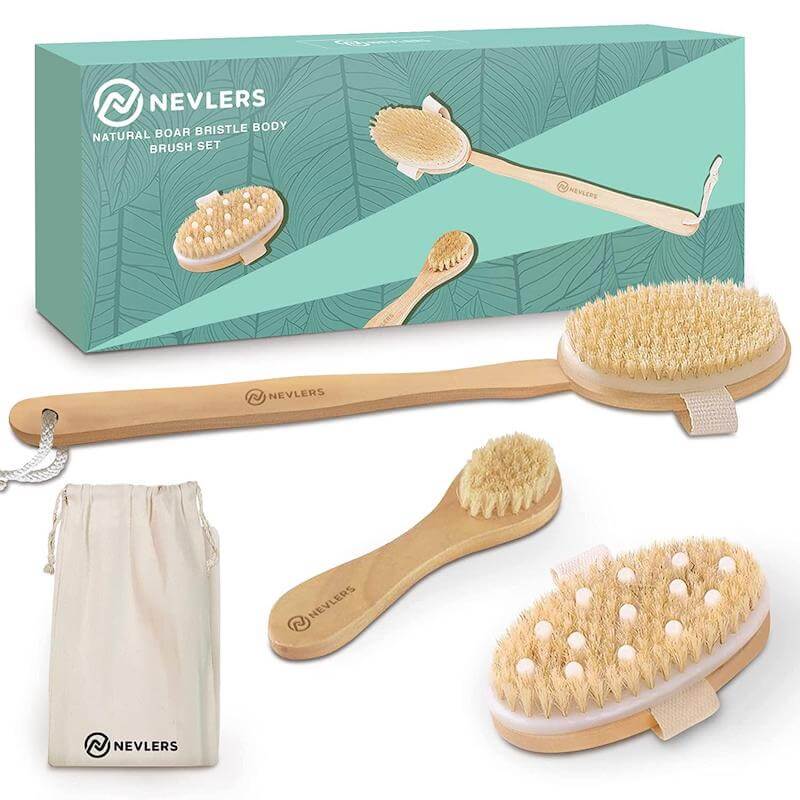
- 100% natural boar bristles for gentle, effective exfoliation
- Long wooden handle so you can reach your back and the backs of your legs
- Includes a body brush, a face brush, and a hand brush, plus a travel storage bag
- Doubles as a back scrubber and shower brush — spa-style care at home
- Highly rated, with a 1-year limited warranty
How often should you dry brush?
For most people, 2 to 4 times a week is the sweet spot when you are starting out, and once your skin adjusts you can move to daily if you keep the pressure light. The skin is the limiting factor here, not the lymph: daily vigorous brushing can leave sensitive skin irritated, so let comfort be your guide. If you have sensitive, reactive, or condition-prone skin (eczema, psoriasis, rosacea), start with once or twice a week using a soft brush and the lightest pressure, and skip any broken, inflamed, or sunburned areas entirely.
Does dry brushing actually work?
It depends entirely on what you are hoping for. For smoother, brighter, better-exfoliated skin and an invigorating morning ritual, yes — dry brushing absolutely works, and the effect is immediate. For deep “detoxification” or dramatic lymphatic cleansing, the clear answer is that the evidence does not support those bigger claims, as the research above shows. Set your expectations around the skin and sensory benefits, treat the rest as a pleasant bonus, and you will never be disappointed.
Does dry brushing help with cellulite?
This is the most common myth, so it is worth being clear: there is no good evidence that dry brushing removes or permanently reduces cellulite. What it can do is temporarily plump and smooth the skin’s surface through stimulation and exfoliation, which may make skin look a little more even for a short while. Cellulite itself is a normal feature of how fat, connective tissue, and skin are structured, and a brush cannot change that underlying architecture. Enjoy dry brushing for the genuine skin-smoothing perks, and be skeptical of any product or routine that promises to “erase” cellulite.
How to clean a dry brush
Boar bristles trap dead skin and oils, so give your brush an occasional wash. Dip it in warm, soapy water for a few minutes, then use your fingers or a soft cloth to loosen any debris. To sterilize the bristles now and then, dip the brush briefly in rubbing alcohol, blot lightly with a towel, and let it air dry completely before using it again.
Always let the brush dry fully and store it somewhere airy — leaving it damp can cause the bristles to break down or split over time. You do not need to deep-clean it often; every few weeks, or whenever it feels like it needs it, is plenty. With basic care, a good brush lasts a long time.
Can you dry brush your face?
Yes — with a dedicated, much softer face brush and a very gentle touch. Facial skin is far more delicate than the body, so the goal is light exfoliation, not scrubbing.
- Use a soft, small natural-bristle face brush — never your body brush.
- Work in light, upward, circular motions across the forehead, cheeks, and chin, then sweep gently down the neck.
- Go over each area only once or twice to avoid irritation.
- Follow with moisturizer to keep skin hydrated and glowing. Skip the face entirely if you have active breakouts, rosacea, or sensitive, reactive skin.
Can dry brushing make you feel sick?
No — dry brushing does not cause nausea or illness. It is a surface exfoliation technique, not something that floods your system. That said, people with sensitive skin can experience irritation if they use too much pressure. If you notice itching, redness, stinging, or any discomfort after brushing, ease off the pressure or pause, and check with a dermatologist about what suits your skin type.
Can dry brushing spread cancer?
Dry brushing does not cause or spread cancer. The sensible precautions are simple: keep the bristles dry, use light pressure, and never brush over moles, skin lesions, or any area your doctor has flagged. If you have a personal or family history of skin cancer or any suspicious skin changes, talk with your dermatologist before adding dry brushing, and always brush around — never over — anything unusual on your skin.
Chronic Puffiness And Sluggishness Usually Track With Something Bigger
More from thewellthieone.com
The links used on thewellthieone.com are affiliate links, which may provide a small commission. This does not increase the price of the goods for the consumer whatsoever. What it does is ensure that useful content like this can continue to be produced. Thank-you for enjoying our content and allowing us to continue to provide more.