
Jawline Lymph Node Cause Finder


If you only CHOOSE one: the Rena Chris Gua Sha Facial Tools: Jade Stone Guasha Tool — it is the foundational tool for getting lymph flowing daily.

Which lymph nodes sit along the jawline — and what each one drains
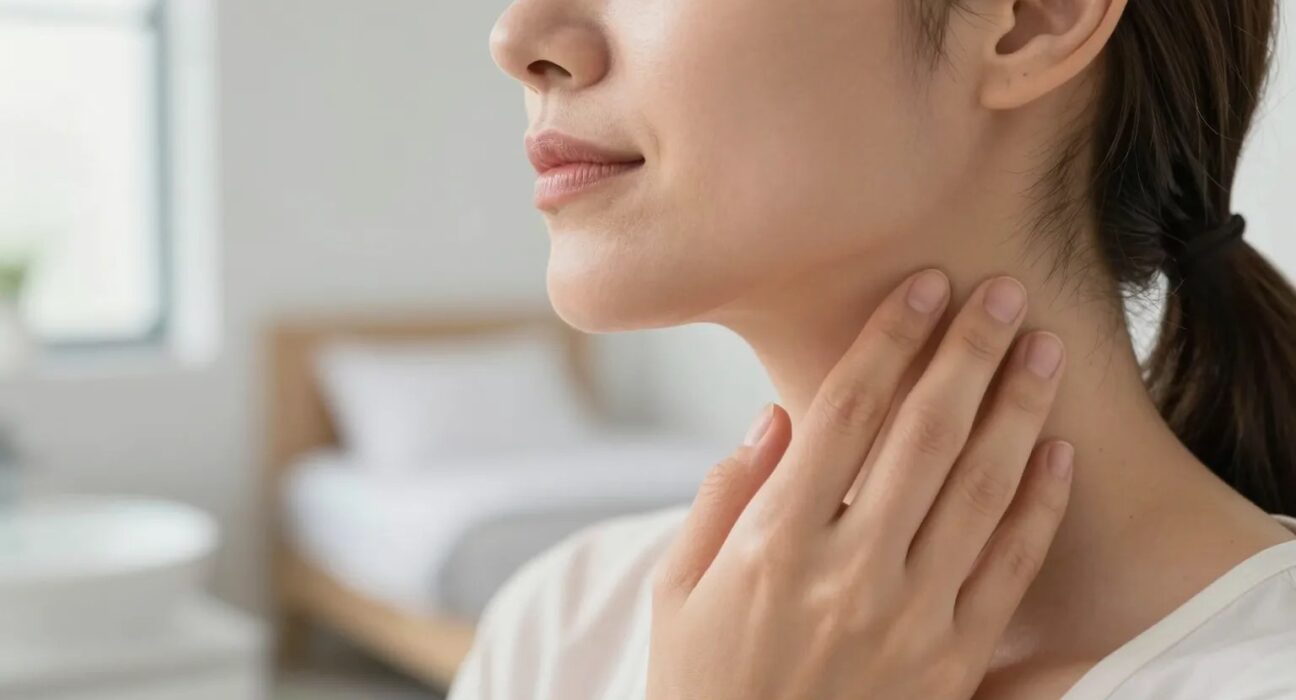
The “jawline lymph nodes” most people feel are not one structure but two main groups: submandibular nodes (under the jaw, on either side of midline) and preauricular nodes (just in front of the ear). Each group drains a specific territory, and which ones swell tells you a lot about what’s going on upstream.
- Submandibular nodes drain the tongue, gums, lips, cheeks, and front of the mouth. Swelling here usually points to dental issues, mouth ulcers, sinus drainage, or upper respiratory infection.
- Submental nodes (under the chin midline) drain the front teeth, gum line, lower lip, and chin skin. Swelling here often comes from dental abscesses or lower-lip irritation.
- Preauricular nodes drain the outer ear, side of the face, and scalp. Swelling here can come from ear infections, scalp conditions, or eye-area allergens.
- Cervical chain (along the neck, extending down from the jaw) drains deeper tissues — throat, thyroid area, deep facial structures.
According to PubMed-indexed research by Pal et al. (2020), perilymphatic mast cells form a histamine-mediated signaling loop that directly influences which lymph nodes respond first to inflammatory triggers — the node closest to the source generally swells first and largest (DOI 10.1152/ajpregu.00255.2019). Translation: where it swells points to where the trigger is.


How to support jawline lymph drainage naturally
The lymph nodes under your jaw drain into the deep cervical chain, then down through the right (or left) lymphatic duct into the venous system at the collarbone. You can support that drainage with a 5-minute daily routine that uses light pressure — no special equipment needed.
According to PubMed-indexed research by Ramadan (2024), manual lymphatic drainage has documented efficacy supporting lymph vessel emptying when applied with proper light pressure (DOI 10.12968/bjcn.2024.29.2.83). Self-massage along the jaw and neck works the same vessels.
- Open the collarbone first. Two fingers in the soft hollow above your collarbone, light downward pumping 20 times. This opens the drainage terminus where your jawline lymph eventually empties.
- Stroke the neck. Flat fingers, gently stroke from behind the ear down the side of the neck toward the collarbone, 10 times per side.
- Jawline strokes. Place fingertips at the chin midline. Light pressure, stroke outward along the jawline toward the ear, 10 times per side.
- Pre-auricular pumping. Gentle circles just in front of each ear, 30 seconds.
- Drink water before food. Lymph is mostly water — being even slightly dehydrated drops drainage immediately.
Pair this with addressing the upstream cause (dental issue, sinus inflammation, allergens) and most jawline lymph node swelling settles within 1-2 weeks.
When lymph stagnates, your toxic load goes up
The lymphatic system is your body's waste-removal highway. When it slows down — from prolonged sitting, dehydration, chronic stress, mold exposure, heavy metals, or surgical scarring — metabolic byproducts and environmental toxins accumulate faster than they can clear. The symptoms (swelling, brain fog, fatigue, recurrent infections, stubborn weight) often get blamed on something else.
The Toxic Load Assessment maps which root-cause pattern is driving YOUR stagnation — mold, metals, parasites, or adrenal — so your lymph work unblocks what's upstream.
Take the Toxic Load Assessment →According to PubMed
A 2020 randomized clinical trial in the International Journal of Rehabilitation Research documented that manual lymphatic drainage produces significantly greater reductions in pain and edema than standard care alone, with effects measurable within the first few days of treatment (DOI 10.1097/MRR.0000000000000417). A separate 2020 review in the Journal of Applied Physiology on the brain's glymphatic system established lymphatic-style drainage as the primary clearance pathway for metabolic waste — supporting the broader concept that whole-body lymph flow is foundational to detoxification.
Tornatore L, De Luca ML, et al. Effects of combining manual lymphatic drainage and Kinesiotaping. Int J Rehabil Res 2020. DOI 10.1097/MRR.0000000000000417
Benveniste H, Elkin R, et al. The glymphatic system and its role in cerebral homeostasis. J Appl Physiol 2020. DOI 10.1152/japplphysiol.00852.2019
Which lymph nodes live in the jawline (anatomy quick reference)
- Submandibular nodes — small nodes sitting just under the jaw on both sides, usually 3-6 per side. They drain the lower teeth and gums, lower lip, anterior two-thirds of the tongue, and chin.
- Submental nodes — a smaller cluster directly under the chin in the midline. They drain the tip of the tongue, midline lower lip, and lower incisors.

The 5 most common causes of swollen jawline lymph nodes
1. Dental or gum infection (most common one-sided cause)
2. Upper respiratory infection (cold, flu, sinus, strep)
3. Skin or scalp inflammation (acne, dermatitis, infections)
4. Allergies (seasonal or food)
5. Chronic lymphatic congestion
When jawline swelling is a red flag
- A single node that is hard, fixed in place, and painless
- Swelling that has persisted more than 4-6 weeks with no infection, dental, or allergy explanation
- Swelling combined with unexplained weight loss, night sweats, or persistent fatigue
- Rapid growth over days
- Skin over the node becoming red, hot, or breaking down
According to PubMed — a 2021 review by Li et al. in the Ear, Nose & Throat Journal documented that the majority of jawline and upper cervical lymph node enlargements resolve with conservative management once the upstream trigger (allergy, dental issue, mild infection) is addressed — surgical workup is reserved for nodes that remain hard, fixed, and growing past 4–6 weeks (DOI 10.1177/01455613211043692). Most tender, mobile nodes calm down on their own with gentle drainage support.


