
Rebounding for lymphatic drainage at home is one of the simplest ways to move stagnant lymph fluid, reduce puffiness, and feel more energized without leaving your living room. A few minutes of gentle bouncing on a mini trampoline each day may help the lymphatic system drain waste, bring oxygen to tissues, and support natural detox pathways. If the idea of another complicated protocol makes you tired already, that is exactly why rebounding is worth trying, because the movement is tiny, easy, and forgiving.
I started experimenting with rebounding after reading that it might help with lingering puffiness and sluggish mornings. I already had a dry brushing routine in place, but I wanted something that added movement, not just stimulation. The first week felt silly. The second week I could tell my legs felt lighter. This guide is the beginner version of what I figured out, plus the specific rebounders I recommend and a short, follow-along video so you can start today.
What Is Rebounding for Lymphatic Drainage?
Rebounding is a low-impact workout done on a small trampoline, also called a rebounder. The up-and-down motion briefly increases and decreases G-force, which may help squeeze the one-way valves in the lymphatic system. Unlike the heart, the lymph system has no pump of its own. It relies on muscle movement, breath, and gravity shifts to push fluid through the body.
Studies suggest that rhythmic vertical motion may support lymph flow and whole-body circulation. The National Library of Medicine notes that the lymphatic system clears cellular waste, filters pathogens, and returns excess fluid to the bloodstream, which is why many detox and anti-inflammation protocols focus on keeping lymph moving.
The best part is that rebounding does not require sweat, speed, or skill. A light bounce where your heels barely leave the mat counts as a lymphatic session. This is often called a “health bounce” and it can be done in slippers while you wait for coffee to brew.
What you will learn in this video:
- A complete 10 minute beginner lymphatic rebounder flow you can follow today
- The “big 6” foundational moves that target major lymph chains
- How gentle tapping, rubbing, and bouncing combine to support drainage
- Why a health bounce can feel easier than a walk yet move more lymph

Why Rebounding May Help Your Lymphatic System
The lymph system is often called the body’s waste highway. When it moves well, you may feel less bloated, less puffy around the eyes, and less heavy in the legs. When it stagnates, waste can linger and your immune system has to work harder. This is why so many natural health protocols include daily lymphatic movement.
What’s draining your brain?
Brain fog, fatigue, sluggish digestion — usually one of 4 toxic load types is behind it: heavy metals, parasites, mold, or burned-out adrenals. Each type needs a completely different protocol. Take the 2-minute quiz to find out which one is draining you.
Potential Benefits Worth Noting
- Gentle circulation boost. The up-and-down motion shifts fluid without the pounding impact of running.
- Ankle and leg lightness. Many people report less swelling in the lower legs after two to three weeks.
- Easier morning movement. A two minute bounce may help shake off grogginess when coffee alone is not cutting it.
- Low joint stress. A quality rebounder absorbs impact, which is kinder on knees and ankles than pavement running.
- Mood lift. Light aerobic movement releases endorphins, and bouncing has a playful quality that is hard to stay grumpy through.
Rebounding is not a medical treatment, and it is not going to undo the effects of a pizza-and-soda lifestyle on its own. Paired with grounding practices, hydration, and whole foods, it becomes a small daily nudge that compounds over time.
How to Start Rebounding for Lymphatic Drainage at Home
The simplest starting routine is two to ten minutes of light bouncing, daily, before showering. Keep your heels close to the mat. Breathe through your nose. Stop when you feel like you have done enough, not when you are exhausted. The point is consistency, not intensity.
A Simple Beginner Protocol
- Warm up for 1 minute. Stand on the rebounder and shift your weight side to side. Let your shoulders relax.
- Health bounce for 3 to 5 minutes. Bend knees slightly, keep heels almost touching the mat, and bounce at a steady rhythm.
- Add gentle arm swings. Let your arms move naturally. This helps move lymph through the upper body.
- Try 10 small heel lifts. Pop your heels up while bouncing. This targets calf lymph return.
- Cool down for 1 minute. Slow the bounce, then step off and take a few slow breaths.
Most beginners notice a difference within two weeks. The key is showing up every day for a short session rather than doing a long workout once a week.

Best Rebounders for Lymphatic Drainage
Not all mini trampolines are built the same. Cheap spring rebounders can be jarring, noisy, and short-lived. When you shop, look for a quiet bungee or strong spring system, a non-slip mat, and a weight capacity well above your own. The rebounders below are ones I would actually keep in my living room.
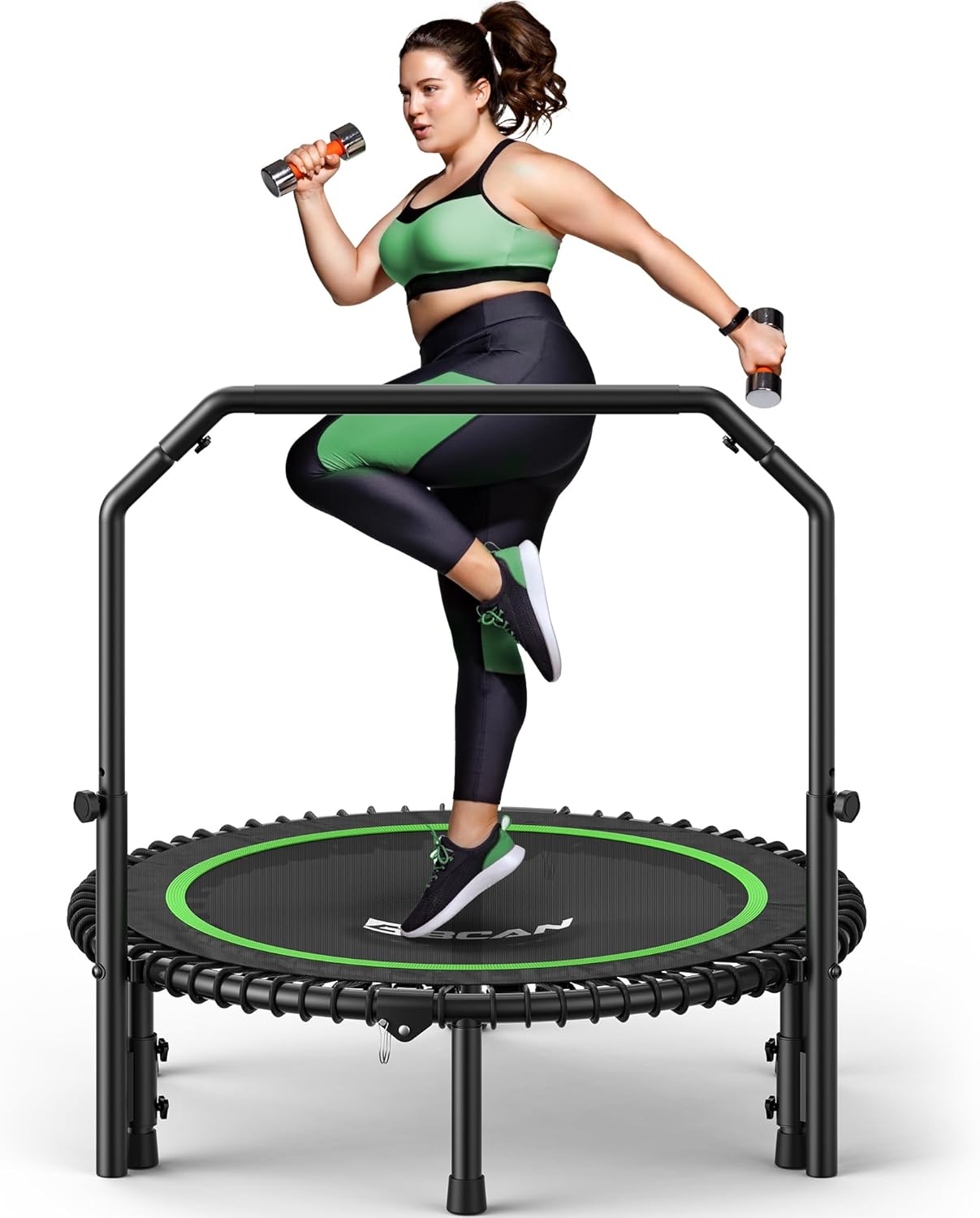
BCAN BT2 Mini Rebounder with Adjustable Bar
Source: amazon.com
Sturdy bungee rebounder with adjustable handle for beginners and balance support.
The Wellthie One Review
BCAN BT2 Rebounder Attributes
- Bungee suspension system, noticeably quieter than spring rebounders
- Adjustable balance bar, great for beginners and anyone with balance concerns
- 450 to 550 lb weight capacity, feels rock solid under foot
- 40 inch mat gives plenty of room for wider stances
This is the rebounder I would hand a nervous beginner or anyone recovering from an injury who wants the bar to hold on to. The bungees are forgiving on the joints and the handle gives a mental safety net that makes consistency easier in the first few weeks.
Common Mistakes to Avoid
- Bouncing too hard too soon. Lymphatic drainage is about rhythm, not height.
- Holding your breath. Nose breathing supports the vagus nerve and circulation.
- Skipping days. Two minutes daily beats 20 minutes once a week.
- Using a toy trampoline. Kid trampolines are usually too bouncy and unstable for adult lymphatic work.
- Rebounding on a full stomach. Wait 60 to 90 minutes after meals.

How to Fit Rebounding Into a Real Day
The hardest part is not the exercise. It is remembering to do it. These are the tiny anchors that kept me consistent.
- Morning coffee bounce. Bounce for 3 minutes while water boils.
- Podcast bounce. Put on a 10 minute podcast and bounce until it ends.
- TV breaks. Bounce during commercial breaks or between episodes.
- Pre-shower bounce. Combine with dry brushing before a warm shower for a morning reset.
BCAN SP2 Foldable Mini Trampoline

Source: amazon.com
Twice-foldable rebounder with removable foam handle, good for apartments.
The Wellthie One Review
BCAN SP2 Foldable Attributes
- Folds in half and in half again, slides easily under a couch or bed
- Adjustable foam handle you can remove once you feel steady
- 40 inch and 48 inch versions for different room sizes
- 330 to 440 lb capacity, sturdier than the price suggests
This is the pick for small apartments, rentals, or anyone who travels. I have used the foldable version in a spare room and it takes about 10 seconds to tuck away. The bounce is not quite as plush as a full size bungee rebounder, but for most beginners the difference is minor and the convenience wins.
How Long Until You Feel a Difference?
Most people notice lighter legs and less morning puffiness within 7 to 14 days of consistent daily bouncing. Deeper benefits like better sleep, smoother digestion, or clearer skin usually take a month or more. Rebounding pairs beautifully with other lymphatic habits such as dry brushing, warm and cold water contrast showers, and staying well hydrated.
If you are just coming back from an illness, start with 1 to 2 minutes. Lymph moves what the body is ready to move. Slamming through a 20 minute workout early on can make you feel worse, not better, because the body is suddenly flooded with debris to filter.
Who Should Be Cautious
Rebounding is gentle, but it is not for everyone. Talk to your doctor before starting if you are pregnant, have a pelvic organ issue, recovering from surgery, have advanced osteoporosis, or have a history of vertigo. Modifications exist for almost all of these, and a physical therapist can point you toward the right starting level.
A Budget-Friendly Starter Rebounder
If you are not sure rebounding is for you, there is no reason to spend over 100 dollars on day one. A solid starter rebounder lets you test the habit for a month before upgrading.
ZCMHAXJ Foldable Mini Trampoline

Source: amazon.com
Affordable foldable rebounder in 36, 40, and 48 inch sizes for adults and kids.
The Wellthie One Review
ZCMHAXJ Foldable Attributes
- Three size options so you can match your space
- 440 lb capacity, well above average for the price tier
- Folds flat for easy storage, comes with a carry bag
- Good entry point for first-time rebounders
This budget pick is a reasonable way to try the habit before committing to a premium rebounder. The bounce is firmer than the BCAN lines, so the body gets a more “exercise” feeling and a little less “glide” feeling. For gentle lymphatic work, keep bounces small.
Frequently Asked Questions
How long should I rebound each day for lymphatic drainage?
Start with 2 to 5 minutes daily. Work up to 10 to 15 minutes over a few weeks. More is not better. Consistency is what moves the needle.
Can I rebound if I have weak pelvic floor muscles?
Go slow and consider working with a pelvic floor physical therapist first. The health bounce, where feet stay near the mat, is usually a safe place to begin for most people. If you feel any pressure or leaking, stop and seek guidance.
Do I need special shoes for rebounding?
No. Most people rebound barefoot or in grippy socks. This deepens proprioception and may support foot and ankle strength. Avoid thick soled running shoes, which can feel unstable.
Will rebounding help with cellulite?
Studies are limited, but many people report smoother skin over time because of improved circulation and lymph flow. It is not a dermatology treatment, but it may be a pleasant side benefit.
Is rebounding safe for older adults?
Yes, especially with a balance bar rebounder. Many seniors do short daily sessions safely. Start with the handle for confidence and check with your doctor if you have balance concerns.
The Bottom Line
Rebounding for lymphatic drainage is one of those rare natural health practices that is genuinely easy to start. You do not need a gym, fancy clothes, or a pricey program. You need a reliable rebounder, a few minutes a day, and the patience to let small consistent movement do its work. If you already dry brush, practice grounding, or take digestive bitters, rebounding is a natural next layer to add.
Pick one rebounder, put it in the middle of the room, and commit to five minutes a day for two weeks. The lymphatic system is patient, but it is also deeply responsive when you finally start moving it.
This post may contain affiliate links, which means we may receive a small commission, at no cost to you, if you make a purchase through a link.
If you are also working on gentle heavy metal support, pair your rebounding routine with a daily binder like chlorella for heavy metal detox. Movement mobilizes, a binder catches, and together they give your body a real chance to clear.


