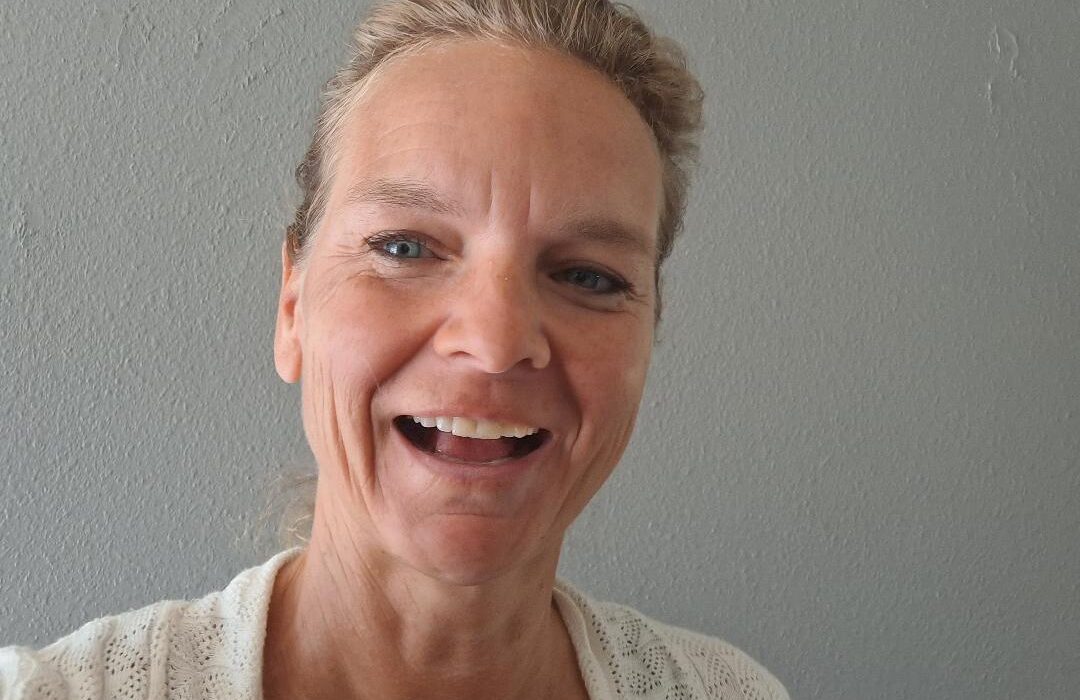
I asked my dentist a question once, years ago. I had told him, more than once, that I didn’t want fluoride treatments for me or for my kids. Every single visit he’d offer them anyway, like it was on a script, like his hand automatically reached for the upsell the second he sat down. I’d say no. Next visit, same thing.
A great toothpaste is step one. Absorption is step two.
Your Pearl Powder Toothpaste Recipe Builder

Dragon Herbs Pearl Powder Capsules
So this one time I just looked at him and said: “Do you give your own children fluoride treatments? Do you use fluoride toothpaste at home with them?”
He looked down at the floor. He said, “No.”
I said, “Then remember to treat my family the same.”
I stopped going shortly after that. The last straw was everything around it. Gums that had started receding. Tools getting shoved under my gumline every cleaning. Leaving appointments with tender, raw gums and being told I’d probably need surgery eventually because, just so I knew, gums don’t grow back. When I asked if there was any natural way to help them heal, they basically laughed me out of the room.
Here’s the thing about fluoride: anything where people need a hazmat suit to handle the raw material is not something I’m going to volunteer to put in my mouth. Or my kids’ mouths. My kids are 18 now, and the same practice is still trying to sell fluoride to them directly, going around me. It feels like a racket. My healthy teeth don’t pay his mortgage.
Bentonite, charcoal, chelation, cilantro, mercury chasing — these protocols all assume heavy metals are your dominant toxic load. For some people they are. Plenty of others land in this kind of work suspecting metals when adrenal exhaustion, parasites, or mold are actually doing more of the damage, and the protocols look very different depending which one is yours. If you want to sort it out before committing to weeks of binders, the 2-minute What's Draining Your Brain Tool places you in one of four root cause types so the next thing you try has a real chance of working.
Key Takeaways
- My DIY pearl powder toothpowder uses just three ingredients: pearl powder, baking soda, and peppermint essential oil.
- I use it every time I brush, three to four times a day. The consistency matters more than the precision.
- After months of daily use, the brown enamel spot on my upper front teeth is visibly fading and my gums stopped feeling tender.
- I take a bit of pearl powder internally too, off and on, most nights. That’s a separate habit from the toothpowder.
- None of this is medical advice. I’m one person sharing what worked for me after years of being told natural options don’t work.
So I did my own research on how the dental industry actually makes money, who benefits when patients need more procedures, more cleanings, more surgery. And I decided I was going to try to fix this myself before I signed up to let anyone cut into my mouth.
What you will learn in this video:
- Why naturopathic doctor Dr. Janine Bowring moved away from conventional toothpaste
- Her own remineralizing toothpaste recipe and the minerals she uses
- How saliva, pH, and minerals actually work together to heal teeth
How I Found Pearl Powder
Around that same time, Matt Roeske, the founder of Cultivate Elevate, introduced me to pearl powder. I’d never heard of it. Ground freshwater pearls, used in traditional Chinese medicine for centuries for skin, teeth, bones, sleep, and eyes. I was skeptical but curious. I ordered a bag.
I started taking a bit internally, half a teaspoon straight, let it sit on my teeth, washed it down. Tastes like nothing. A little chalky. I didn’t feel anything dramatic, so I mostly forgot about it and just kept doing it on and off, most nights, some mornings, whenever I remembered.
The Toothpowder Came From a Detour
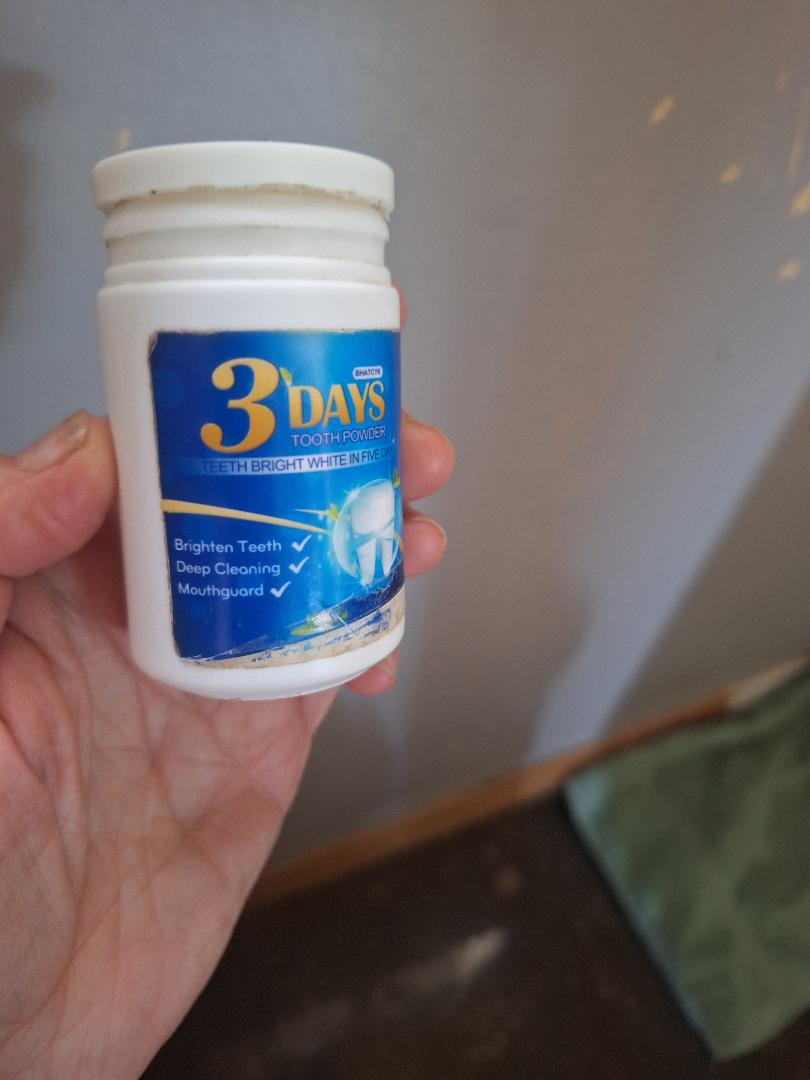
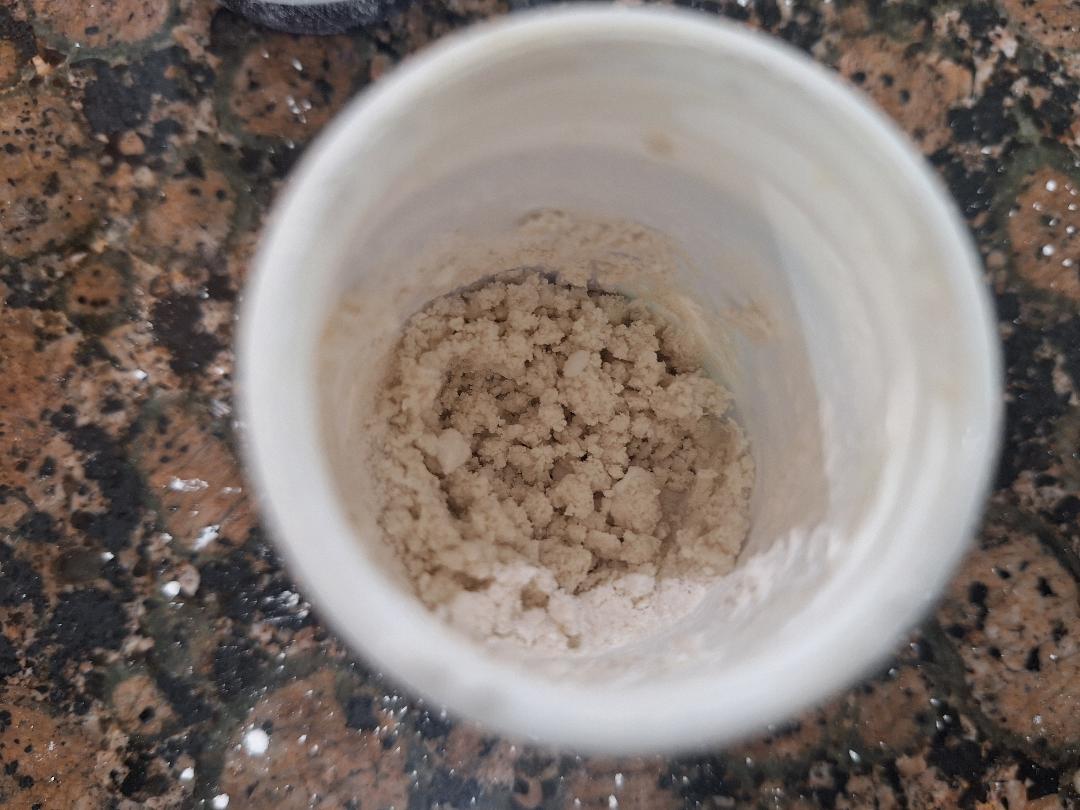
I’d bought a little jar of something called “3 Days Tooth Powder” off Amazon years ago, one of those whitening gimmicks. It worked OK, but when I looked at the ingredient list I thought, I could make this better myself with cleaner stuff. So I emptied the jar, kept the container (perfect size, great shape), and started mixing my own.
The Recipe
Two parts pearl powder. One part baking soda. Dozens of drops of organic peppermint essential oil. This surprises people. A few drops isn’t enough. You keep pouring, stirring, pouring, until the powder holds together like a crumbly paste. Could be 30 drops, could be 60, depends on your batch size and how dry the powder is.
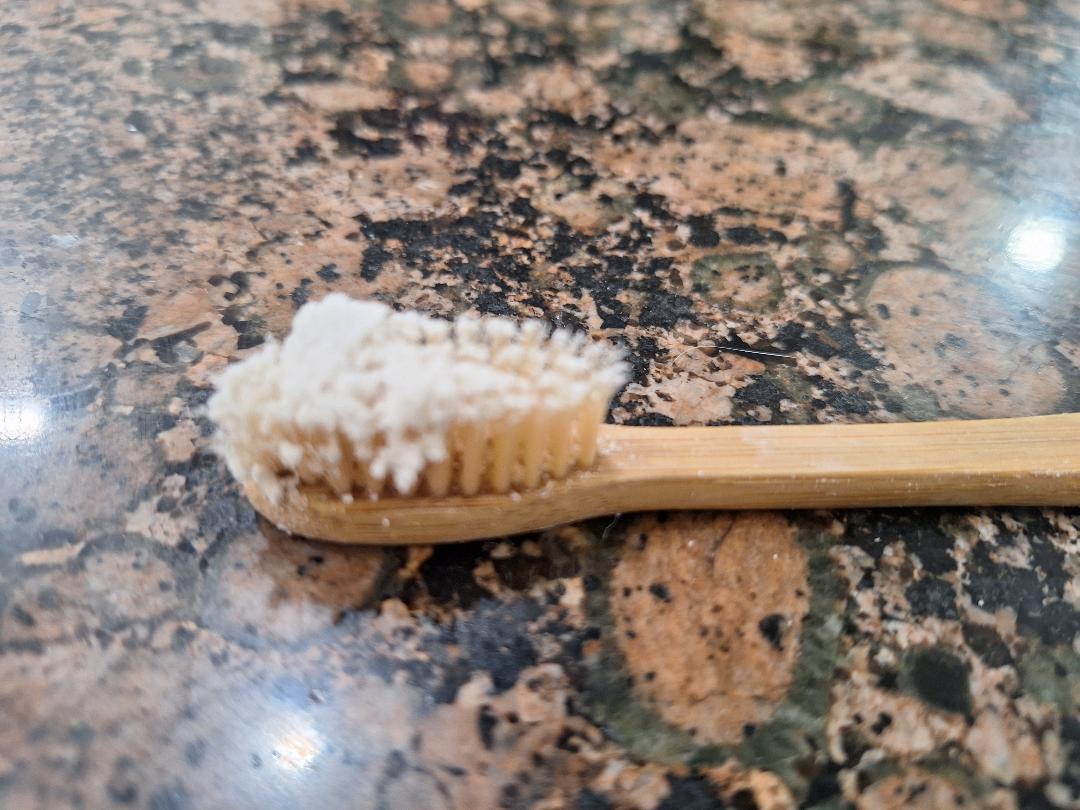
That’s it. You shake the jar. It comes out like a crumbly, slightly damp powder. You dip a wet toothbrush in, it clumps onto the bristles, and it’s the most refreshing thing I’ve ever put in my mouth.
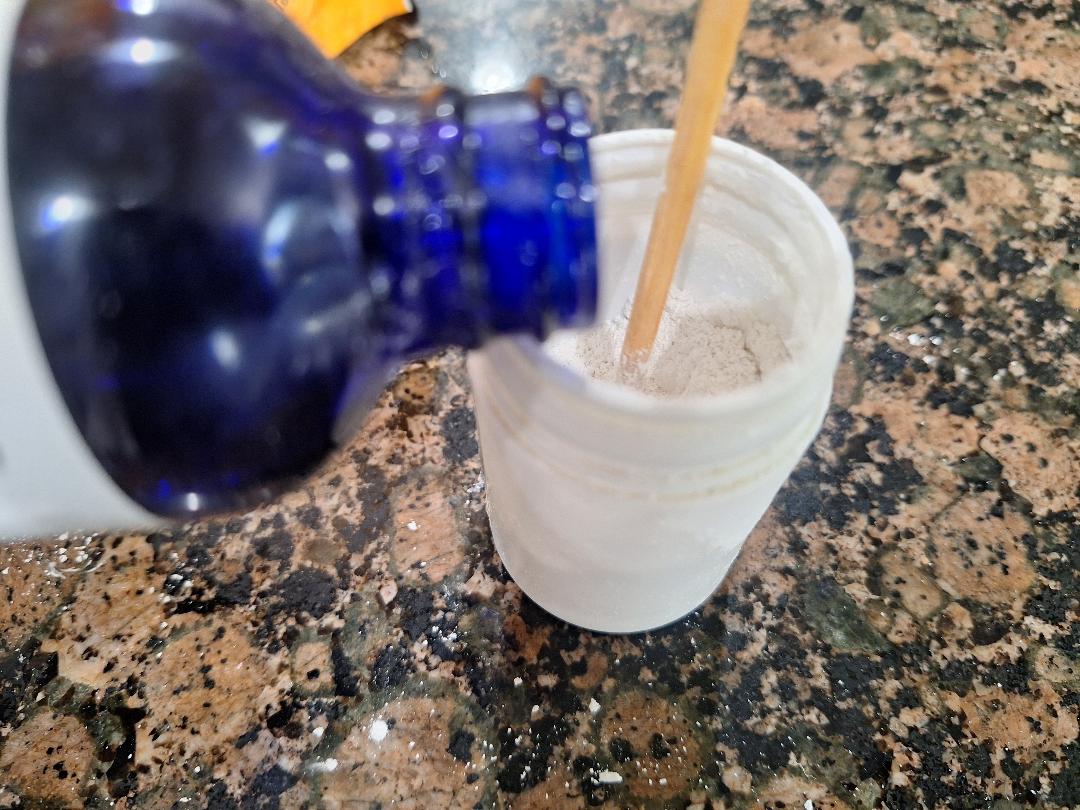
A few notes on ratios. I don’t measure perfectly. Two scoops of pearl powder, one scoop of baking soda, a few drops of peppermint oil. If it’s too dry, a couple extra drops of oil. If it ever starts feeling too gritty, I add more pearl powder next refill. You’ll dial it in to what feels right in your own mouth within a few days.

How I Actually Use It
This part is where I got consistent. The DIY toothpowder, I use every single time I brush, three or four times a day. Every morning. Every night. After anything acidic. It’s not a “when I remember” thing, the way the internal pearl powder is. This is the daily habit that replaced fluoride toothpaste for good.
I wet my toothbrush, dip it into the jar, let the powder clump onto the bristles, and brush like normal. Between 30 seconds and two minutes, depending on what I just ate. Then rinse and spit. That’s it.
What Happened After Months of Using It
I wasn’t tracking anything. I wasn’t documenting anything. I was just brushing with my DIY powder every day because it tasted good, felt clean, and I’d given up long ago on the chemicals and procedures the dental industry was selling. The natural route I have always trusted. I just wasn’t expecting visible enough reversal to bother documenting it. Real natural healing is quiet. It works in slow daily increments and it doesn’t announce itself.
I’ll be about how bad that brown spot was. It was sensitive enough that when I ran my fingernail across it, it felt like there was no enamel left at all. I knew that didn’t quite make sense, but that’s what it felt like, and looking at the brown coloration in the mirror it didn’t look like there was much enamel left either. I didn’t want to go to the dentist and have him diagnose it, shame me, push me into a procedure, or scare me about losing my teeth. I knew for sure I wasn’t going that route. The one mercy was that the spot was hidden under my smile. My lip covered it, so I didn’t have to be reminded of it every day in the mirror. That’s how I was able to mostly forget about it.
And then one day I was running my tongue across the front of my upper teeth, along that rough, brown, sensitive patch I’ve been watching for years where the enamel had worn thin, and something felt different. I grabbed a mirror, thinking it was a trick of the light. It wasn’t. The brown was fading. The tooth was shinier than it had been in a long time. I ran my tongue over my gums and they didn’t feel tender anymore either.
I don’t have a before photo of my gums, because I wasn’t documenting it. I didn’t really believe it would work. I just noticed it had worked, after the fact.
If You Don’t Want to Mix Your Own
I get it. Not everyone wants to eyeball two-parts-this and one-part-that. If you’d rather start with a ready-made clean toothpowder and see how your mouth responds before going full DIY, there are a couple of options worth looking at. Both of these are fluoride-free and use hydroxyapatite, which is the mineral your teeth are actually made of.

OraWellness Shine Remineralizing Tooth Powder
Remineralizing Works Better When You Know Your Driver

Frequently Asked Questions
How do you make pearl powder toothpaste?
A simple base is coconut oil with pearl powder, a little baking soda, powdered xylitol, and a few drops of food-grade essential oil for flavor. Mash it into a smooth paste and store it in a small jar. The builder above tunes the amounts to your sensitivity and whitening goal.
Is pearl powder toothpaste safe for enamel?
Pearl powder itself is gentle and remineralizing. The variable is baking soda, which is mildly abrasive, so keep it low if your teeth are sensitive and always use a soft brush with light pressure.
Does pearl powder whiten teeth?
It can brighten by gently polishing and remineralizing rather than bleaching, which is the opposite of the enamel-stripping super-white approach. Results are subtle and build over time.
How often should I use homemade pearl toothpaste?
Once a day is plenty for most people, alternating with a plain soft brushing if you like. Watch how your teeth and gums respond and adjust the baking soda down if you feel any sensitivity.
The remineralizing idea behind this recipe is well grounded. According to PubMed, zinc-hydroxyapatite toothpaste was shown to significantly re-harden acid-softened enamel in testing (PubMed, DOI), the same calcium-phosphate principle pearl powder brings to a homemade paste.
Related Reading
- What Is Pearl Powder?
- Pearl Powder for Eyes
- Pearl Powder for Receding Gums
- Hydroxyapatite Toothpaste Benefits
- How to Detox Heavy Metals (Complete Guide)
- Explore the Toxic Load Assessment Tool
Affiliate disclosure: as an Amazon Associate, The Wellthie One earns from qualifying purchases. We only point to products we use or have carefully researched. This article shares personal experience and is for educational purposes, not medical advice. Please work with a naturopath, functional-medicine practitioner, or your dentist before making changes that affect your health.
What I’m Writing Next in This Series
This is the first article in a longer pearl powder series I’m putting together this month. Next up I’ll be writing about what pearl powder actually is, what I learned about taking it for receding gums specifically (with the photos I do have), what happened to my eyes after months of internal use, and whether it’s safe to eat pearl powder straight. If any of that sounds interesting, you can check back on the blog over the next few weeks.
The Part Where I Admit I’m Not a Dentist
I’m not. I’m one woman who got tired of being told her gums wouldn’t regenerate, did her own research, started mixing her own toothpowder, and noticed things changed. Pearl powder isn’t a medication. Baking soda isn’t a medication. Neither is peppermint oil. None of this is medical advice, and if your gums are in bad shape you should absolutely weigh what I’m saying against what a dental professional you trust tells you. But if you’ve been to a practice that seems to be selling you things you don’t need, that doesn’t practice what they preach on their own children, and that can’t imagine a scenario where you heal naturally, maybe it’s worth remembering that dentists are in business. And my healthy teeth don’t pay his mortgage.
I’m still not going back to that dentist. I don’t think I’ll need to.
This post may contain affiliate links, which means we may receive a small commission, at no cost to you, if you make a purchase through a link.