
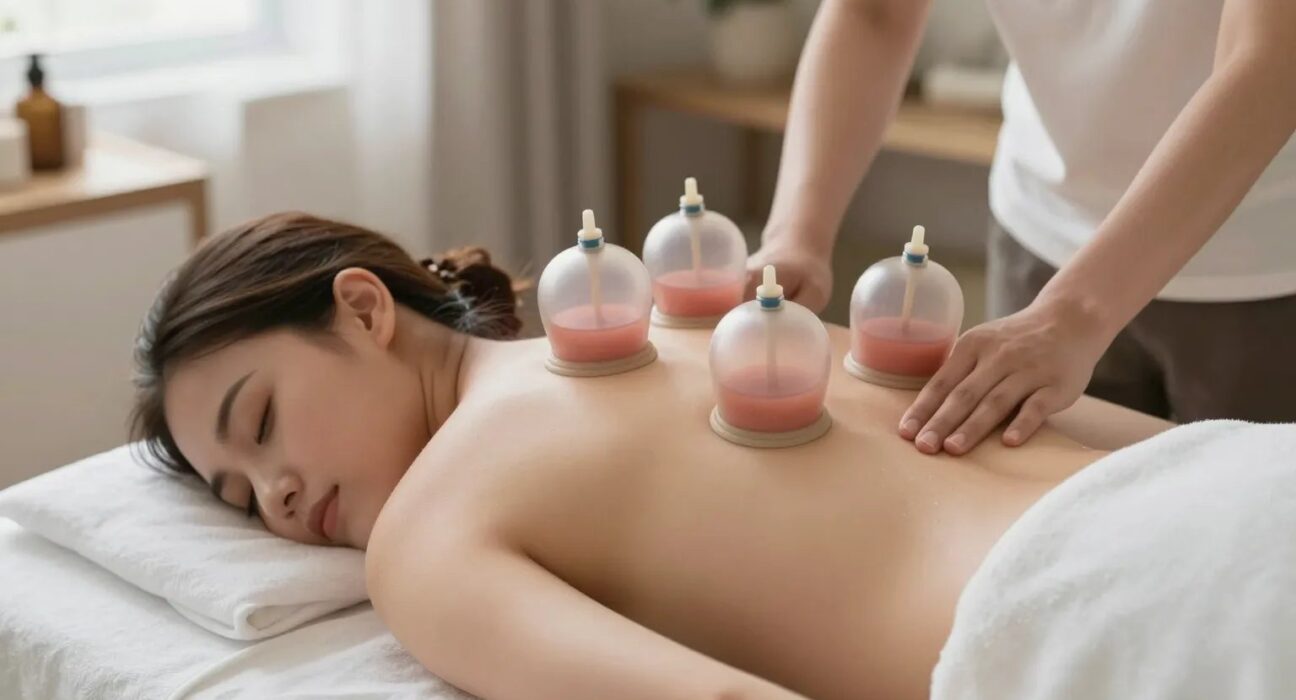
Cupping therapy promises a long list of benefits — less pain, faster recovery, better circulation, smoother skin, deep relaxation. So which are real, and which fit you? Here’s the evidence-aware rundown, plus a quick tool to match the benefit you care about to a realistic plan.
In short: cupping’s best-supported benefit is short-term relief of muscle pain and tension, with recovery, circulation, and relaxation close behind. The skin-smoothing effect is real but temporary. Here’s how to get what you’re after.
Most people in detox or chronic-symptom work eventually hit the same problem: the same symptoms — fatigue, brain fog, gut issues, poor sleep — can come from completely different root causes, and the wrong protocol can run for months before that becomes obvious. The 2-minute What's Draining Your Brain Tool sorts you into one of four toxic load types so the next thing you try has a real chance of actually working.


Why do the aches keep coming back?
What the research really shows
What the research actually says
Based on articles retrieved from PubMed, here is the balanced picture of cupping’s benefits:
It reliably beats doing nothing for short-term pain
A meta-analysis of 18 trials found cupping produced large short-term reductions in pain intensity versus no treatment, plus meaningful improvements in disability — though the authors note study quality is a limitation (Cramer et al., The Journal of Pain 2020; DOI: 10.1016/j.jpain.2020.01.002).
Against a sham, the edge narrows
A randomized trial found dry cupping was not clearly better than sham cupping for chronic low back pain, suggesting part of the benefit is the hands-on attention and expectation (Almeida Silva et al., Journal of Physiotherapy 2021; DOI: 10.1016/j.jphys.2021.02.013). Upside: it’s low-risk and many genuinely feel better.
The bigger picture most benefit lists skip
Frequently asked questions
What are the main benefits of cupping therapy?
The best-supported benefit is short-term relief of muscle pain and tightness; people also use it for athletic recovery, circulation, temporary skin de-puffing, and relaxation. Evidence is strongest for pain versus no treatment.
Is cupping scientifically proven to work?
For short-term muscle pain it reliably beats doing nothing, per a meta-analysis. Against a fake (sham) treatment the edge is smaller, so some benefit is the hands-on attention. It’s low-risk and worth trying with realistic expectations.
How long do the benefits of cupping last?
Often a few days for tension and looseness. For lasting benefit, do it as a short series and pair it with movement, hydration, and addressing what keeps the tension coming back.
Do the marks mean the benefits are working?
No — the marks reflect how much blood the suction drew up, which varies by person and area. Darker isn’t ‘better.’
This article is general education, not medical advice. Cupping is low-risk with a trained provider, but check with a clinician first if you take blood thinners, are pregnant, or have a bleeding or skin condition.


