
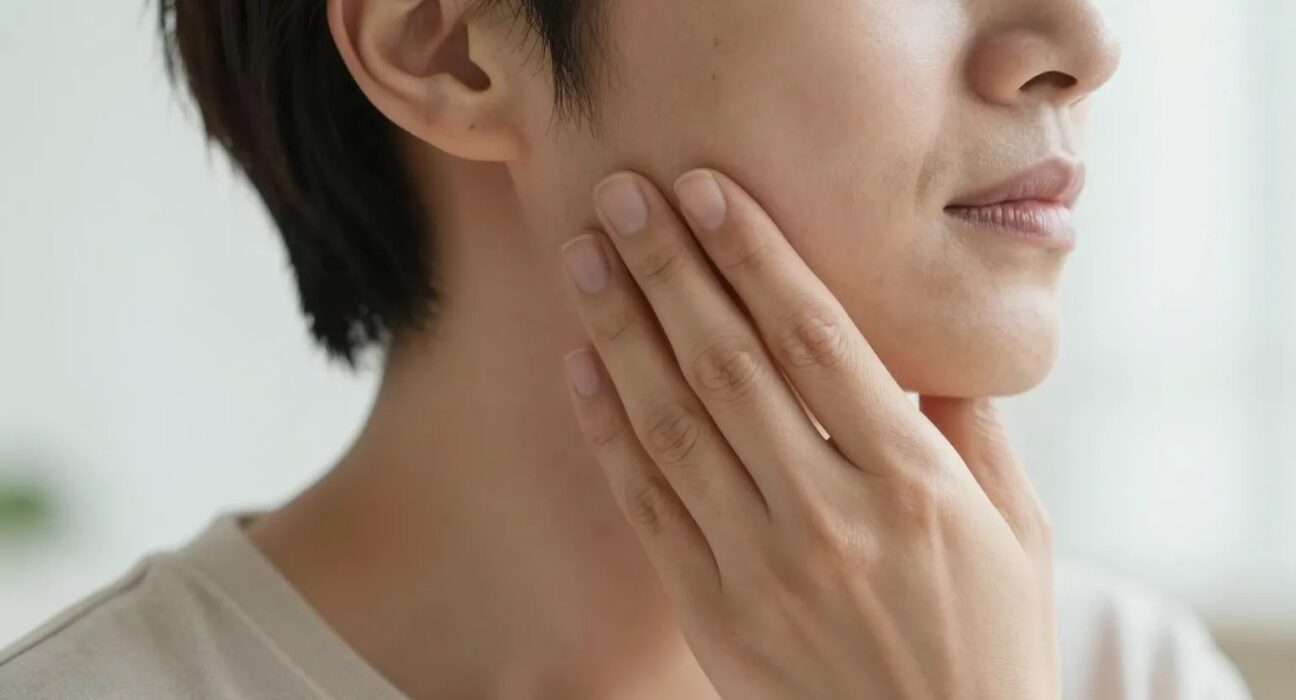
Pain on just one side of your jaw — especially near the ear — is unsettling, but it’s usually not as serious as it feels. The most common cause is the jaw joint itself (TMJ), often from clenching and stress, though a tooth, sinus, or swollen gland can also be behind it.
Run the decoder to sort tooth pain from jaw-joint pain, then read on for the usual causes of one-sided jaw pain, how to ease it naturally, and when it’s worth getting checked.
Your mouth is a window into your whole body


What causes jaw pain on one side
The leading cause is TMJ dysfunction — strain in the jaw joint and muscles, usually from clenching or night-time grinding (often stress-driven), which tends to hit one side harder. Other causes include a tooth problem radiating into the jaw, sinus pressure on that side, a swollen lymph node or salivary gland, or simply sleeping or chewing on one side. Pain with clicking, locking, or morning soreness strongly suggests TMJ.
Most people in detox or chronic-symptom work eventually hit the same problem: the same symptoms — fatigue, brain fog, gut issues, poor sleep — can come from completely different root causes, and the wrong protocol can run for months before that becomes obvious. The 2-minute What's Draining Your Brain Tool sorts you into one of four toxic load types so the next thing you try has a real chance of actually working.
How to relieve one-sided jaw pain naturally
Apply gentle heat to the jaw muscles, consciously unclench through the day (lips together, teeth apart), and eat a softer diet for a few days. Magnesium supports muscle relaxation and calmer sleep, and a night guard protects against the grinding that drives so much TMJ pain. Managing stress is the real root for most people.

What the research says about clove oil
What the research actually says
Clove oil is the one home remedy with real backing. Based on articles retrieved from PubMed:
Eugenol is a recognized dental painkiller
Eugenol, the active compound in clove oil, ‘has been widely used for its anesthetic and analgesic action in dentistry,’ with antioxidant and anti-inflammatory effects (Pramod et al., Natural Product Communications 2010; PMID 21299140).
Clove oil eased pain and inflammation in studies
Clove oil produced significant pain-relieving and anti-inflammatory effects in an experimental study, supporting its traditional use for toothache (Taher et al., Libyan Journal of Medicine 2015; DOI: 10.3402/ljm.v10.28685). (Animal study — supportive, not proof.)
Why the same mouth trouble keeps coming back
Frequently asked questions
Why does only one side of my jaw hurt?
One-sided jaw pain is most often TMJ strain — people tend to clench or chew more on one side, so that joint and muscle take the brunt. A tooth, sinus pressure, or a swollen gland on that side can also cause it. Clicking, locking, or morning soreness points to TMJ.
How do I relieve TMJ jaw pain naturally?
Use gentle heat, keep your teeth slightly apart during the day, eat soft foods for a few days, manage stress, and consider a night guard if you grind. Magnesium can help relax the muscles. Most cases settle with these steps.
When should I worry about one-sided jaw pain?
See a dentist or doctor if it lasts more than a week or two, comes with facial swelling or fever, makes the jaw lock, or follows an injury. Sudden jaw pain with chest pain, sweating, or shortness of breath is a medical emergency — call emergency services.
Can stress cause jaw pain?
Yes — stress is one of the biggest drivers, because it leads to daytime clenching and night-time grinding that strain the jaw joint and muscles. Calming the nervous system often eases the jaw.
This article is general education, not dental advice, and does not replace seeing a dentist. Natural remedies ease mild pain temporarily; cavities, cracks, and infections need professional treatment. Seek urgent care for facial swelling, fever, or trouble breathing or swallowing.


