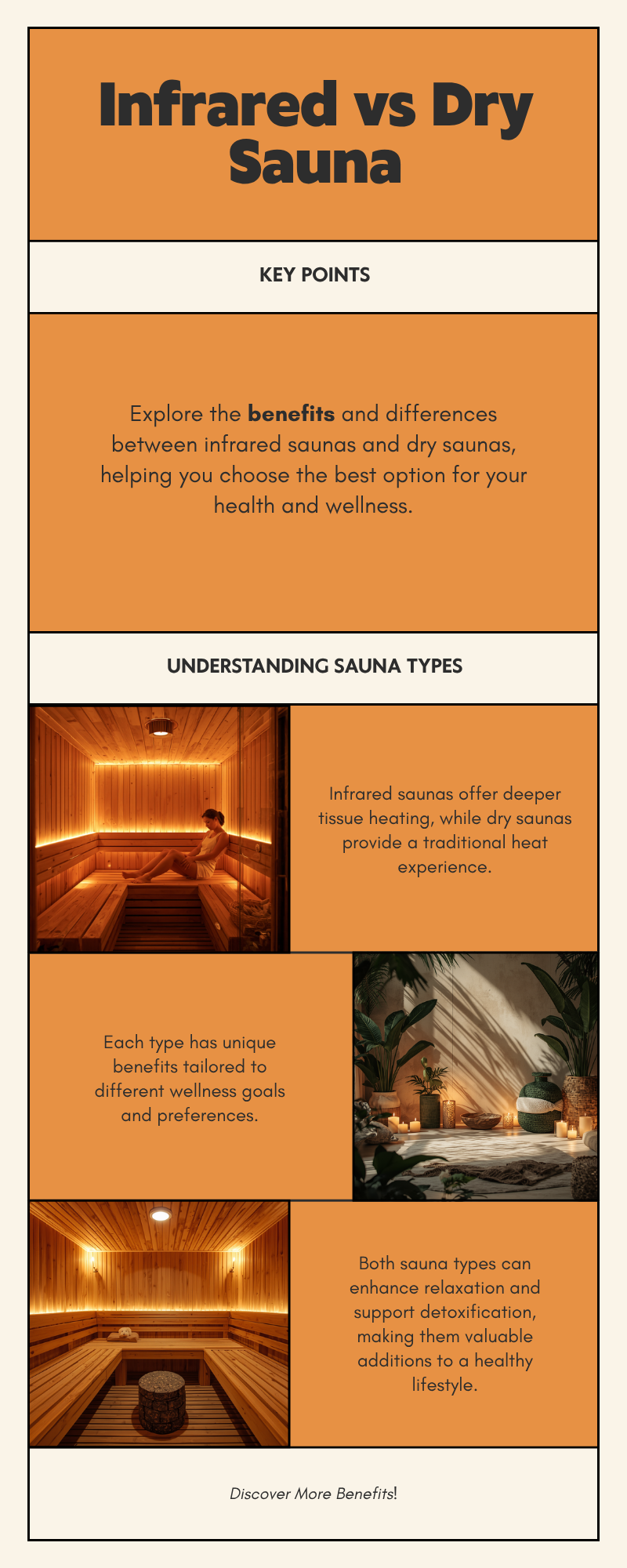
Infrared sauna vs dry sauna. Both heat your body and trigger a sweat session, but the mechanism, temperature range, optimal session duration, and downstream health benefits differ in ways that matter when you’re picking which one to invest in. Traditional Finnish dry sauna heats the AIR around you to 170-185°F, which then heats your skin and surface tissues. Infrared sauna emits far infrared (FIR) and sometimes near infrared (NIR) wavelengths that penetrate up to 1.5 inches into tissue at much lower air temperatures (130-150°F). Same sweat outcome on the surface. Very different physiological effects underneath.
Both saunas mobilize heavy metals and toxins through sweat. Without the right binders + hydration, those toxins reabsorb instead of clearing. The free 90-second Toxic Load Type Tool identifies which root pattern is driving your symptoms so sauna pairs with the right protocol.
Sauna Session Planner
Personalized session length, temperature, frequency + ramp-up schedule.
The Core Difference: How They Heat You
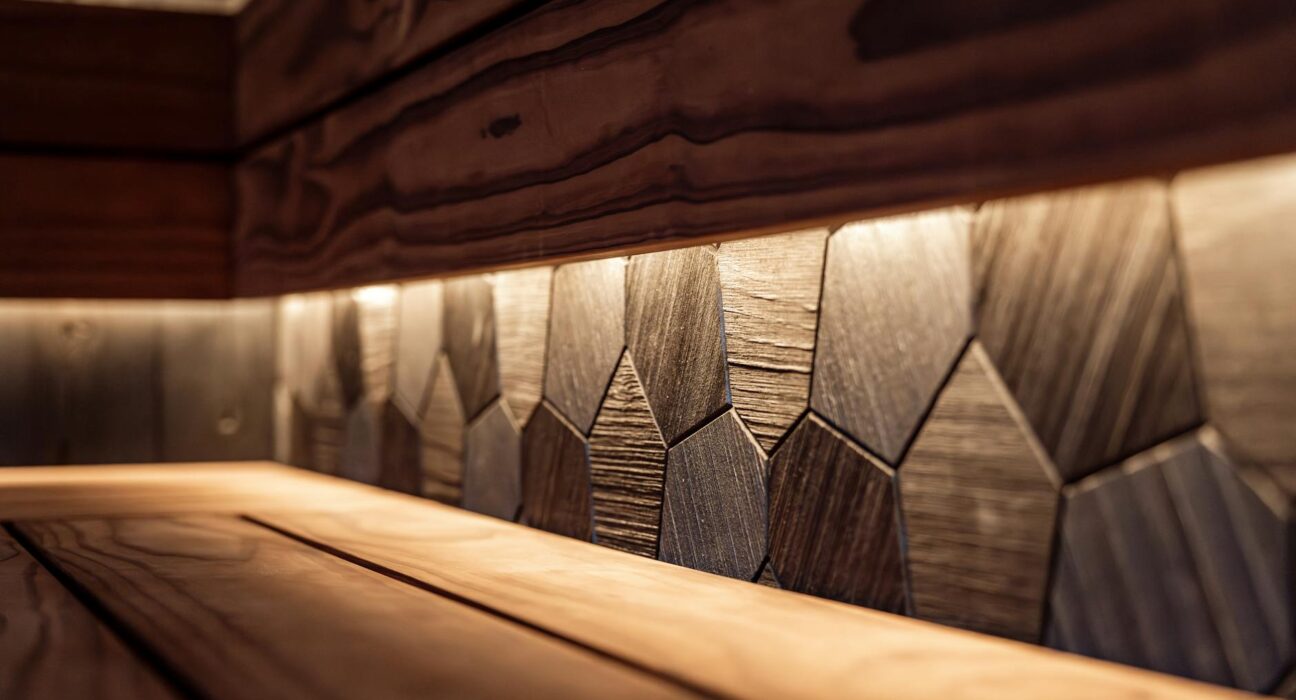
Dry sauna (Finnish): A wood-burning, gas, or electric stove heats the air inside the sauna room to 170-185°F. The hot air heats your skin → your body responds by sweating to cool itself. Heat penetration is mostly surface-level. Humidity is intentionally low (5-10%). Sometimes raised briefly with ladles of water on hot rocks (löyly).
Infrared sauna: Carbon or ceramic emitters produce infrared rays at specific wavelengths. Far infrared (FIR, 5.6-1000 micrometers) penetrates 1.5 inches into tissue. Near infrared (NIR, 0.7-1.4 micrometers) penetrates even deeper and adds red-light-therapy benefits. Air temperature is much lower (130-150°F) because the heating happens INSIDE your tissues, not on your skin. Full-spectrum saunas combine FIR + NIR + mid-IR.
Side-By-Side Comparison
| Factor | Dry / Finnish Sauna | Infrared Sauna |
|---|---|---|
| Air temperature | 170-185°F | 130-150°F |
| Tissue penetration | Surface only (skin + first few mm) | 1.5 inches into muscle/tissue |
| Humidity | 5-10% (with brief steam from löyly) | 15-25% (ambient) |
| Session duration | 10-20 min | 30-45 min |
| Sweat onset | 2-5 min | 10-15 min |
| Heat shock protein activation | Strong | Moderate |
| Cardiovascular load | Higher (more like cardio) | Moderate (gentler on heart) |
| Detoxification | Heavy surface sweat | Deeper tissue detox via mobilization |
| Cost (in-home unit) | $2,500-$8,000+ | $1,500-$5,000 (blankets $300-700) |
| Electric draw | 6-9 kW | 1.5-3 kW |
| Easier on heat-sensitive users? | No | Yes |
Which Wins For Detoxification?
Both promote detoxification through sweating, but the mechanisms differ. Dry sauna’s intense surface heat triggers heavy sweating fast. You’ll wring out your towel after 15 minutes. The sweat composition is similar across both types (mostly water, plus electrolytes and small amounts of heavy metals).
Infrared sauna’s advantage is deeper tissue heating. Far infrared penetrates 1.5 inches into muscle, fat tissue, and connective tissue. Which is where stored heavy metals (mercury, lead, cadmium, aluminum) actually live. Surface sweat in a dry sauna doesn’t reach those reservoirs as effectively. People on serious heavy metal detox protocols typically prefer infrared for this reason.
That said, the volume of sweat matters too. A 15-minute dry sauna session can produce 1-2 liters of sweat. A 30-minute infrared session might produce 0.5-1 liter. So if your only metric is “sweat as much as possible,” dry sauna wins. If your metric is “sweat from deeper tissues,” infrared wins.

Which Wins For Cardiovascular Benefits?
The first foundational support for any detox or cellular-repair protocol is glutathione. Most adults run depleted, especially during active detox when the body burns through it faster than it can produce. The liposomal form below absorbs through the gut where capsules largely do not.
Sauna Detox Works Better When You Know Your Driver
Both sauna types help mobilize stored toxins through sweat. The bigger question is which toxins are dominant in your body and whether your liver and kidneys are ready to clear what the sauna mobilizes. Sauna without supported drainage causes herx reactions. The 90 second Toxic Load Tool finds which one is driving yours.
Use The Toxic Load Tool
Quicksilver Scientific Liposomal Glutathione
The form Andrea uses in her own protocol. Liposomal absorption through stomach acid intact. Use morning, away from food, away from dairy.
Check Price on AmazonThe Finnish KIHD study (Laukkanen et al., 2018) tracked 2,315 Finnish men over 20+ years and found those using traditional dry sauna 4-7 times per week had:
- 40% lower all-cause mortality
- 50% lower cardiovascular mortality
- 66% lower risk of dementia/Alzheimer’s
- Significantly lower blood pressure
That’s the gold-standard human research, and it’s specifically on traditional Finnish dry sauna. Infrared sauna research exists but is much smaller in scale. Mechanism likely overlaps (heat shock proteins, improved endothelial function, cardiovascular conditioning) but we don’t have the same 20-year mortality data on infrared.
Verdict for cardio: dry sauna has the research weight. Infrared probably delivers similar benefits but the evidence base isn’t as deep yet.
Which Wins For Skin?
Infrared has the edge here, especially full-spectrum (FIR + NIR) units. Near infrared wavelengths (similar to red light therapy) stimulate fibroblasts to produce more collagen and elastin. Many users report improved skin tone, reduced fine lines, and faster acne healing after 8-12 weeks of regular infrared sauna use.
Dry sauna improves skin too. Through increased circulation and detoxification. But the collagen-stimulation pathway is unique to infrared NIR wavelengths.

Which Wins For Recovery?
Both work for muscle recovery. The mechanism is increased blood flow + heat shock protein activation + reduction in lactic acid clearance time. Studies show 20-30 minute sessions post-workout reduce delayed onset muscle soreness (DOMS) by roughly 30-40% across both sauna types.
The practical edge for athletes goes to infrared because it’s gentler on the cardiovascular system after a hard workout. Pushing into 185°F dry heat post-training can overstress an already-elevated heart rate. Infrared lets you recover without compounding cardiovascular load.
Which Wins For Heat-Sensitive Users?
Infrared, hands down. People with low heat tolerance, dysautonomia, MCAS (mast cell activation syndrome), or perimenopausal hot flashes often can’t handle traditional dry sauna’s 180°F air temperature. Infrared at 140°F is the difference between “I have to leave after 5 minutes” and “I can do a full 30-minute session.” The lower temperature isn’t a compromise. It’s an opening of access for a much wider population.
Cost + Practical Considerations
The second foundational support is activated charcoal as a binder. Glutathione mobilizes toxins out of cells faster than your drainage pathways can clear them. Without a binder in the gut, mobilized toxins recirculate. Take charcoal 2 hours away from food, supplements, and meds.

Bulk Supplements Activated Coconut Charcoal
Coconut shell sourced, fine mesh. The binder Andrea recommends. Take on empty stomach, two hours from food.
Check Price on AmazonHome installation costs:
- Dry sauna: $2,500-$8,000 for a 2-4 person cedar unit. Requires 220V dedicated circuit. Footprint typically 4×6 feet minimum.
- Infrared sauna unit: $1,500-$5,000. Plugs into standard 110V outlet. Smaller footprint, faster installation.
- Infrared sauna blanket: $300-700. Folds away after use. Best for small spaces or apartments. Less effective per session than a full unit but huge convenience.
BEST INFRARED BLANKET
LifePro FAR Infrared Sauna Blanket

Source: amazon.com
Andrea’s pick for at-home infrared without the cost of a unit. Folds away when done. 140-160°F. Far infrared penetrates 1.5 inches into tissue. Deeper detox than steam or dry sauna surface sweat.
Check Price On AmazonElectricity costs: Infrared uses ~30% of the power of a traditional dry sauna. Over a year of regular use, infrared saves $200-400 in electricity.
Heat-up time: Traditional sauna needs 30-45 minutes to reach temperature. Infrared is ready in 10-15 minutes. For daily use, the time savings compound. Most people pick the option they’ll actually use consistently.
Which Should YOU Choose?
Pick traditional dry sauna if:
- You want the strongest research-backed cardiovascular benefits
- You love intense heat and the löyly tradition
- You have heat tolerance built up and can handle 180°F
- You have the budget + space + 220V capacity
- Your primary goal is cardiovascular longevity
PRE + POST SAUNA HYDRATION
GOODONYA Electrolyte Hydration Powder

Source: amazon.com
Pre + post-sauna hydration. Plain water alone causes electrolyte dilution under heavy sweat. This replaces sodium, potassium, magnesium without artificial sweeteners.
Check Price On AmazonPick infrared sauna if:
- You’re on a heavy metal detox protocol (deeper tissue mobilization)
- You have heat sensitivity, dysautonomia, or perimenopausal symptoms
- You want skin benefits via near-infrared collagen stimulation
- You want lower electricity costs + standard outlet plug-in
- You’re doing post-workout recovery and want lower cardiovascular load
- You have limited space (consider an infrared blanket)
PRE-SAUNA BINDER
Bulletproof Activated Coconut Charcoal

Source: amazon.com
Take 30 min BEFORE sauna sessions if heavy metal detoxing. Binds mobilized metals in the gut so they exit instead of reabsorbing. The piece most people skip.
Check Price On AmazonPick BOTH if you can afford it: A growing number of integrative wellness centers offer access to both. Use traditional sauna 2-3x/week for cardiovascular conditioning + infrared 2-3x/week for detox and skin. The combination outperforms either alone for most goals.
What NOT To Do (Either Type)
- Don’t skip pre-hydration. Headache + dizziness post-sauna is almost always electrolyte depletion. Mineral water with Redmond Real Salt, not plain water.
- Don’t sauna without a binder if heavy metal detoxing. Activated charcoal 30 minutes before. Otherwise mobilized metals reabsorb.
- Don’t push through dizziness, nausea, or chest tightness. Exit immediately.
- Don’t cold plunge in week 1. Cool rinse only until heat tolerance is built (4-6 weeks).
- Don’t sauna with active fever, untreated high blood pressure, or unstable cardiovascular disease.
- Don’t sauna while pregnant. Raised core temp is contraindicated.
The Bigger Picture
Sauna of any type is one of the most evidence-backed longevity interventions in modern medicine. Both types work. The “better” choice depends on your specific goals, tolerance, budget, and space. Use the Sauna Session Planner above to dial in your protocol once you’ve picked a type.
If your symptoms are driven by heavy metal accumulation, sauna pairs with the deeper Klinghardt 5-phase protocol. Find your phase with the Heavy Metal Detox Phase Tracker. And if you’re not sure whether metals, parasites, mold, or adrenal patterns are driving your toxic load, start with the free Toxic Load Type Tool.
The full integration of sauna into a complete detox + repair protocol is in the Toxic Load Reset PDF.
Disclosure: As an Amazon Associate, I earn from qualifying purchases. This is educational content. Work with a practitioner if you have cardiovascular, kidney, or chronic conditions before starting any sauna protocol.