

A dopamine detox is a deliberate break from the artificially stimulating habits that have hijacked your focus, usually for 24 to 72 hours, so your brain can reset to enjoy slower, quieter, more meaningful activities again. To do one well, you pick a window of time, identify the inputs that spike your dopamine the hardest (social media, short video, news feeds, sugary snacks, binge TV, even impulse online shopping), remove them as completely as possible, and fill the space with calm, low-stimulation alternatives like walking, journaling, reading a paper book, or doing one thing at a time with full attention.
I am not a pill-taker and I am definitely not someone looking for a life hack to squeeze more output out of a tired brain. What I wanted was the feeling I used to have in my early twenties, when I could read a whole chapter without reaching for my phone every two minutes, when a slow afternoon felt luxurious instead of uncomfortable. The first time I tried a real dopamine detox, I made it about six hours before I started cleaning out a junk drawer I had ignored for three years, just so I could feel productive. That is how badly my brain wanted a hit of something.

What a Dopamine Detox Actually Is (and What It Is Not)
The phrase “dopamine detox” has gotten trendy enough that a lot of people think you are literally lowering dopamine in your brain. You are not. Dopamine is a neurotransmitter your body needs to function, and you cannot cleanse it like you cleanse a juicer. What you are actually doing is reducing the frequency and intensity of dopamine spikes from supernormal stimuli, things like infinite scroll feeds and reward-loop games, so that ordinary pleasures, a good conversation, a long walk, a home cooked meal, start registering as enjoyable again.
The psychiatrist Dr. Anna Lembke writes about this idea in her book Dopamine Nation, and the framing that finally made it click for me is this: every intense pleasure comes with a corresponding dip. The bigger the spike, the deeper the dip. Modern life is one continuous spike with almost no room to recover, and that is why rest does not feel restful anymore. The detox is not about punishing yourself. It is about letting the dip finish so that your baseline can come back.
A Doctor Explains It Better Than I Can
Watch this first. Dr. Alok Kanojia (the psychiatrist behind HealthyGamerGG) explains what a dopamine detox is actually doing in the brain, what the research does and does not support, and how to set one up without falling into the trap of just swapping one compulsion for another. I came back to this video after my first failed attempt and it changed how I set up the second one.
What’s draining your brain?
Brain fog, fatigue, sluggish digestion — usually one of 4 toxic load types is behind it: heavy metals, parasites, mold, or burned-out adrenals. Each type needs a completely different protocol. Take the 2-minute quiz to find out which one is draining you.
How to Do a Dopamine Detox, Step by Step
Every detox I have tried falls apart in the same place, the first quiet hour, unless I have set up the environment in advance. So I stopped thinking of it as willpower and started thinking of it as logistics. The night before, I write down what I am removing and what I am replacing it with. That tiny piece of planning is probably 80 percent of why the later ones worked.
Step 1: Pick Your Window and Write It Down
Start with 24 hours. Not a weekend, not a week. One day, from waking up to going to bed, is enough to feel the edges of the habit and long enough to get past the worst of the discomfort. I write the date at the top of a page in my paper journal and list the specific things I am not doing: no Instagram, no short video apps, no news, no podcasts faster than 1x speed, no sugar, no alcohol, no impulse Amazon browsing. Specific beats broad every time.
Step 2: Identify Your Top Three Triggers
There is always a top three. Mine are Instagram, snacking on something sweet at 3 p.m., and opening a news app the second I feel bored. Your list is probably different and that is fine. The point is that you cannot remove what you have not named. Write them down where you can see them. If your phone is the main culprit, physically move it to another room, ideally upstairs or in a drawer. Out of sight actually does work, because the habit is partly visual.

Step 3: Plan the Replacement Activities
This is the part most people skip, and it is the reason the detox feels unbearable by hour three. Your brain has a giant open time slot where it used to get hits of stimulation, and if you do not fill it deliberately, it will start chewing on anxiety or drifting toward whatever is closest. I plan a short list of slow, analog replacements: a walk outside without earbuds, fifteen minutes of journaling with real questions I have been avoiding, making a proper meal from scratch, reading a physical book, a slow warm bath, light stretching on the floor.
The Tools That Made Mine Actually Work
I tried to do my first few detoxes with nothing but resolve, and I failed every single time. The three tools below are not magic, but they removed enough friction that I stopped relying on willpower alone. All three are things I picked up after my first failed attempt and have actually used repeatedly, not products I grabbed off a list.

Atomic Habits by James Clear
I re-read the chapter on environment design the night before every detox. The idea that you do not rise to the level of your goals, you fall to the level of your systems, is basically the whole reason I stopped relying on willpower. It is not a detox book, but it will change how you set one up.
Step 4: Make the First Hour Boring on Purpose
The first hour is where most detoxes die. Your brain is scanning for a hit and everything feels flat. My trick is to have the first hour be completely pre-planned and slightly boring, something like making coffee from whole beans, sitting with the cup for twenty minutes, then going for a slow walk with no phone. You want to prove to your brain that the boredom passes. If you can get through that first 60 to 90 minutes, the rest of the day gets noticeably easier.

Pair It With the Right Work Rhythm
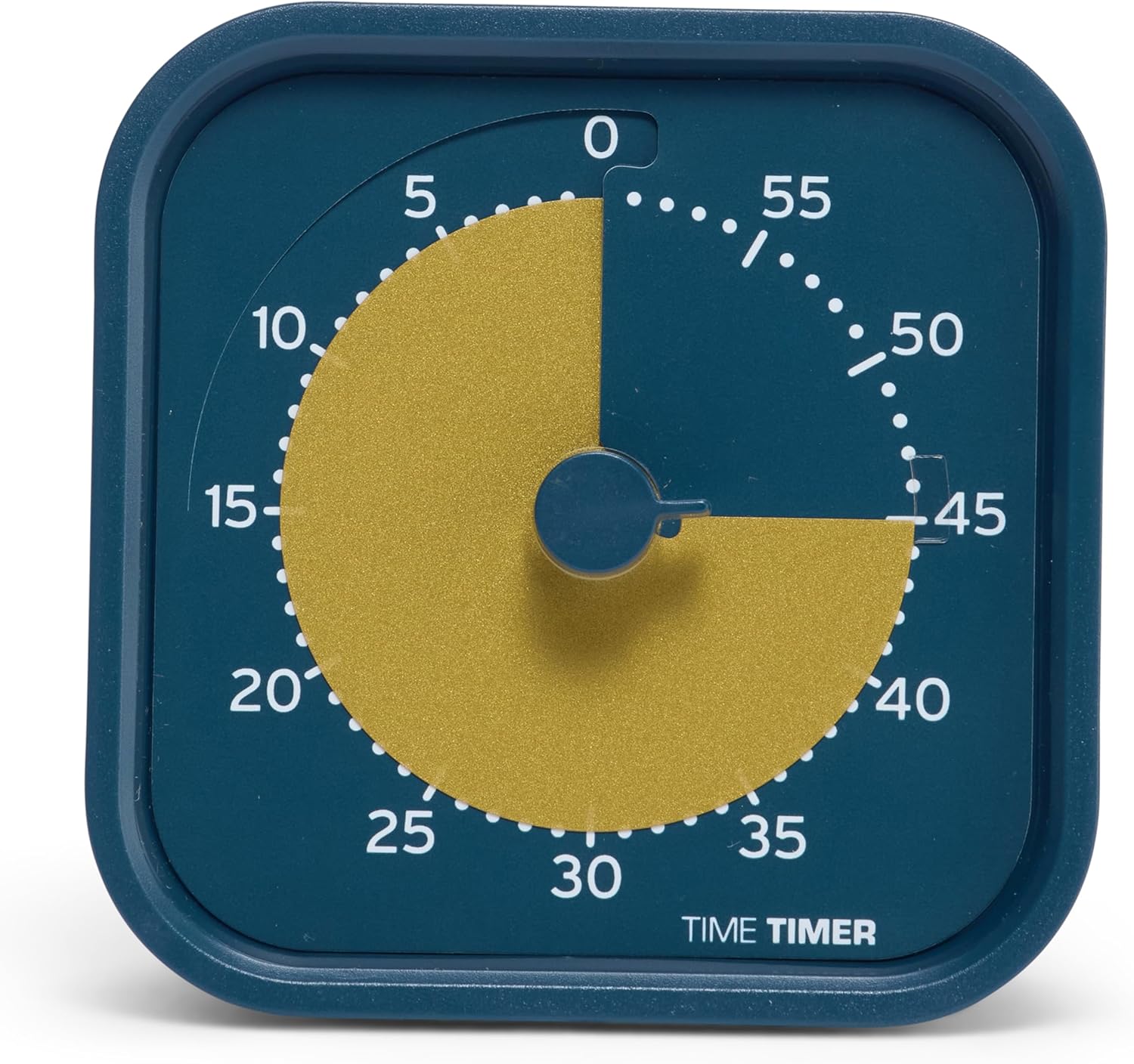
One thing that surprised me: on detox days I got more done at work, not less. Not because I had some magical burst of productivity, but because every time I would have normally broken to scroll, the break just… did not happen. To keep that going, I started using a real timer for deep work blocks. My phone timer was a trap because the phone itself was the problem. A separate, single-purpose timer cut that loop completely.
Time Timer MOD
A silent, visual countdown timer that sits on my desk. I set it for 50 minutes, leave my phone in another room, and work until the red disc is gone. It is the single most useful analog tool I have for protecting focus on a detox day, and pairs well with the Pomodoro Technique I wrote about here.
What Happens After Hour 12
Somewhere around the 12 hour mark, at least for me, the quality of attention changes. Not in a blissed out way. More like the volume of background noise finally drops. Tastes feel more intense, a sandwich you would normally eat on autopilot becomes genuinely good. Conversations feel slower and easier to follow. I notice I am not finishing other people’s sentences in my head. None of this is dramatic, and none of it feels like a high. It feels like my baseline, which is the whole point.
The second thing I notice is that my urge to check things does not actually go away, it just becomes visible. I see it happen in real time, the little pull toward my pocket, the half-thought of “I wonder if anyone messaged me,” and because there is nothing to reach for, the urge just passes. That is the part that carries over after the detox ends.
Journaling Keeps the Detox From Being a One-Time Event
The piece I kept skipping for way too long was writing anything down during the detox. Eventually I started keeping a cheap paper planner on the kitchen counter and jotting a few lines every few hours: what I noticed, what urges came up, what I did instead. Having even two weeks of those notes showed me patterns I would have missed, like the fact that my worst scroll urges were almost always right after lunch, not when I thought they were.

Full Focus Planner
A 90-day paper planner with daily pages that have space for a rituals check, top three tasks, and end-of-day notes. I use it mostly for the evening review, which is where I track what happened during detox days and what I want to keep after. Any paper planner would work, but this is the one I have actually stuck with.
Common Mistakes That Made My First Few Attempts Fail
The first time I tried this, I picked a Sunday, which sounds smart and is actually the worst day, because Sunday is when you are already using your phone for distraction. Pick a weekday if you can, when you have obligations that make the time pass naturally. Second mistake: I tried to go cold turkey on caffeine at the same time, which turned the whole day into a headache instead of a reset. Keep coffee or tea in if that is your normal. The detox is about the supernormal stimuli, not about punishing your body.
Third mistake, and this one is the sneakiest: I replaced my phone with reading long-form articles on my laptop, which is still a screen, still a feed, and still a dopamine loop. If a replacement activity has infinite scroll or recommended content, it is not actually a replacement. Books with covers, walks without earbuds, and conversations with real humans pass the test. Also, do not sleep the whole day. Napping once is fine. Using sleep to escape the boredom means you never get to the part where the baseline comes back.

How Often to Do This
Once a week for me, usually a weekday when my schedule is already full enough to carry me through the quiet stretches. Some people prefer a full weekend once a month. I would rather do 24 hours more often than three days rarely, because the muscle that gets built is the ability to notice and redirect, and that muscle needs frequent reps. Whatever rhythm you pick, write it on a calendar a week out. Spontaneous detoxes almost always lose to whatever stress is happening that morning.
After a few months of doing this regularly, what actually changes is your normal days. I reach for my phone less on days I am not detoxing. I read more. I feel less frantic when a task takes longer than expected. None of this happened because I willed it to. It happened because I gave my baseline enough room to come back.
Where to Go From Here
If you want to stack this with other low-stimulation habits, the easiest next step is a phone-free morning routine, which I wrote about after doing one for 30 days straight. The other piece that fits naturally is habit stacking, because a detox is basically one very big habit-stack chained onto a single day. For a deeper look at the psychology of why this works, this review on behavioral addiction and dopamine signaling is a solid, non-sensational read.
A dopamine detox is not a personality transplant and it is not a productivity hack. It is a reset button, used regularly, that lets ordinary life start feeling vivid again. You do not need to be perfect at it. You just need one quiet day, a piece of paper, and a willingness to sit with the boredom long enough to watch it dissolve.
Affiliate disclosure: As an Amazon Associate, I earn from qualifying purchases. Links to products on this page may be affiliate links, which means if you click through and buy, I may receive a small commission at no extra cost to you. I only recommend products I have used personally and would be comfortable handing to a friend. Nothing on this site is medical advice. If you are dealing with compulsive behavior that is interfering with your life, please talk with a licensed mental health professional.


