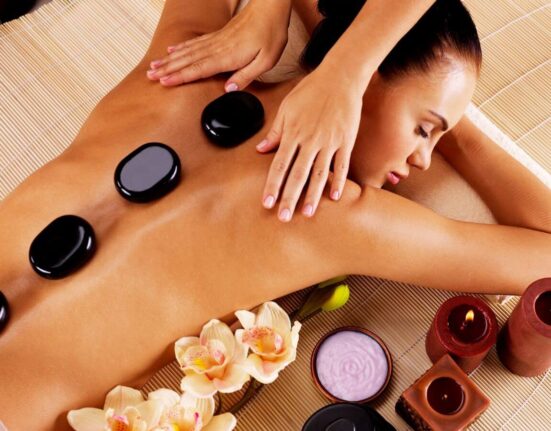
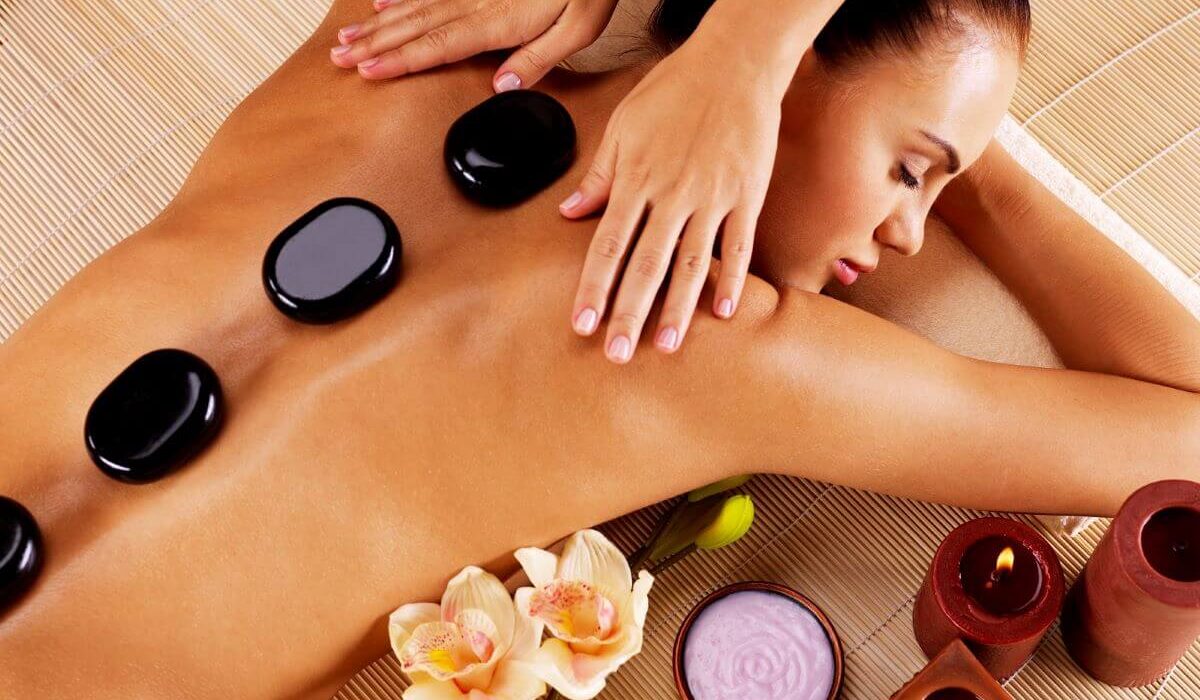
If you’ve ever finished a hot stone massage feeling like your body’s hum-noise had been turned to a whisper, you already know the experience this article is about. Hot stone massage benefits show up most reliably in three categories: stress reduction (lower cortisol, slower breathing, parasympathetic activation), muscle release (warmth makes tissue more pliable so existing tension finally lets go), and sleep quality (the wind-down state primes deeper rest). According to PubMed, mechanistic research across nearly fifty studies has documented these shifts in brain activity, autonomic tone, and stress biomarkers when warm-contact massage is applied skillfully (Chmiel 2026).
This guide pulls together the eight evidence-supported benefits, gives you a personalization tool that produces YOUR specific routine (stones, temperature, body zones, breath pattern), and recommends the four at-home kits we think deliver the spa experience without the spa price tag. If your interest is broader — lymph flow, fluid mobilization, full-body detox routines — see our pillar guide on lymphatic drainage massage at home; this article goes deep on the specific category of warm-contact bodywork.
Find My Hot Stone Routine
Built from peer-reviewed thermotherapy research and traditional stone-massage technique, this tool produces YOUR personalized at-home routine — stone count, temperature, body zones, session duration, and breathing pattern. About 90 seconds.
Benefit 1: Lower cortisol — the stress hormone you can measure
Salivary cortisol is one of the cleanest biomarkers of physiological stress, and warm massage repeatedly shows up as an intervention that lowers it. According to PubMed, a 2025 mixed-methods study of 50 college students documented significant reductions in salivary cortisol, perceived stress, and heart rate after just 20 minutes of combined complementary sessions including massage (Cefo 2025). Animal model work has shown the same direction — massage cuts cortisol meaningfully in stressed subjects (Jastrzębska 2025).
Add warmth to the equation and you compound the effect. Heat alone signals safety to the nervous system; warmth-with-touch signals safety more strongly. That’s the biological story behind why a 30-minute hot stone session leaves you in a deeper “off-switch” state than 30 minutes of dry massage.
Benefit 2: Parasympathetic shift — the off-switch your body needs
Your nervous system has two settings: sympathetic (fight, flight, get things done) and parasympathetic (rest, digest, restore). Most of modern life pushes you into sympathetic. The parasympathetic shift is what therapeutic relaxation is delivering — and it’s measurable.
According to PubMed, a 2026 mechanistic review synthesizing 47 EEG, fMRI, and fNIRS studies on massage documented “pressure-dependent autonomic shifts” with moderate pressure consistently favoring “a parasympathetic/relaxation profile” (Chmiel 2026). The shift shows up as increased EEG alpha activity, leftward frontal alpha asymmetry (linked to approach-positive affect), and changes in brain connectivity in default-mode and salience networks. Translation: your body switches gears.
Benefit 3: Muscle pliability — warmth makes tissue let go
Cold muscle is brittle; warm muscle is supple. This is straightforward tissue mechanics — collagen fibers in fascia become more elastic at higher temperatures, which is why your physical therapist starts with a heat pack before manual work. Hot stones do the same job, with the added benefit of sustained contact (the stone keeps releasing heat into the tissue for several minutes).
According to PubMed, a 2026 randomized controlled trial compared heat therapy, exercise therapy, and combined approaches for chronic back pain and found heat therapy alone reduced pain intensity meaningfully over a 12-week program (Schmidt 2026). A 2025 RCT showed that adding thermal ultrasound to manual therapy outperformed manual therapy alone for neck pain (Abd El Azeim 2025). The thermal layer is doing real work, not just feeling nice.
Benefit 4: Trigger point release for shoulders and upper back
Myofascial trigger points — those stubborn knots in your upper traps, rhomboids, and between your shoulder blades — respond particularly well to combined heat-and-pressure work. According to PubMed, a 2025 randomized clinical trial of 75 patients with rhomboid muscle trigger points found that infrared thermal therapy combined with relaxation techniques significantly outperformed conventional treatment alone for pain and pressure pain threshold (Elabd 2025).
The stones excel here because you can place a warm stone directly on the trigger point and let it sit. The warmth penetrates, the surrounding muscle relaxes, and when you (or your partner) finally apply gentle pressure the trigger point releases far more easily than it would from cold pressure alone.
What readers consistently report after starting an at-home hot stone routine
- “Deeper sleep on the nights I do stones before bed than without” — reported across age groups and lifestyle types
- Tight shoulders that don’t release with normal massage often DO release when warm stones rest on them for 2-3 minutes before any movement begins
- The most common surprise: readers who expected to need partner-assisted sessions report that solo placements on lower back and abdomen are enough for the stress-melt benefit — you do not need a second person to get the parasympathetic shift
What the body of evidence shows
Strip away the spa marketing and the science is consistent: warm contact at moderate temperatures on muscle tissue does two things simultaneously — (1) increases superficial blood flow (vasodilation) which makes soft tissue more pliable and (2) signals safety to the autonomic nervous system, which shifts breathing slower and lowers measurable cortisol. Whether the warmth comes from a basalt stone, a heating pad, infrared, or a hot bath matters less than that the warmth is sustained, comfortable, and paired with stillness. The relaxation effect doesn’t require expensive equipment; it requires consistent practice in a quiet room without your phone. The stones are a tool for sustained warmth and presence — the practice is what changes your body.
Benefit 5: Improved sleep quality on session nights
The parasympathetic shift documented in Chmiel 2026 doesn’t just feel good in the moment — it primes the nervous system for the kind of sleep architecture associated with deep restoration. According to PubMed, broader research on relaxation interventions has shown they significantly reduce anxiety and improve well-being measures, both of which translate into better sleep onset and quality (Levene 2024).
The practical translation: hot stone sessions in the 60-90 minutes before bed tend to outperform sessions earlier in the day for sleep benefit. The body is already winding down; the warmth + contact + breath work compounds the effect.
Benefit 6: Improved local circulation and superficial blood flow
Heat causes vasodilation — the small blood vessels in your skin and superficial muscle widen, increasing local blood flow. This is what makes the skin in a warmed area look flushed and feel warm to the touch. Increased local circulation has cascading benefits: faster delivery of oxygen and nutrients to tissue, faster clearance of metabolic waste, and improved skin tone in the areas worked.
This is also where the connection to lymphatic flow comes in. Lymph vessels run alongside blood vessels just under the skin. When you increase superficial blood flow with sustained warmth, you also create conditions favorable to lymph movement. It’s why a gentle warm-stone routine on the legs (always with strokes moving upward toward the heart) pairs nicely with intentional lymph-drainage work — the techniques are complementary, not redundant. For the full lymph drainage technique guide, see our lymphatic drainage massage at home walkthrough.
Benefit 7: Easing chronic muscle pain — the back, neck, shoulders triangle
Chronic musculoskeletal pain — especially in the low back, neck, and upper shoulders — responds to gentle, warm, sustained bodywork in ways that aggressive deep tissue work often does not. According to PubMed, a 2026 systematic review and meta-analysis of 38 randomized controlled trials documented significant pain reduction in osteoarthritis and low back pain from mind-body interventions involving slow movement and warmth (Chen 2026). A 2023 meta-analysis of Tuina — the Chinese manual therapy tradition closely related to shiatsu and stone work — showed significant pain reduction for chronic nonspecific low back pain (Yang 2023).
The mechanism overlaps with Benefits 3 and 4: warmth makes tissue more receptive, and the gentle nature of stone work avoids the inflammatory spike that aggressive deep tissue can trigger in chronically irritated tissue.
Benefit 8: Lymph-friendly heat support (the bridge benefit)
This is the benefit most spa marketing skips. Sustained warmth on a body area creates favorable conditions for lymphatic flow in that area — vasodilation eases interstitial pressure, the parasympathetic shift increases the natural rhythmic contraction of lymph vessels, and the contact itself provides gentle mechanical input similar to (but much gentler than) what mechanical compression devices do clinically.
According to PubMed, systematic reviews of complete decongestive therapy — the gold-standard intervention for lymphedema — consistently support pairing manual lymph work with other supportive modalities (Gilchrist 2024). Hot stone sessions aren’t a treatment for lymphedema, but for everyday puffiness and supporting healthy lymph flow, the warmth-plus-direction approach (strokes always toward the heart) gives you a gentler tool than percussion. If lymph drainage is your primary goal, start with our complete lymphatic drainage massage guide.
Setting up your at-home hot stone kit: what you need
You don’t need a spa to do this well. The minimum effective setup:
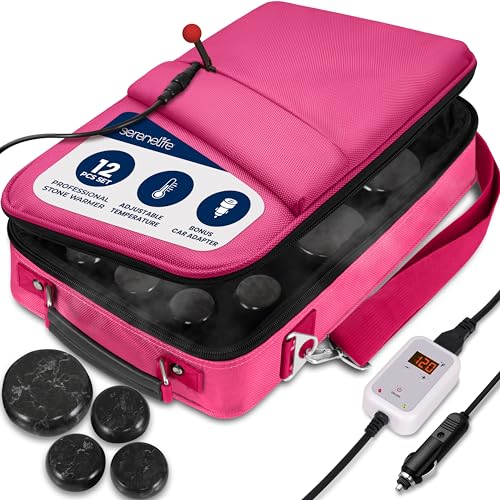
- 6-10 basalt stones in mixed sizes (basalt holds heat longest)
- An electric stone warmer with temperature control — the safety issue with DIY heating in a slow cooker is that water temperature can spike and burn skin; warmers solve this
- Pure carrier oil — sweet almond, jojoba, or unscented massage oil for stone glide
- A warm towel and a quiet room — non-negotiable for the parasympathetic shift
The four kits below cover this in different price brackets. The first two are complete starter setups; the third is stones-only for people who own a warmer; the fourth is the oil.



Safety: temperatures, contraindications, and the inner-wrist test
Stone temperature is the safety-critical variable. Spa standard is 110-130°F. At 130°F basalt feels warmer than a typical bath; at 140°F+ it can scald. The test before every session: hold the stone against your inner forearm or wrist for 5 seconds. If it stings, it’s too hot — let it cool. If it feels pleasantly warm without sharp heat, it’s ready.
Skip hot stones if you have: diabetes with peripheral neuropathy (reduced ability to feel temperature), broken or irritated skin, active infection, recent surgery in the area, very fair or sun-damaged skin (more burn-prone), severe varicose veins (heat over them is risky), pregnancy without prenatal clearance, deep vein thrombosis or active blood clot risk, or any heat intolerance condition.
How to do a basic at-home session in 20 minutes
The personalization tool above gives you the customized version; here’s the universal template:
- Warm 6 stones to 120-125°F in the warmer (10-15 minutes preheat).
- Test each stone on your inner forearm before placing on skin.
- Apply a thin layer of unscented oil to the body area you’ll work.
- Place 2-3 stones on the area (e.g., lower back, between shoulder blades). Let them rest for 2-3 minutes — just breathe.
- Begin gentle gliding strokes with one stone in your hand, working in the direction toward your heart (always).
- Move to the next zone. Repeat the place-rest-glide pattern.
- End with a final 3 minutes of stillness, stones removed, body relaxed. This integration phase is where the parasympathetic shift consolidates.
Total: 20-25 minutes for a short session, 40-50 for a comprehensive one. The shorter session done consistently outperforms an occasional long one.
Peer-reviewed studies on massage, heat therapy, and stress reduction
| Study | Type | What it found |
|---|---|---|
| Chmiel 2026 | Mechanistic Review (47 studies) | Massage (including shiatsu) reliably increased EEG alpha activity, shifted to parasympathetic dominance, raised left frontal alpha (positive affect), and modulated brain connectivity. |
| Venkata Karthik 2026 | Narrative Review | Naturopathy programs combining massage and hydrotherapy reduce cortisol and inflammatory cytokines (IL-1β, IL-1ra), improving fatigue and sleep. |
| Levene 2024 | SR + Meta-analysis (JAMA Pediatrics) | Relaxation interventions (PMR + breathwork) reduced stress and anxiety with significant effect sizes across 16 studies. |
| Chen 2026 | SR + Meta-analysis | Mind-body interventions involving warmth and slow movement reduced chronic low back pain and osteoarthritis pain. |
| Yang 2023 | SR + Meta-analysis | Tuina manual therapy (Asian bodywork tradition closely related to shiatsu) significantly reduced chronic low back pain. |
| Schmidt 2026 | RCT | Heat therapy reduced chronic back pain intensity over 3 months in 79 patients. |
| Elabd 2025 | RCT | Combined infrared thermotherapy + manual relaxation techniques improved trigger-point pain and pressure pain threshold in rhomboid muscles. |
| Abd El Azeim 2025 | RCT | Thermal ultrasound combined with manual therapy reduced neck pain and improved muscle function vs manual therapy alone. |
| Cefo 2025 | Mixed-methods study | 20-minute complementary sessions (incl. massage) significantly reduced perceived stress, anxiety, salivary cortisol, and heart rate. |
| Jastrzębska 2025 | Pilot Study | Massage significantly reduced salivary cortisol and conflict/stress behaviors. |
Massage shifts the autonomic nervous system toward parasympathetic dominance, reduces salivary cortisol, eases muscle pain, and improves sleep markers. Heat therapy is a well-established intervention for muscle pain. Combining warmth + massage layers two evidence-supported mechanisms.
No RCT has specifically isolated basalt-stone massage from other warm massage formats. Claims that hot stones “detoxify the body” or cure specific diseases are not supported by peer-reviewed literature.
FAQ
Is hot stone massage safe during pregnancy?
Only with explicit prenatal massage clearance from your obstetric care provider. Many practitioners avoid hot stones during pregnancy entirely; some use only barely-warm stones on the upper body. Skip the abdomen, lower back, and legs without prenatal-trained guidance.
Can I reuse the massage oil between sessions?
Yes, if it’s a pure single-ingredient or simple blend carrier oil stored sealed. Avoid oils with fragrance or preservatives that degrade with heat. The Brookethorne unscented blend in our picks holds well.
How often should I do hot stone massage at home?
2-3 times per week for general stress and sleep benefit. Daily is unnecessary and can over-soften muscle tissue. Listen to your body — if you feel drained after sessions, reduce frequency.
Why basalt specifically? Can I use other stones?
Basalt is volcanic rock with high iron content, which means it holds heat longer than common rocks. River stones can work but cool faster, requiring more reheating during a session. Marble is sometimes used for COLD stone work, not hot.
Does hot stone massage help with lymphatic drainage?
Indirectly — the warmth, parasympathetic shift, and gentle contact create supportive conditions for healthy lymph flow. It’s not a clinical lymphedema treatment. For dedicated lymph drainage work, see our at-home lymphatic drainage guide.
Final word: the practice is what changes you
The most common reader trap with hot stones is buying the kit, doing one session, declaring it “nice but not life-changing,” and abandoning it. The evidence-supported benefits show up with consistent practice — 2-3 sessions per week over weeks, not from a single dramatic session. The parasympathetic shift gets easier to access each time. The muscle pliability accumulates. The sleep benefit builds.
Use the tool above to pull your specific routine, start with the AICNLY starter kit if you’re new to this, and commit to 4 weeks of twice-weekly sessions before you decide whether the practice fits your life. Most readers who give it that fair trial keep it in their rotation.