

What Is the 1-3-5 Rule?
The 1-3-5 rule is a daily planning method that limits your to-do list to nine tasks. You choose 1 big task, 3 medium tasks, and 5 small tasks. That is it. No endless lists. No guilt from unfinished items.

This rule was popularized by The Muse, a career advice platform. It works because it mirrors how our energy actually flows during a workday. You have limited peak energy for hard tasks. You have moderate energy for medium ones. And you always have enough for small quick wins.
The 1-3-5 rule stands apart from other systems because it builds in flexibility. You are not forcing yourself into six equal priorities. You are matching task difficulty to your realistic daily capacity.
How the 1-3-5 Rule Works Step by Step
Setting up your 1-3-5 list is simple. Here is how to do it each day.
Start by identifying your one big task. This is the project or deliverable that will move the needle most. It needs your best focus and the most time. Examples include writing a report, finishing a proposal, or completing a workout plan.
Next, pick three medium tasks. These take moderate effort and usually between 15 and 45 minutes each. They might include responding to an important email thread, scheduling appointments, or reviewing a document.
Finally, list five small tasks. These are quick wins that take under 15 minutes. Think of things like making a phone call, tidying your desk, or updating a spreadsheet.
- A clear walkthrough of the 1-3-5 rule and why limiting tasks to nine works
- How categorizing by difficulty level matches your natural energy patterns
- Additional productivity strategies that pair well with the 1-3-5 system
- Real examples of daily 1-3-5 lists for different types of workers
Why the 1-3-5 Rule Works Better Than a Long To-Do List
Most people write to-do lists with 15 or 20 items. By noon, they have finished three and feel defeated. The 1-3-5 rule avoids this trap because nine tasks is a realistic daily number for most people.

Research on goal setting from the American Psychological Association shows that specific, limited goals are far more motivating than vague, open-ended ones. The 1-3-5 structure gives you a finish line you can see from the starting block.
The tiered system also matches how cognitive load works. Your brain performs best on demanding tasks early in the day. By afternoon, it prefers lighter work. The 1-3-5 rule naturally guides you to tackle your big task first, then move through medium and small ones as your energy dips.
A Planner Designed for Structured Daily Planning
The right planner turns the 1-3-5 rule from a theory into a daily habit. Look for one with priority sections that separate your tasks by importance level.
Wyze Daily Planner

Source: amazon.com
Undated daily planner with priority sections, time blocking, and habit trackers
The Wellthie One Review
The Wyze Planner fits the 1-3-5 method well because its daily layout includes tiered priority sections. You can write your one big task at the top, your three medium tasks in the middle section, and your five small ones in the quick-wins area. The time-blocking columns help you assign your big task to your peak energy hours. The undated format means no wasted pages if you skip a day.
Wyze Daily Planner Attributes
- Undated format lets you start any day of the year
- Tiered priority section holds tasks at different importance levels
- Time-blocking columns for peak-energy scheduling
- Built-in habit tracker for daily consistency
How to Categorize Tasks: Big, Medium, and Small
The hardest part of the 1-3-5 rule is deciding which category each task belongs in. Here is a simple test.
A big task requires deep focus for more than 45 minutes. It moves a project forward significantly. If you can only finish one thing today, this is the one that should get done.
A medium task needs 15 to 45 minutes of moderate attention. It matters, but it will not derail your week if it slides to tomorrow.
A small task takes under 15 minutes and requires minimal mental effort. These are the things that pile up if ignored but can be knocked out quickly.

When in doubt, ask yourself: “How long will this take, and how much mental energy does it need?” Time and energy together determine the category.
Review Your Week to Improve Next Week
A weekly planner helps you spot patterns. If you notice your big task keeps rolling over, it might be too big. Break it into smaller pieces. If your small tasks pile up, batch them together into one focused block.
Life Charge Weekly To Do List Planner

Source: amazon.com
Weekly to-do list planner with priority matrix and progress tracking
The Wellthie One Review
The Life Charge Weekly Planner pairs naturally with a daily 1-3-5 practice. At the end of each week, you can see which big tasks you completed and which medium ones kept getting delayed. This feedback loop helps you calibrate your daily lists more accurately. The priority matrix built into each page mirrors the tiered thinking that makes the 1-3-5 rule effective.
Life Charge Weekly Planner Attributes
- Weekly layout with daily task breakdowns for each day
- Priority matrix helps rank by urgency and importance
- Progress tracking reveals patterns in task completion
- Compact size works on a desk or in a bag
Common Mistakes With the 1-3-5 Rule
The biggest mistake is making your one big task too large. If a task will take three full days, it is a project, not a single task. Break it into daily-sized chunks. Your big task should be completable in one focused session of one to three hours.
Another mistake is filling your small task slots with things that do not actually need doing. “Organize my entire closet” is not a small task. “Put away the laundry basket” is. Be honest about what qualifies as quick.
Some people skip the system on busy days, thinking they have too much to do for only nine tasks. Those are exactly the days when you need it most. The 1-3-5 rule shines under pressure because it forces clarity when chaos wants to take over.
Capture Overflow Ideas Without Losing Focus
While working through your 1-3-5 list, new tasks will pop into your head. Instead of adding them to today’s list and breaking the system, write them in a separate notebook. Review that notebook each evening when you build tomorrow’s 1-3-5 list.

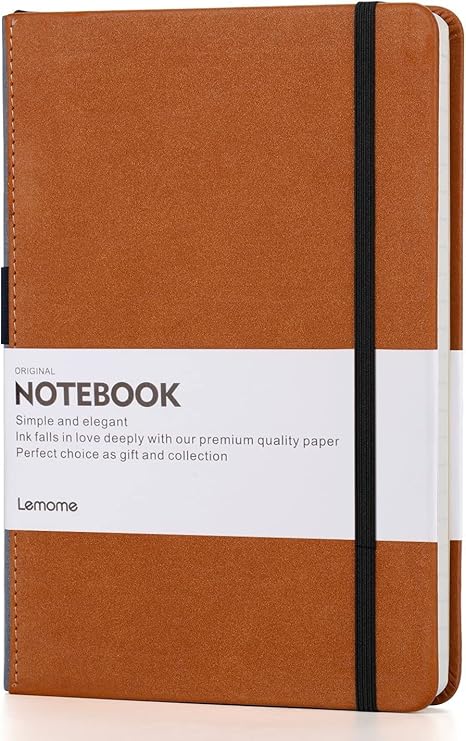
Lemome Thick Classic Notebook
Source: amazon.com
A5 hardcover notebook with pen loop, 180 pages, faux leather cover
The Wellthie One Review
The Lemome Thick Classic Notebook works as the perfect overflow capture tool. While your planner holds your daily 1-3-5 list, this notebook handles all the random ideas, meeting notes, and future task candidates that show up during focused work. The pen loop means you always have a writing tool ready. At 180 pages, it lasts for months of daily brain dumps and evening reviews.
Lemome Thick Classic Notebook Attributes
- Faux leather hardcover stands up to daily use
- Pen loop keeps your writing tool always within reach
- 180 college-ruled pages for months of capturing ideas
- Built-in pocket and page dividers organize different projects
The 1-3-5 Rule vs. Other Productivity Methods
You might wonder how the 1-3-5 rule compares to other planning systems. The Eisenhower Matrix sorts tasks by urgency and importance but does not set a daily limit. The 1-3-5 rule adds that critical constraint. Together, they work well: use the Eisenhower Matrix to decide what matters, then use the 1-3-5 rule to plan what fits into today.
Unlike time blocking, which schedules every minute, the 1-3-5 rule focuses on outcomes rather than hours. This makes it more forgiving when interruptions happen. You still know your nine tasks. You just adjust the order.
Start Your First 1-3-5 List Tonight
Grab a pen and paper right now. Write down one big thing you need to finish tomorrow. Add three medium tasks that would make the day feel productive. Then list five small things you have been putting off. That is your entire plan for tomorrow.
The 1-3-5 rule works because it respects your limits. It does not ask for superhuman effort. It asks for honest prioritization and steady follow-through. That combination is what separates people who feel busy from people who actually get things done.
Disclosure: This post contains affiliate links. If you click through and make a purchase, we may earn a small commission at no extra cost to you. We only recommend products we believe in.


