

The two minute rule for procrastination is the simplest productivity trick I have ever stuck with. The rule is straightforward. If a task takes less than two minutes, you do it right now. If a bigger task feels too heavy to start, you commit to only the first two minutes. That is the whole thing. No app, no system overhaul, no hour-long planning ritual. Two minutes.
I started using it on a Tuesday morning when I sat down with my coffee and a to-do list that had been sitting on my counter for nine days. By 9 a.m. I had cleared half of it. Not because the tasks were urgent. Because I stopped letting myself negotiate with two-minute jobs.
Where the Two Minute Rule Comes From
The original two minute rule is from David Allen’s classic book Getting Things Done, published in 2001. Allen’s version is the productivity flavor. If a task takes less than two minutes to complete, do it the moment it appears instead of capturing it in a list. The cost of writing it down, sorting it, and revisiting it later is higher than the cost of just doing it.
James Clear gave the rule a second life in Atomic Habits with a habit-formation twist. To start a new behavior, shrink it to something that takes two minutes or less. Want to read more? Read one page. Want to run? Put on your running shoes. The two minutes is a doorway, not a destination. Once you walk through, momentum carries you.
I lean on both versions. The Allen version clears clutter from my mental inbox. The Clear version starts the deeper work I keep avoiding. They work better together than apart.

Why Procrastination Is Almost Never About Laziness
Procrastination is rarely a character flaw. It is a brain protection mechanism. Your nervous system flags a task as threatening (boring, hard, ambiguous, emotionally loaded) and the easiest way to avoid the discomfort is to scroll, snack, or start something else. The task does not get smaller while you avoid it. It usually gets bigger and scarier.
The two minute rule sneaks past the threat response. Two minutes is too small to feel scary. Your brain says yes before it has time to argue. Once you start, the difficulty drops fast. A 2017 study from Wake Forest researchers, summarized by the American Psychological Association, found that the discomfort of a task drops sharply within the first few minutes of starting it. Starting is the hard part. The rest is mostly just doing.
Two Versions, One Habit
Version One: Do It Now (David Allen)
Any task that pops into your head and would take less than two minutes gets done immediately. Examples from a normal week:
- Reply to the friend’s text instead of starring it for later
- Wipe down the bathroom counter when you brush your teeth
- Hang up the towel instead of dropping it on the bed
- Pay the small invoice while you are looking at email
- Put the dish in the dishwasher instead of leaving it in the sink
This version is mostly about not letting tiny tasks accumulate. A pile of nine-minute jobs is more demoralizing than nine separate two-minute jobs that never piled up in the first place.
Version Two: Just Start (James Clear)
Any habit you want to build gets a two minute on-ramp. The two minute version of the habit is what you actually do, every day, no exceptions. Examples:
- “Write a chapter” becomes “open the document and write one sentence”
- “Meditate for 20 minutes” becomes “sit down with eyes closed for two minutes”
- “Run three miles” becomes “lace up the running shoes and walk to the corner”
- “Cook a healthy dinner” becomes “wash one vegetable”
- “Clean the garage” becomes “carry one box to the donation pile”
The point is not to stop after two minutes. The point is to make starting frictionless. Most days you will keep going. Some days you will not. Both are fine.
Getting Things Done by David Allen
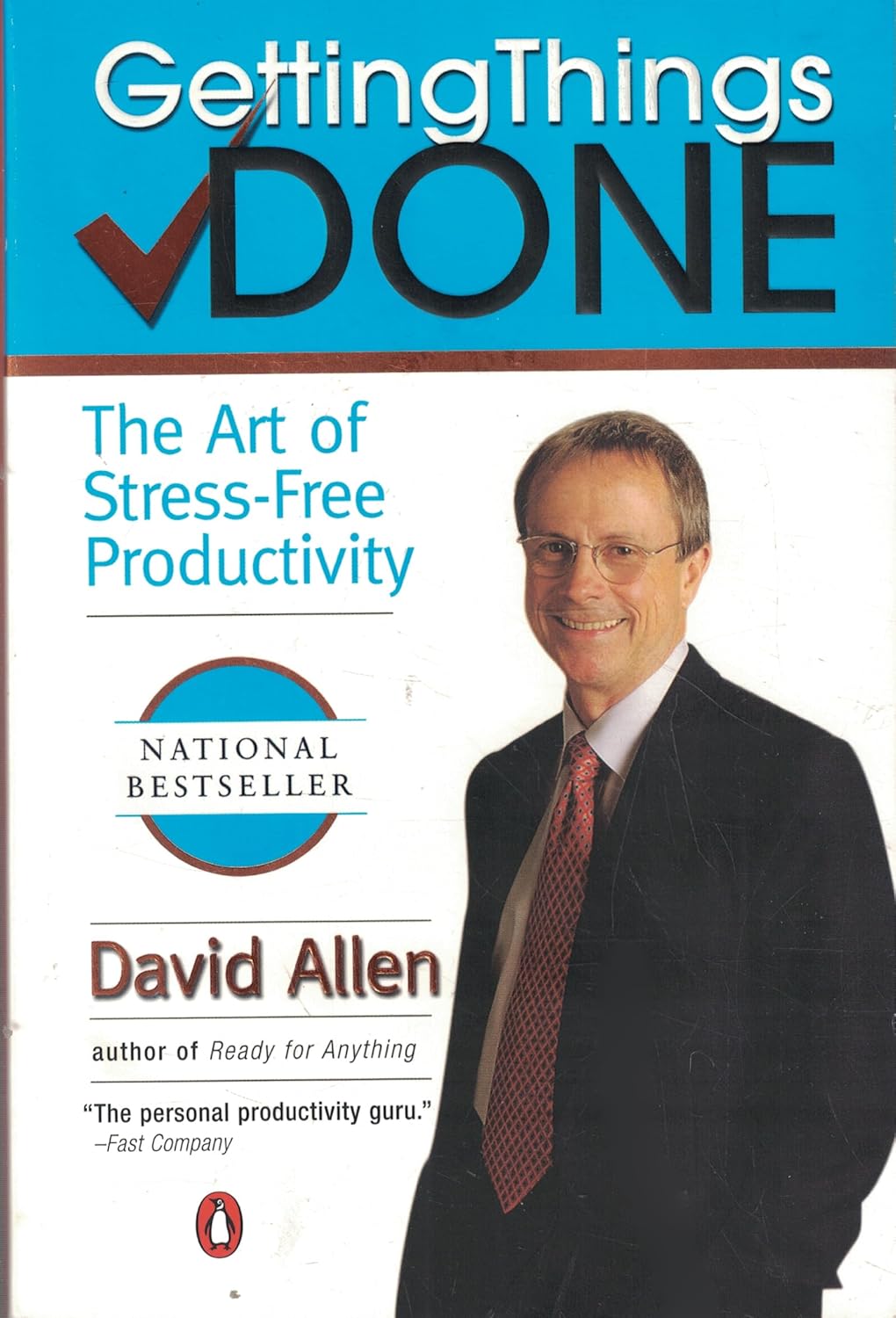
Source: amazon.com
The art of stress-free productivity, the book where the original two minute rule lives
The Wellthie One Review
Getting Things Done Attributes
- The original source of the David Allen two minute rule
- Full inbox-to-action capture system that scales for work and home
- Reissued and updated edition, still relevant after 20+ years
- Available in paperback, audiobook, and Kindle
If your problem is not motivation but the sheer volume of inputs hitting you every day, this is the book to start with. Allen’s full workflow is more involved than the two minute rule alone, but most readers walk away with at least one habit that quietly transforms their week. The two minute capture rule lives inside this larger inbox-clearing system, which is why it stuck for me long term.
What you will learn in this video:
- The two distinct flavors of the two minute rule and when to use each
- How shrinking a task changes the brain’s resistance pattern
- Examples you can borrow for the very next task on your list
- Why the rule sticks when bigger productivity systems quietly fail
The Source Material That Actually Earned Shelf Space
I have read more productivity books than I would like to admit. The two below are the ones I keep going back to. If you only buy one personal development book this quarter, it should be Atomic Habits. If you are drowning in inputs from work and home, add Getting Things Done.
Atomic Habits by James Clear

Source: amazon.com
An easy and proven way to build good habits and break bad ones
The Wellthie One Review
Atomic Habits Attributes
- Practical framework for tiny behavior change, no fluff
- Chapter-length deep dive into the two minute rule
- Hardcover, paperback, audiobook, and Kindle editions all in print
- One of the best-selling personal development books of the decade
I underline a book maybe one time in twenty. Atomic Habits is one of the underlined ones. Clear’s two minute chapter alone has saved me more wasted afternoons than any productivity app I have ever installed. The ideas are short, the examples are concrete, and the writing is calm. It pairs especially well with my dopamine menu for productivity guide if you struggle with starting because everything feels equally meh.

How I Use the Two Minute Rule on a Real Tuesday
Here is the actual sequence I run most weekday mornings.
I wake up, drink water, and write a list of every nagging little task on a sticky note. Anything that is bothering me. Email replies, a payment, calling the dentist, switching the laundry. The note has to fit on a single sticky. That cap forces me to choose.
I look at the list. Anything under two minutes gets done in the next ten minutes. Most of the list disappears. The few items that need more time get a different treatment. I commit to two minutes of work on each one. I open the document, the email, the spreadsheet. I do two minutes. About three quarters of the time, I keep going. The other quarter, I close it and move on without guilt. I started. I learned where the friction was. I will be back tomorrow.
The whole protocol takes maybe twenty-five minutes. It clears more from my plate than two hours of pretend-working did the week before.
The Tool That Made the Rule Stick
For the longest time I tried to use my phone timer. It was a disaster. Every time I touched my phone to start the timer I lost ten minutes to a Slack notification or a news headline. The fix was a dedicated visual timer that lives on my desk and never connects to the internet.
Time Timer 60 Minute Visual Timer

Source: amazon.com
Silent visual countdown clock, ideal for focus, deep work, and tiny task starts
The Wellthie One Review
Time Timer Attributes
- Analog visual countdown so you can see time disappear
- Silent operation, no ticking, no beeps unless you want them
- Removable silicone cover for everyday wear and tear
- One AA battery, no app, no charging cord, no notifications
This little device is the most-used item on my desk. I twist the dial to two minutes when I want to start something hard. The shrinking red disk is weirdly motivating. When the disk runs out, my brain notices and either keeps going or gives me permission to stop. It is the one productivity gadget I would replace immediately if it broke.

Where the Two Minute Rule Falls Apart
The rule is not magic. It breaks in three predictable ways.
It breaks when the task is genuinely the wrong thing to do. Two minutes of a task that should be deleted is still wasted time. Before you start, ask if the task should exist at all.
It breaks when you mistake busywork for progress. Twenty two-minute tasks in a row can feel productive while your real priority sits untouched. Use the rule to clear the runway, then commit your best energy to the one big thing that actually matters.
It breaks when you need rest. If you are exhausted, the right move is sleep, not another tiny task. Recovery is not procrastination. Be honest about which one you are doing.
Pairing the Rule With Other Lightweight Habits
The two minute rule plays well with other small productivity habits. I pair it with a Sunday review session that catches anything bigger than a few minutes (my weekly review practice walks through the version I use). I pair it with a morning brain dump (see how to do a brain dump for stress relief) so the list of two-minute tasks is honest, not a guess. And on the days I keep avoiding the one big task, I run my eat the frog method first and treat the rest of the morning as cleanup.
What Happens After Thirty Days
I tracked my own use of the rule for thirty days using a simple checkbox in my notebook. By week two, the small tasks that used to pile up on my counter were gone before lunch. By week three, the bigger projects I had been avoiding started moving again. By week four, I noticed I was not procrastinating less, exactly. I was just spending less time stuck. Same human, smaller stuck moments. That was the actual win.

The Bottom Line
The two minute rule for procrastination is the rarest kind of productivity advice. Free, fast, easy to remember, and genuinely effective. Use the David Allen version to clear the small stuff. Use the James Clear version to start the big stuff. Use a real timer instead of your phone. Pair it with a weekly review and a daily brain dump.
You do not need a new app. You do not need a coach. You need two minutes and the willingness to start. Try it on the next nagging task that has been sitting on your list. Set a timer. Begin. See what happens.
This post may contain affiliate links, which means we may receive a small commission, at no cost to you, if you make a purchase through a link.


