
I used to wake up, reach for my phone, and be in seven people’s heads before my feet even hit the floor. If you have been searching for how morning pages for mental clarity actually work, welcome. I stumbled onto them during a stretch of brain fog and low-level dread, and they changed the way I start my day.
Morning pages are three pages of longhand, stream-of-consciousness writing, done first thing in the morning. No editing, no looking pretty, no sharing. Just you, a pen, and a notebook. Julia Cameron introduced them in her book The Artist’s Way over thirty years ago, and they are still one of the cheapest, most effective mental clarity tools I have found.
This is not a productivity hack or a gratitude list. It is closer to mental flossing. You dump the static so the rest of the day can actually land. In this guide I will share how I do morning pages, the three simple tools I use, and the small habit changes that made them stick for me.
Key Takeaways
- Morning pages are three pages of longhand writing, done first thing, with no rules about style or content.
- They work best before phones, email, and news; the goal is to clear mental static, not capture brilliant ideas.
- You only need a notebook, a pen that flows well, and about 20 to 30 minutes of quiet.
- Expect the first week to feel awkward. The real shift usually shows up in week two or three.
- Pair morning pages with simple habits like phone free mornings for a calm, focused start.
What Morning Pages Actually Are
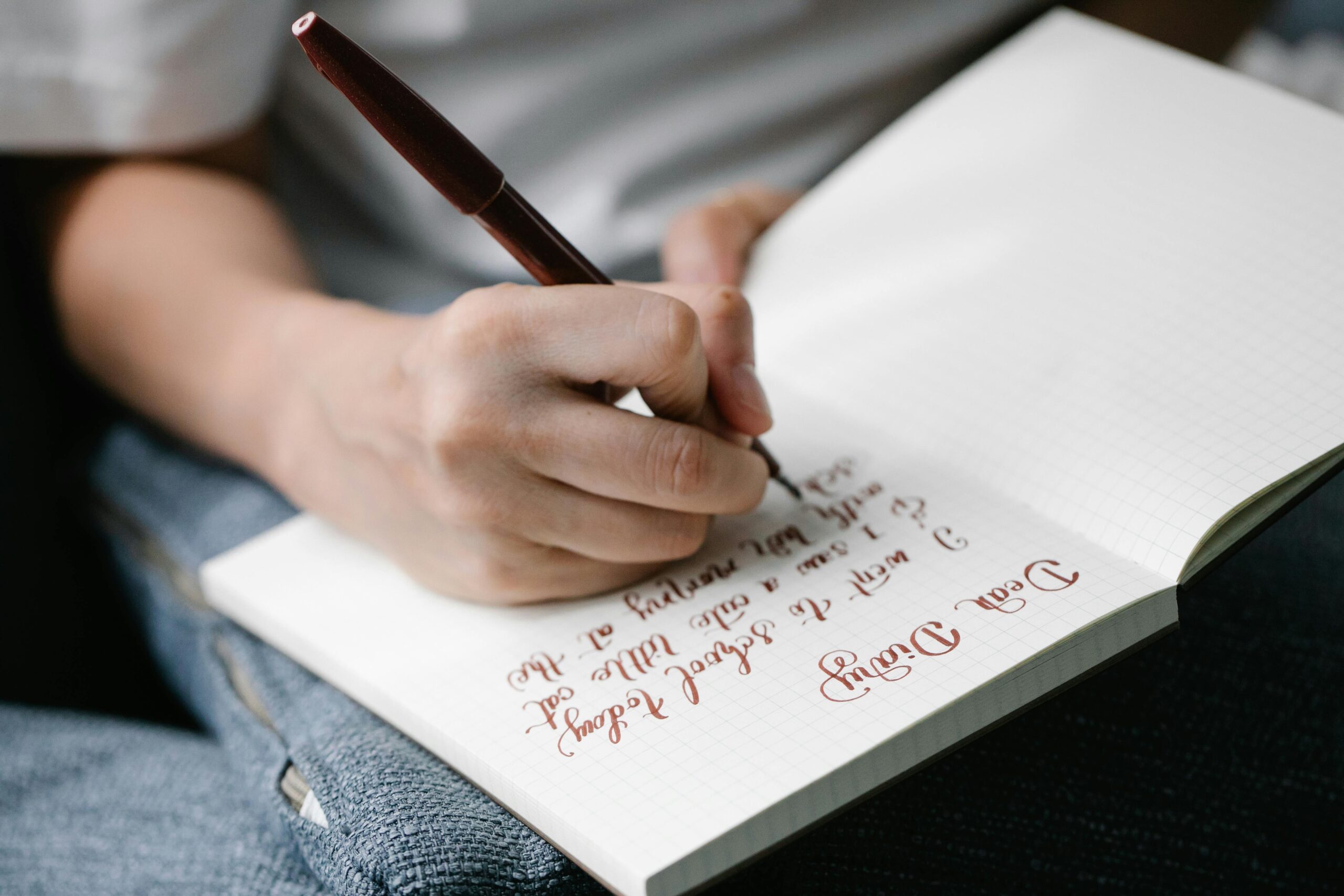
Morning pages are three handwritten pages of whatever is in your head when you first wake up. Grocery lists, worries, half-formed ideas, complaints about the dog, reminders, random memories. All of it goes on the page. You do not stop to edit, correct spelling, or make it good. The only rule is to keep your hand moving until you finish three pages.
The scale matters. Three pages is long enough to get past the surface noise but short enough that you can fit it in before the day takes over. Anything shorter tends to stay polite. Anything longer starts to feel like homework.
This is not the same as journaling in the traditional sense. You are not writing a record for your future self. You are taking out the mental trash so the rest of your day is not dragging it around.
Why Morning Pages Support Mental Clarity
Your brain does a lot of background cleanup while you sleep, but it does not finish the job. When you wake up, there is a stack of half-thoughts, unfinished worries, and random signals still looping. If you reach for your phone, you just pour more noise on top of that pile.
Morning pages give you a structured way to empty the stack. The act of writing by hand slows your thoughts down enough to actually see them. Once they are on paper, they stop pinging in the background. You are not suddenly a zen master, but the baseline chatter drops a notch or two, and that small drop is where the clarity comes from.
A few patterns I noticed after about a month of daily pages:
- I stopped carrying the same five worries around all day, because most of them had already been written and let go by 8 a.m.
- I could feel my real priorities a little faster, instead of hours into the day after I had already answered ten emails.
- I was less reactive. When something small went sideways, I had already used my morning page energy on it, so the rest of the day felt lighter.
It is not magic. It is the boring kind of discipline that compounds.
In this conversation Julia Cameron covers:
- Why morning pages are the foundation of her creative recovery work
- How longhand writing opens up ideas that typing cannot reach
- The gentle way she suggests beginners get started without making it precious
How to Start a Morning Pages Practice
There is no perfect setup, but a few simple choices make a real difference in whether the habit sticks.
- Write first. Before phone, before news, before email. If you open your phone first, the pages become a response to the world instead of a clearing of your own mind.
- Use paper, not a screen. Typing is too fast and too polished. The slight friction of a pen is what makes this work.
- Three pages, no matter what. If you are empty, write “I have nothing to say” over and over. The block is the point, and writing through it is how it breaks.
- Do not read them back. At least not for the first few weeks. You are practicing release, not performance.
- Keep it private. These pages are not for anyone else. If that freaks you out, Julia Cameron suggests tearing them up or shredding them.
Most days this takes me twenty minutes. On a hard day it can stretch to thirty five. I guard the time the way I guard my first cup of coffee.
The Only Three Tools I Actually Use
You can do this with a spiral notebook and a stick pen and it will still work. That said, a few small quality upgrades made a huge difference in whether I kept showing up. Better tools removed friction, and the lower the friction, the more I wrote.
The Artist’s Way 30th Anniversary Edition (Julia Cameron)

Source: amazon.com
The book that started it all. Walks you through twelve weeks of creative recovery with morning pages at the core.
The Wellthie One Review
I finally read the 30th anniversary edition last year after seeing it referenced for the hundredth time, and I understand the hype now. The morning pages chapter is short, clear, and matter of fact. No woo, no guilt trips, just a simple instruction to show up and write. If you are going to commit to this practice, you might as well read the source material once.
The Artist’s Way 30th Anniversary Attributes
- Written by Julia Cameron, who created the morning pages concept
- 288 pages, paperback format, travel friendly
- Anniversary edition with new introduction and reflections
- Works as a stand-alone read or a 12 week guided workbook

The Right Notebook Makes You Want to Show Up
A flimsy notebook makes you dread the page. A notebook that opens flat and takes ink without bleeding makes you want to pick it up. After trying several, I landed on a dot grid hardcover that I have refilled year after year.
LEUCHTTURM1917 A5 Dotted Hardcover Notebook (251 Pages)

Source: amazon.com
Hardcover A5 notebook with dotted, numbered pages; lies flat and handles gel ink cleanly.
The Wellthie One Review
This is the notebook that earned a permanent spot on my bedside table. The paper is ivory, the dots are subtle, and it lies flat so my hand is not fighting the spine at 6 a.m. The numbered pages are handy if you ever want to make a quick index of lines you want to come back to. One book covers about three months of daily pages for me.
Leuchtturm1917 Attributes
- Hardcover, A5 size, 251 numbered pages
- 80 gsm ivory paper, compatible with gel and fountain pens
- Elastic closure, pen loop, and back pocket
- Available in dotted, lined, blank, and squared
A Pen That Moves as Fast as Your Brain
This one is easy to shrug off, but please do not. A pen that skips or drags will kill your morning pages faster than anything else. You want a pen that lays down smooth ink without pressure so you can write quickly without your hand cramping.
PILOT G2 Premium Gel Pens (12 Count, Fine Point, Black)

Source: amazon.com
Retractable gel pens with smooth black ink; refillable and loved by writers, journalers, and students.
The Wellthie One Review
These are the pens I keep refilling in my notebook pen loop. The fine point is crisp without being scratchy, the ink is dark, and they dry quickly enough that lefties can use them without smearing. Twelve at a time means one stays at my desk, one in my bag, one by the bed, and the rest do not go missing. Simple, cheap, reliable.
Pilot G2 Gel Pen Attributes
- Retractable, refillable gel ink
- 0.7 mm fine point, consistent ink flow
- Comfortable rubber grip for long writing sessions
- 12 count bulk pack, trusted by students and journalers

How to Make Morning Pages Actually Stick
Most people try morning pages, love them for a week, and then lose the habit to a busy Tuesday. Here is what kept me going past the shiny honeymoon phase.
- Stack them on an anchor habit. I write mine right after pouring coffee, before I sit down on the couch. Anchoring them onto something I already do means I rarely skip. This is the same principle behind habit stacking for beginners, where tiny habits piggyback on routines that already work.
- Keep the supplies in one spot. Notebook, pen, coffee cup, small clock. If I have to hunt for any of them at 6 a.m., the habit is in trouble.
- Protect the time like sleep. It is non negotiable. If I wake up late, I shrink the pages to one page rather than skip entirely. Showing up short beats not showing up at all.
- Remember the minimum. Three pages on a great day, one page on a rough day, a few lines on a really rough day. Streaks matter more than volume.
For extra support, I also recommend pairing morning pages with a dopamine detox week if you feel the practice slipping because of constant scrolling. A calmer nervous system makes the page easier to face.
Common Questions About Morning Pages
Do I have to write three pages exactly?
The three page rule is the guideline, not a law. Julia Cameron uses 8.5 by 11 inch pages. If you are using an A5 notebook like I do, three pages in that notebook is pretty close. Pick a page size and be consistent. The point is to write long enough to get past the first layer of busy.
Can I type my morning pages instead?
You can, but you will miss a big part of the benefit. Typing is too fast, and your polished writing brain kicks in quickly. Longhand slows you down and pulls different things up. Try paper for three weeks before you decide.
What if I keep writing the same complaints every day?
Great. That means you have spotted a real signal under all the noise. Recurring complaints on the page are often the first draft of a change you need to make. Keep writing them; the solution usually follows.
Do I need to do this forever?
No. Many people do morning pages for a few months around a big life change, then dip in and out. I have had seasons of daily pages and seasons of a few times a week. The practice is yours, not the other way around.
Final Thoughts on Morning Pages for Mental Clarity
Morning pages are the opposite of a life hack. They are slow, low-tech, and a little boring. That is why they work. You are not trying to outsmart your brain, you are giving it a soft place to empty itself before the day hits.
Start with a cheap notebook and whatever pen you have. If you stick with it for three weeks, treat yourself to a real notebook and a pen that flows. That small upgrade is a signal to your brain that you are taking this seriously.
For a fuller daily routine, you might also enjoy my guides on the Pomodoro technique for deep work and brain dump journaling for overwhelm. Morning pages, focus blocks, and a real brain dump on hard days have carried me through the messiest seasons of the last few years.
Morning pages work beautifully alongside a weekly review practice. Morning pages clear the emotional noise. The weekly review turns the leftover clarity into a plan.
This post may contain affiliate links, which means we may receive a small commission, at no cost to you, if you make a purchase through a link. This content is for informational purposes only and is not a substitute for medical advice. Please talk to your healthcare provider before starting any new practice if you have concerns about your mental health.