

The 5-4-3-2-1 grounding technique for anxiety is a sensory exercise that pulls your attention out of an anxious spiral and back into the present moment. You name five things you can see, four you can feel, three you can hear, two you can smell, and one you can taste. The whole practice takes about 60 seconds, requires nothing but your senses, and works even if you have never tried mindfulness before.
Grounding calms the moment — but what is fueling the anxiety?
Guided 5-4-3-2-1 Reset
I learned this technique on a Tuesday afternoon when I had three articles half-written, two emails I’d been avoiding, a stack of laundry I kept walking past, and a head full of thoughts that would not stop bouncing. I was sitting at my desk feeling like I was juggling a dozen balls and dropping every single one — not finishing anything, not doing a good job on any of it. My chest was tight and my mind would not settle on one thing long enough to actually do it. A friend texted me this five-step list. I tried it once. By the third step my breathing had slowed. By the time I finished, the spiral had stepped back from the wheel. I have used it dozens of times since, and now keep it in my mental first-aid kit alongside lavender oil and a deep breath.
This guide walks through how the 5-4-3-2-1 grounding technique works, why it calms your nervous system, exactly how to practice it, and a few small tools that make the habit stickier.
What Is the 5-4-3-2-1 Grounding Technique for Anxiety?
The 5-4-3-2-1 method is a structured mindfulness exercise that uses your five senses to interrupt anxiety. It asks your brain to look outward, count, and name. That kind of attention is the opposite of what anxiety wants you to do.
Therapists in cognitive behavioral therapy and trauma-informed care recommend this practice often. The reason is simple. When your nervous system is in fight-or-flight, your thoughts race, your body tightens, and your breath gets shallow. The grounding exercise gives your prefrontal cortex something concrete to do, which signals safety to the rest of your nervous system.

It is not a replacement for therapy or medical care. It is a portable tool you can use in line at the airport, before a hard conversation, or in the middle of the night when sleep refuses to show up.
What you will learn in this video:
- How the 5-4-3-2-1 grounding technique interrupts a panic spiral
- The exact words to say to yourself for each sense
- How to use the technique in public without anyone noticing
- Why it works on both panic attacks and everyday anxiety
How to Do the 5-4-3-2-1 Grounding Technique, Step by Step
Sit or stand comfortably. You can keep your eyes open. Take one slow breath in and out before you start. Then move through the five senses in order.
5 things you can see. Look around the room or space you are in. Name five specific objects out loud or in your head. Not “stuff on my desk” but “the blue mug, the cracked white wall, the sunlight on the floor, the pen with the chewed cap, the silver paper clip.” Specifics pull your brain into the room.
4 things you can feel. Notice four physical sensations you are touching right now. The chair against your back. The texture of your jeans. The cool air on your hands. Your feet pressing into your shoes. If you have a worry stone, a textured ring, or a soft fabric nearby, this is when to use it.
3 things you can hear. Pause and listen for three distinct sounds. The hum of the refrigerator. A car passing outside. Your own breath. Birds. The clock. Your brain is wired to find threats in sound, so this step quietly resets that scanner toward neutral or pleasant noise.
2 things you can smell. If your space has obvious scents, name them. Coffee. Laundry. Soap. If not, sniff your hand, your sleeve, the pillow next to you. Many people keep a small essential oil roll-on in a pocket or purse for this exact step. The scent itself becomes an anchor your brain learns to associate with calm.
1 thing you can taste. Notice the taste in your mouth. If it is bland, take a sip of water, a piece of gum, a square of dark chocolate, or a mint. Let your tongue work. Pay attention to whether the taste is sweet, bitter, sharp, or warm.
That is the entire practice. By the time you reach “one thing you can taste” your nervous system has usually shifted at least one gear out of red.
Why This Simple Exercise Calms Your Nervous System
Anxiety has a habit of catastrophizing the future or replaying the past. Either way, your brain has left the present. When you ground yourself in the senses, you are quietly telling the deeper parts of your brain that you are not in danger right now.
The technique also engages your prefrontal cortex, the planning and thinking part of your brain. Anxiety pushes activity into the amygdala, the alarm center. Naming and counting requires the prefrontal cortex to come back online. The two regions cannot be in full panic and full focus at the same time.

Research on grounding and mindfulness shows reductions in self-reported anxiety, lower heart rate, and better sleep when these practices are done regularly. The National Institute of Mental Health notes that mindfulness-based techniques are a recognized adjunct to traditional anxiety treatment.
The exercise also pairs beautifully with the breathwork I describe in how to regulate your nervous system naturally. You can use the grounding technique to come down from a panic moment, then move into slower vagal breathing to keep the calm steady.
Small Tools That Make Grounding Easier
You do not need any tools to do this practice. But a few low-cost items can make the technique easier, especially for the smell, taste, and touch steps.
An Aromatherapy Roll-On for the Smell Step
The smell step is the hardest one for most people in modern indoor spaces. There just are not enough natural scents in a fluorescent-lit office or a quiet bedroom. A high-quality essential oil roll-on solves that.
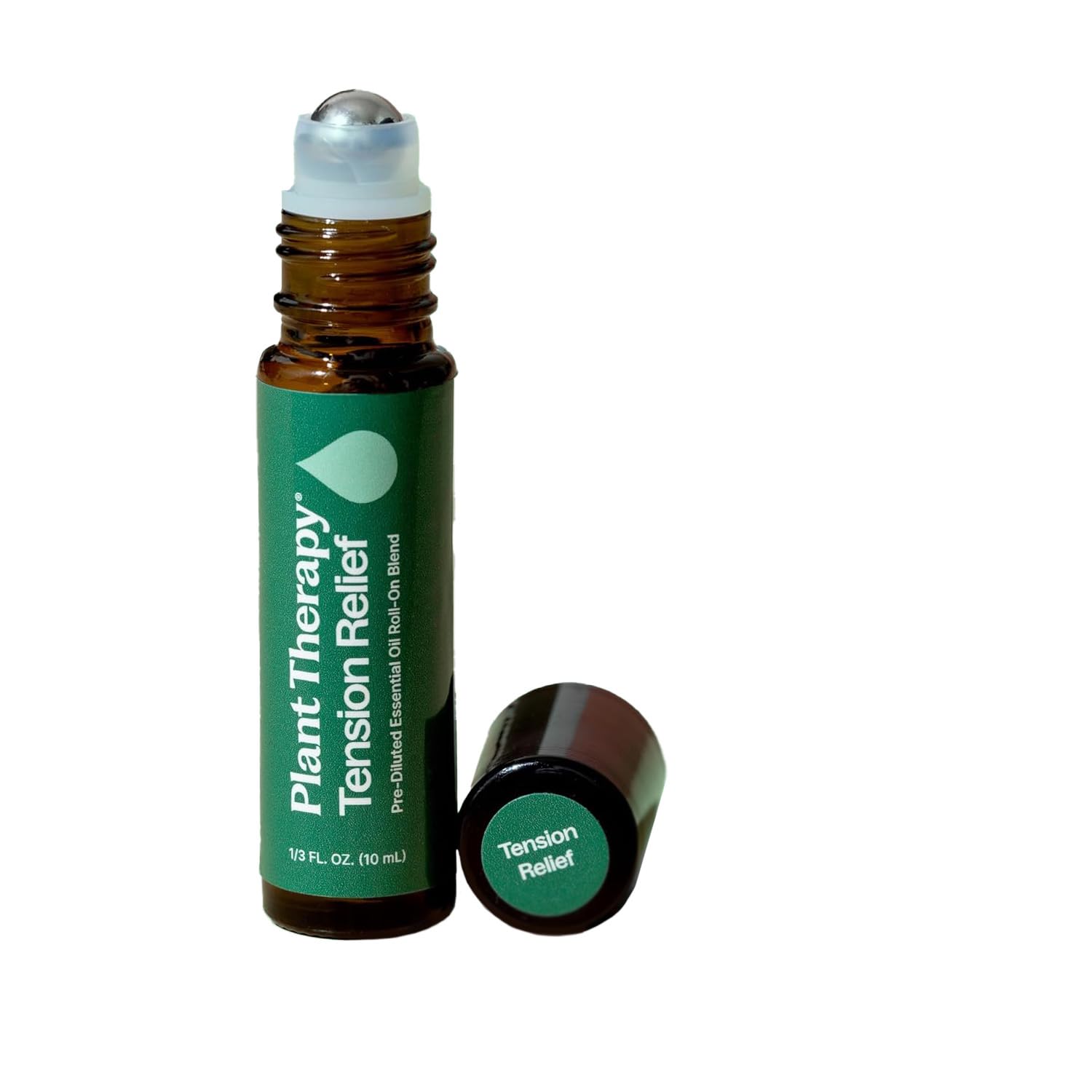
Plant Therapy Tension Relief Roll-On
Source: amazon.com
A pre-diluted blend of lavender, peppermint, and frankincense for grounding on the go.
Check Price On AmazonThe Wellthie One Review
Plant Therapy Tension Relief Roll-On Attributes
- Pre-diluted in fractionated coconut oil, no skin irritation
- 10 mL bottle fits in any pocket or small bag
- KidSafe certified blend of lavender, peppermint, and frankincense
- Glass roller-ball applicator delivers a steady, mess-free amount
I keep this roll-on in my purse and a second one on my nightstand. Two swipes on the wrist, one quick sniff, and the smell step practically does itself. The scent has become my brain’s signal for “we are slowing down on purpose.”
A Spinner Ring for the Touch Step
For the four-things-you-can-feel step, having a textured object on your finger makes the practice almost involuntary. A spinner ring lets you fidget discreetly anywhere, even in a meeting or at a kid’s birthday party.
Sterling Silver Spinner Anxiety Ring

Source: amazon.com
Solid 925 sterling silver with a smooth spinning band for quiet fidget relief.
Check Price On AmazonThe Wellthie One Review
Sterling Silver Spinner Ring Attributes
- Hypoallergenic 925 sterling silver, safe for sensitive skin
- Inner band spins smoothly with one finger touch
- Looks like regular jewelry, not a medical device
- Available in multiple sizes for a precise fit
I bought one for myself and one for my teenage niece. We both wear them every day. The texture and the spin give my hand something to do during long calls and stressful errands. By the time I notice I have been spinning, my breath has already slowed.
Variations of the 5-4-3-2-1 Grounding Technique
The classic version uses sight, touch, hearing, smell, and taste in that order. But the technique is flexible. Use whatever sense is most available in the moment.
For nighttime anxiety in bed: skip sight and lean on touch and sound. Notice four spots where your body meets the mattress, three sounds in the house, two scents in the room, and one taste in your mouth.
For driving anxiety: use only sight and touch since you should not close your eyes or focus inward. Name five things outside the windshield and four sensations of your body in the seat. Repeat as needed.
For grief or sadness: add a sixth step at the end. Name one thing you are grateful for in this moment, however small. The shift from senses to gratitude can soften a heavy heart.
A Weighted Lap Blanket for Deeper Resets
If your anxiety has a body component, like trembling, fidgeting legs, or restless arms, the grounding technique works even better with deep pressure. A weighted lap blanket is the easiest way to add that pressure on the couch or at a desk without committing to a giant body blanket.
Cottonblue Weighted Lap Blanket

Source: amazon.com
7 lb crystal velvet weighted blanket sized 29 by 24 inches for lap or couch use.
Check Price On AmazonThe Wellthie One Review
Cottonblue Weighted Lap Blanket Attributes
- 7 lb fill provides gentle deep-pressure stimulation
- Crystal velvet cover stays soft and washable
- Compact 29 by 24 inch size, ideal for couch or office chair
- Heavy enough to feel grounding, light enough to travel with
I keep mine folded on the couch. When my anxiety hits in the evening, I drape it over my lap, run through the 5-4-3-2-1 sequence, and finish with a few slow exhales. The combination is faster than either practice alone.
Mistakes to Avoid With This Grounding Technique
The practice is simple, but a few habits keep it from working its best.
- Rushing through the steps. Speed defeats the purpose. The point is to spend three to five seconds with each item.
- Listing categories instead of specifics. “Five things on my desk” does not engage your brain. “The yellow pencil” does.
- Closing your eyes. The visual step needs your eyes open. If panic makes that hard, look at one steady object until you can name it.
- Only using it in crisis. Practice the technique on a calm Tuesday and your brain will have an easier time finding it during a hard Friday.
If you find yourself in a regular evening anxiety pattern, pair this practice with the slower wind-down routine in phone-free mornings for better focus and add a calming morning ritual on the other end of the day.
Final Thoughts on the 5-4-3-2-1 Grounding Technique
This is one of the few self-help tools I would teach a stranger in an elevator. It is free, portable, evidence-supported, and genuinely fast. It will not solve a chronic anxiety disorder on its own, and it should never replace professional care if you need it. But it can be a calm hand on your shoulder in the moments when your thoughts have run ahead of your body.
Try it once today, even if you are not anxious. Practice when you are calm so your brain knows the path. Then the next time the spiral starts, your senses will already know the way home.
Once grounding feels comfortable, layering in a structured breath practice gives your nervous system a second strong tool. Our guide on the box breathing technique for stress walks through the simple 4-4-4-4 pattern Navy SEALs use to stay calm under pressure.
What the research says about grounding for anxiety
The 5-4-3-2-1 technique is a form of sensory mindfulness — it pulls your attention out of anxious thoughts and into the present moment through your senses. That broader approach has strong support: according to PubMed, a comprehensive meta-analysis of 209 studies (over 12,000 people) found mindfulness-based therapy is moderately effective and “especially effective for reducing anxiety, depression, and stress” (Khoury et al., 2013, Clinical Psychology Review, DOI). Grounding will not cure an anxiety disorder on its own, but as a free, portable, evidence-aligned coping skill, it is one of the most useful tools you can carry.
Frequently asked questions
How does the 5-4-3-2-1 grounding technique work?
It interrupts the anxiety spiral by directing your attention to your five senses, one at a time: five things you see, four you feel, three you hear, two you smell, one you taste. This shifts your brain from anxious thoughts to present-moment sensory input, which calms the stress response.
When should you use the 5-4-3-2-1 technique?
Use it the moment you feel anxiety, panic, or overwhelm rising, or during a racing-thought spiral. It works anywhere — at your desk, in the car, or in bed — and takes about a minute.
Does grounding actually help anxiety?
Yes, as an in-the-moment coping skill. It is a form of sensory mindfulness, and mindfulness-based approaches are well supported for reducing anxiety. It is best used alongside, not instead of, professional care for an anxiety disorder.
What if grounding does not calm me down?
Try it a few times, since it works better with practice, and pair it with slow breathing. If anxiety is frequent or severe, talk to a professional, and consider whether an underlying driver like a high toxic load is keeping your nervous system on high alert.
Constant Anxiety Often Has A Physical Driver
More calm-your-system guides: pair this with vagus nerve exercises and earthing at home.
This post may contain affiliate links, which means we may receive a small commission, at no cost to you, if you make a purchase through a link.