

The first time I gave chamomile tea for dog anxiety, it was for my friend’s senior beagle who paced the kitchen during every thunderstorm. I brewed a cup of weak, cooled organic chamomile, splashed about a tablespoon into his water bowl, and within twenty minutes he lay down on his bed and stopped panting. Not a miracle, but a clear shift. Chamomile is one of the gentlest, most well-studied calming herbs for dogs, and most owners are surprised by how simple it is to use safely.
Chamomile contains apigenin, a flavonoid that binds to the same calming receptors in the brain as some prescription anti-anxiety medications, though far more gently. Both humans and dogs share these GABA receptors, which is why the herb works across species. Research in veterinary herbalism circles has documented its use for mild stress, restlessness, digestive upset, and trouble settling down at night.
This guide walks through what chamomile actually does for an anxious dog, how to brew and serve it safely, dosing by body weight, when to use a glycerite instead of tea, and the few situations where you should skip chamomile entirely. If your dog has mild storm anxiety, separation jitters, or a chronic case of the evening zoomies, this is one of the easiest natural tools to try.
Key Takeaways
- Chamomile tea for dog anxiety works through apigenin, a flavonoid that may help calm GABA receptors gently in both dogs and humans.
- Brew a weak, cooled cup of organic chamomile and add a small amount to your dog’s water or food, dosed by body weight.
- For more potent or fussy situations, a glycerite tincture made for dogs delivers a stronger, alcohol-free dose.
- Skip chamomile if your dog is pregnant, on blood thinners, or allergic to the daisy family, and always check with your vet first.
What you will learn in this video:
- Dr. Andrew Jones’ top natural calming remedies for anxious dogs, including chamomile
- Why herbal options work especially well for storm phobia, separation, and noise sensitivity
- Practical dosing tips and when to combine with behavioral support
What Chamomile Actually Does for an Anxious Dog
Chamomile (Matricaria chamomilla) has been used by herbalists for over 2,000 years to calm restless humans and animals. The dried flower contains over 120 active compounds, but the one that matters most for anxiety is apigenin. Apigenin binds to benzodiazepine receptors in the brain, the same family of receptors targeted by prescription calming medications, but with a much milder action and no known dependency risk.
Studies suggest the herb may help in three ways. First, it gently lowers nervous system arousal, which is what most owners feel as “my dog finally settled.” Second, it acts as a mild antispasmodic on the gut, which is helpful since many anxious dogs also have upset stomachs. Third, the warm tea ritual itself has a calming, hydrating effect on dogs who are panting or pacing.
The effect is gentle. This is not a sedative. Your dog will not be groggy. Instead, the edge tends to come off the anxiety, and the dog can lie down and rest. For severe panic or aggression, chamomile is not enough on its own and you should work with a veterinarian who understands behavioral medicine.

How to Brew Chamomile Tea for Dogs
The brewing method matters more than the brand. For dogs, you want a weak, fully cooled tea, never hot, never strong. Use one organic chamomile tea bag in 8 ounces of hot water and steep for 4 to 5 minutes. Pull the bag and let the tea cool completely to room temperature or lukewarm. Strong, hot tea is too concentrated for a dog, and a hot beverage can burn the mouth.
Once the tea has cooled, you have a few options. The simplest is to add the tea to your dog’s water bowl in place of some of the regular water, about one part tea to three parts water for the first time. You can also pour a small amount over a meal as a “soup,” or pour it into ice cube trays and freeze it for slow-lick relief on warm afternoons.
If your dog is small or skeptical of new smells, start with just a tablespoon mixed into food. If your dog is large and confident, you can use up to half a cup of the cooled, diluted tea in their next meal.
Dosing Chamomile Tea for Dog Anxiety by Weight
Dose is everything with herbs. Too little does nothing, and too much can upset the stomach. The following ranges assume a properly brewed, weak, cooled chamomile tea using one organic tea bag in 8 ounces of water.
Toy and small dogs under 20 pounds usually do best with 1 to 2 tablespoons of the cooled tea, once or twice a day, in food or water. Medium dogs from 20 to 50 pounds tolerate 2 to 4 tablespoons, up to twice daily. Large dogs from 50 to 90 pounds can have a quarter to half a cup, twice daily. Giant breeds over 90 pounds can do half a cup, twice daily. Start at the low end of each range, watch for two or three days, and only increase if needed.
Timing matters. For thunderstorms, fireworks, or known anxious events, give the tea about thirty to forty-five minutes before the trigger. For daily background nervousness, work it into the morning and evening meals. Consistency over a week or two tends to produce a calmer baseline than one-time dosing.
FGO Organic Chamomile Tea Bags

Source: amazon.com
100 USDA Organic chamomile tea bags, eco-conscious, resealable
The Wellthie One Review
FGO is my go-to organic tea brand for human and dog use alike. The chamomile is real bud, not dust, the bags are unbleached, and 100 bags lasts most multi-dog households for months. Tea bags are the easiest format if you’re new to using chamomile with a dog, because you can brew exactly one cup at a time and have predictable dosing. I keep a box on the kitchen counter next to my own tea, which means I never have to “go find the dog stuff” during a thunderstorm.
FGO Organic Chamomile Tea Bags Attributes
- USDA Certified Organic, eco-conscious tea bags, no microplastics
- 100 tea bags per resealable bag, generous family supply
- Whole flower buds rather than tea dust for stronger calming effect
- Brews easily and stores well in a dry cupboard
When a Glycerite Tincture Works Better Than Tea
Some dogs refuse anything in their water bowl. Others are too big to dose practically through tea. And some situations call for a more concentrated form. That’s where a glycerite, an alcohol-free liquid extract, fits in. Glycerites use vegetable glycerin instead of alcohol, so they taste slightly sweet and are safe for dogs and even cats at appropriate doses.
A chamomile glycerite gives you a higher concentration of apigenin in a tiny volume, which is helpful for picky eaters or fast-acting situations. The dosing is dropper-based, usually 0.25 to 0.5 mL per 25 pounds of body weight, two to three times a day. Apply directly into the side of the mouth or onto a treat, and the herb is absorbed quickly through the mucous membranes.

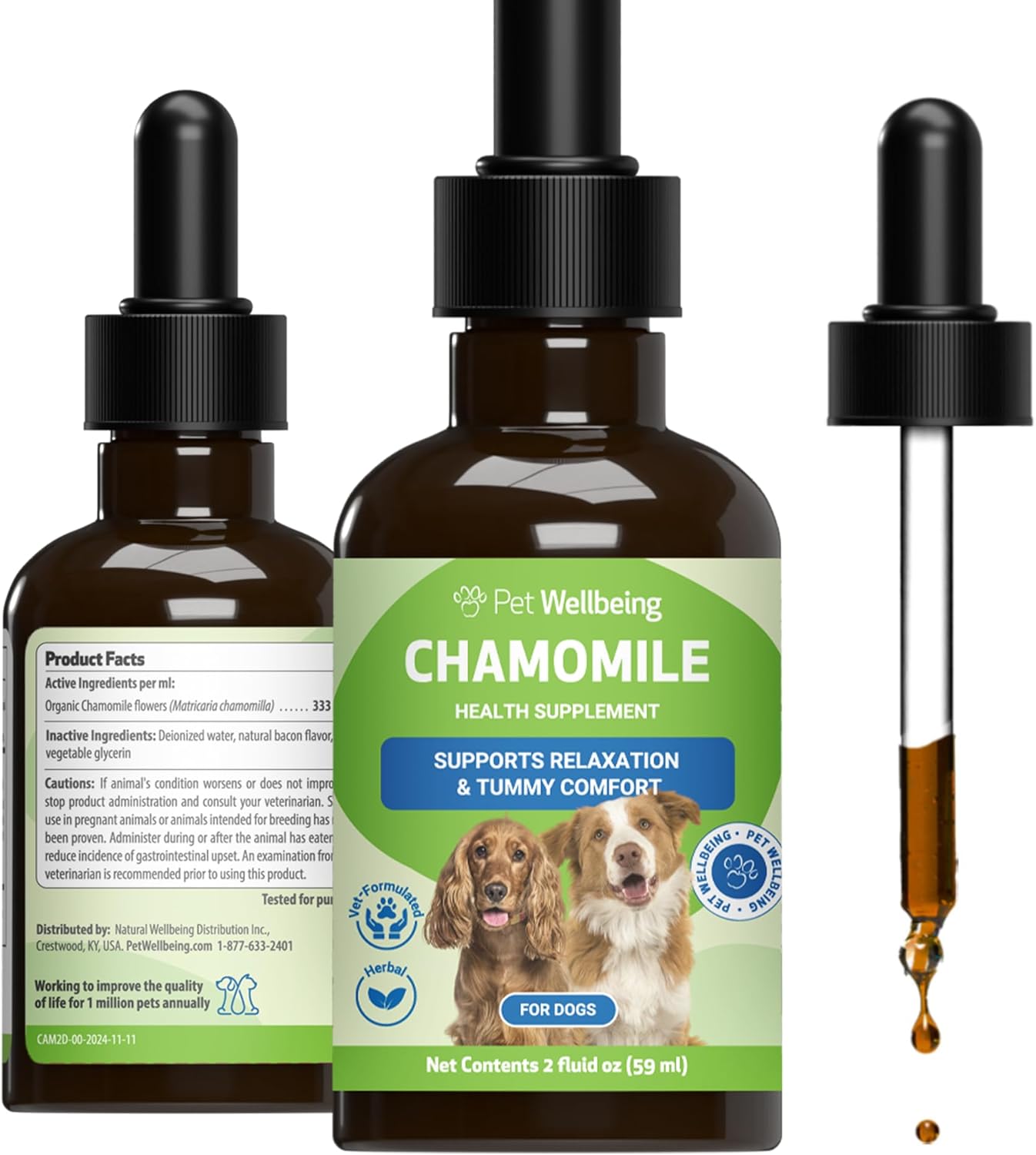
Pet Wellbeing Chamomile for Dogs
Source: amazon.com
Organic single-herb chamomile glycerite tincture made specifically for dogs
The Wellthie One Review
Pet Wellbeing has been making single-herb glycerite tinctures for dogs for over twenty years, and the chamomile formula is one of the cleanest on the market. The herb is organic, the base is vegetable glycerin, and the dropper is calibrated for pet dosing. I like that it is a single-herb product, not a blend, which means you know exactly what you are giving your dog. The glycerite is also useful for digestive upset during car rides or vet visits, since chamomile soothes the gut and the nerves at the same time.
Pet Wellbeing Chamomile Attributes
- Single-herb organic chamomile glycerite, no fillers or alcohol
- Calibrated dropper for accurate small-dog dosing
- Useful for both anxiety and digestive upset support
- Long shelf life when stored in a cool, dark cupboard
Common Mistakes That Spoil the Effect
The number one mistake I see is using non-organic chamomile. Conventional chamomile is often sprayed, and the pesticide residue can irritate sensitive dog stomachs. Always go USDA Organic. The cost difference is small, and the cleaner herb just works better.
The second mistake is brewing the tea too strong. Most owners assume more is better, but a strong tea can taste bitter to a dog and cause refusal. Stick with one tea bag in 8 ounces, steep for four to five minutes, then dilute further if needed.
The third mistake is giving the tea hot. Hot liquids are unsafe for dogs and they will not drink them anyway. Let the tea cool completely before serving. In the summer, freezing the cooled tea into ice cubes turns the routine into an enrichment treat, which pairs nicely with a lick mat for an additional calming boost.
Finally, some owners stop after one rough night. Chamomile works best with consistent low-dose use, often a week or two before it becomes a baseline calming influence. Use it daily for moderate anxiety, and save concentrated dosing for known stressful events.
Pairing Chamomile with the Bigger Picture
Herbs are support, not substitutes for the foundations of canine calm. A dog with chronic anxiety often benefits from more exercise, predictable routines, a quiet retreat space, and limited screen-time exposure in the household. Chamomile fits naturally alongside these shifts, smoothing out the day rather than fixing everything on its own.
For dogs who get anxious in the car or before vet visits, ginger for motion sickness pairs well with chamomile because the two herbs cover both ends of the gut-brain connection. For dogs who are anxious about being alone, our guide to L-Theanine for dogs with anxiety covers another gentle option that stacks safely with chamomile.
U.S. Wellness Organic Chamomile Flowers

Source: amazon.com
1 lb bulk USDA Organic loose chamomile flowers for tea and homemade ice cubes
The Wellthie One Review
For multi-dog households or anyone who wants to make homemade chamomile ice cubes regularly, the 1-pound loose flower bag is the best value. The flowers are whole buds, not dust, and the USDA Organic seal is on the front of the bag, which is what you want. Use one tablespoon of loose flowers per 8 ounces of hot water, steep for 5 minutes, strain, and cool. The flavor is slightly sweeter and the calming effect noticeably stronger than bagged tea, which I attribute to fresher, less processed buds.
U.S. Wellness Organic Chamomile Flowers Attributes
- 1 lb resealable BPA-free bag of USDA Certified Organic flowers
- Whole-bud quality rather than tea bag dust
- Cost effective for daily use across multiple dogs
- Doubles as a calming herb for humans in the household
When to Skip Chamomile
Chamomile is one of the safer herbs for dogs, but it is not for every dog. Skip it if your dog is pregnant or nursing, since the herb has historically been used to bring on contractions. Avoid it for dogs on blood thinners, including some heart medications, because chamomile can mildly thin the blood. Dogs with known allergies to the daisy family, which includes ragweed and chrysanthemums, may react to chamomile too, so watch the first dose carefully.
If your dog has severe, dangerous anxiety, including aggression, self-harm, or panic attacks that lead to injury, please work with a veterinarian or veterinary behaviorist. Chamomile is a gentle daily tool. It is not a replacement for behavioral medicine when a dog is in real distress.
Putting It All Together
Chamomile tea for dog anxiety is one of the simplest, cheapest, and gentlest natural tools you can keep in the kitchen. A box of organic tea bags, a kettle, and a measuring spoon are all you need to add a quietly calming layer to your dog’s day. Most owners notice a difference within the first week of consistent use, and the routine pairs beautifully with exercise, predictable schedules, and a calm home environment.
Start small, brew weak, serve cool, and watch your dog. If the rhythm settles and the panting eases, you have found one of the best-kept natural secrets for canine calm. If your dog still struggles after two weeks, call your vet. Chamomile is a tool, not a treatment plan, and dogs deserve the same thoughtful care we give ourselves.
This post may contain affiliate links, which means we may receive a small commission, at no cost to you, if you make a purchase through a link. This article is for educational purposes only and is not veterinary advice. Always check with your dog’s veterinarian before starting any new supplement, especially if your dog is pregnant, nursing, taking medication, or managing a chronic health condition.