
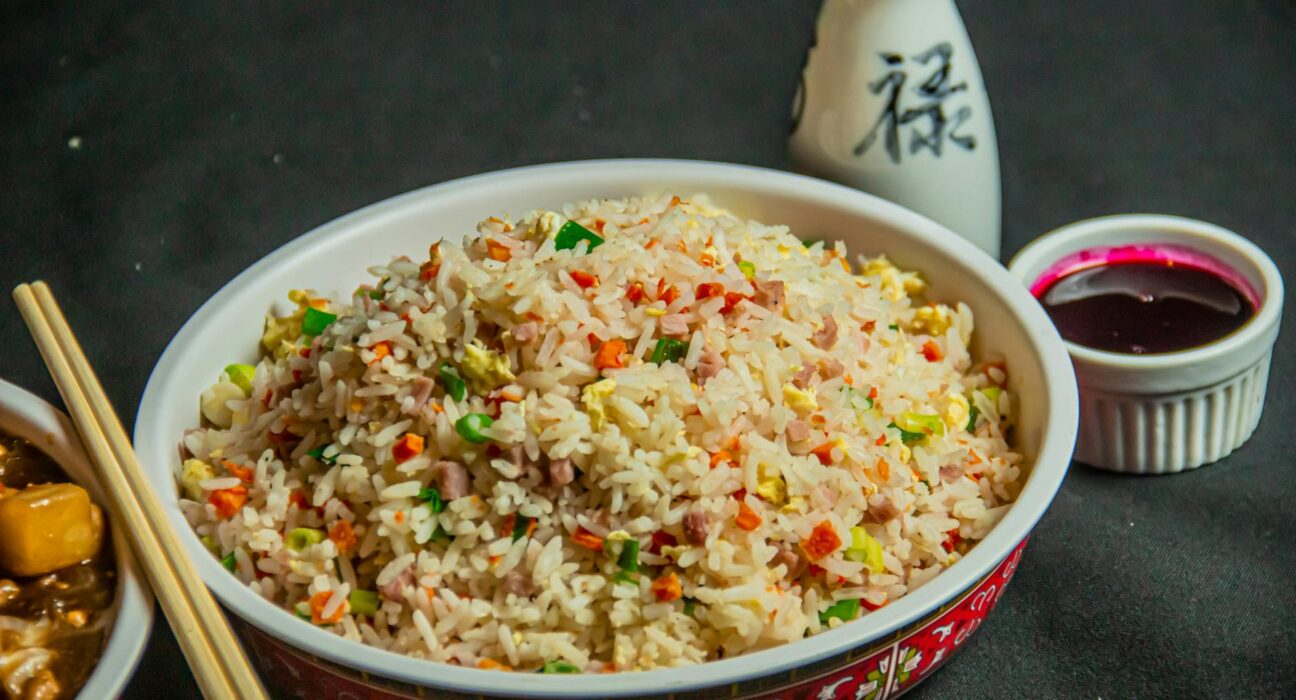
Panda Express calorie calculator. Build your bowl, plate, or bigger plate exactly the way you order it and see the real calories, sugar, sodium, and fat before you commit. Calculator below. Includes the full entrée + side + appetizer menu, with cleaner-swap suggestions so you can stay metabolically intact while still eating Panda.
Panda Express Calorie Calculator
Build your plate. See real calories + sugar + sodium + a cleaner swap.
Counting calories alone won’t fix what frequent Panda Express is doing to you. The sauces (orange chicken, Beijing beef, honey walnut shrimp, sweetfire) use heavily refined soybean oil + added sugar glaze + MSG. Even when calories look “ok,” the metabolic + inflammation + sodium load is significant. Run the Toxic Load Type Tool to find out which root pattern (insulin/sugar, parasites, mold, adrenal) is being fed every time you eat here.
Make It At Home: Save 1250 Calories Per Meal
The calculator above shows you the damage. The table below shows you the escape route. Each Panda Express order has a home version that hits the same craving with a fraction of the calorie load, the seed oil load, and the sodium load — using ingredients you already understand. This is the move that compounds over weeks. One meal swap saves around 500 calories. Ten swaps a month is 5,000 calories that never become weight.
- Regular ultra-processed and fried food intake raises CV disease risk in a dose-response pattern
- The mechanism includes insulin resistance, fatty liver, and inflammation — not just calorie surplus
- Cutting frequency, even without cutting calories, lowers risk in cohort data
- An occasional fast food meal will not cause disease
- No single meal causes weight gain or insulin resistance overnight
- These are observational studies — correlation strong enough to act on, but cannot prove causation in any individual case
- Regular ultra-processed and fried food intake raises CV disease risk in a dose-response pattern
- The mechanism includes insulin resistance, fatty liver, and inflammation — not just calorie surplus
- Cutting frequency, even without cutting calories, lowers risk in cohort data
- An occasional fast food meal will not cause disease
- No single meal causes weight gain or insulin resistance overnight
- These are observational studies — correlation strong enough to act on, but cannot prove causation in any individual case
| Restaurant Item | Restaurant Cal | Home Swap | Home Cal | Saved |
|---|---|---|---|---|
| Orange Chicken (1 serving) | 490 cal | Air-fried chicken + homemade orange glaze | 220 cal | −270 |
| Beijing Beef (1 serving) | 470 cal | Stir-fried sirloin + coconut aminos sauce | 210 cal | −260 |
| Fried Rice (1 side) | 520 cal | Cauliflower fried rice with eggs + veggies | 180 cal | −340 |
| Chow Mein (1 side) | 510 cal | Zucchini noodles or shirataki + same sauce | 130 cal | −380 |
| All four swapped | 1,990 cal | Home cooked, full week | 740 cal | −1,250 |


How This Connects To Your Weight Loss (And Weight Maintenance) Journey
Calorie counting alone breaks down when the foods you eat carry a heavy toxic load — the dyes, the refined seed oils, the residual pesticides, the emulsifiers that show up in fast-casual menu items even when the calories look reasonable. Your body spends biological energy detoxing those compounds instead of mobilizing fat. Two people can eat the same calorie count and have radically different weight outcomes depending on the toxic load of those calories. The home swaps above don’t just cut calories. They cut the quality burden your liver, lymph, and gut microbiome have been carrying. That is the part of weight loss the standard calorie-counter apps never measure.
If you want to see how your current pattern is loading you up, the Toxic Load Type tool below maps your specific exposure profile in 90 seconds and tells you which single swap will compound fastest for YOUR body.
How To Use The Panda Express Nutrition Calculator
Pick your plate size (Bowl, Plate, Bigger Plate, or Kids), select your side, then your entrées (1 for Bowl, 2 for Plate, 3 for Bigger Plate), plus optional appetizer. The calculator returns total calories, sugar grams, sodium mg, fat grams, plus a color-coded warning if sodium is over the daily limit, and a cleaner-swap suggestion specific to what you ordered.
What Each Choice Really Costs
Sides. The biggest swing: Chow Mein (510 cal, 9g sugar) and Fried Rice (520 cal, 850 mg sodium) are the most expensive sides. White Rice is 380 cal with zero sugar. Brown Rice is 420 cal. Super Greens is only 90 cal. Single biggest leverage point on the whole menu. Half Chow Mein / Half Super Greens splits the difference at 300 cal.
Entrées. The sneakiest swing: Beijing Beef (480 cal, 22g sugar, 27g fat) and Orange Chicken (510 cal, 19g sugar, 23g fat) are the highest-calorie + highest-sugar choices. The “healthier” looking Honey Walnut Shrimp is 410 cal with 23g of fat. Meanwhile Broccoli Beef is 150 cal, 8g sugar, 7g fat. And tastes like real food. String Bean Chicken Breast is 190 cal. Most people don’t realize there’s a 3x calorie difference between the top and bottom entrées.
Sodium is the silent killer: Kung Pao Chicken sits at 970 mg sodium. Black Pepper Chicken at 1,130 mg. Firecracker Shrimp at 1,140 mg. That’s nearly HALF the daily sodium limit in one entrée. Stack it with Chow Mein (860 mg) and you’re at the daily limit before you’ve finished your meal.
The Cleanest Panda Express Orders
Ranked from cleanest to acceptable:
- Bowl with String Bean Chicken Breast + Super Greens. 280 cal, 805 mg sodium, 12g fat. The single best order on the menu.
- Bowl with Broccoli Beef + Super Greens. 240 cal, 900 mg sodium, 10g fat. Cleanest beef option.
- Plate with Black Pepper Angus Steak + String Bean Chicken + Super Greens. 490 cal, 1,385 mg sodium, 22g fat.
- Bowl with Mushroom Chicken + Super Greens. 310 cal, 990 mg sodium, 17g fat.
- Bowl with Kung Pao Chicken + Super Greens. 380 cal, 1,200 mg sodium, 22g fat. Higher sodium but no glaze.
The Worst Panda Express Orders
For weight + metabolic health, these orders hit hardest:
- Bigger Plate: Orange Chicken + Beijing Beef + Honey Walnut Shrimp + Chow Mein. 1,910 cal, 58g sugar, 3,050 mg sodium, 100g fat. Single meal = full day of calories.
- Plate: Orange Chicken + Beijing Beef + Fried Rice + Cream Cheese Rangoon. 1,700 cal, 50g sugar, 2,660 mg sodium, 85g fat. The “treat yourself” combo that derails the week.
- Bowl: Honey Walnut Shrimp + Chow Mein + 2 Cream Cheese Rangoon. 1,110 cal, 22g sugar, 1,640 mg sodium, 54g fat. Looks moderate, is not.
Calorie Counting Works At The Surface. The Deeper Question Is Underneath.
Tracking calories is useful, but most people stuck in a counting loop are dealing with something hormonal, not arithmetic. Insulin resistance from heavy metal load on the pancreas, cortisol dysregulation that locks in belly fat regardless of intake, sluggish thyroid driven by halogen displacement, or sugar cravings from gut parasites all override calorie math. The 90 second Toxic Load Tool finds which one is driving yours.
Use The Toxic Load ToolThe Hidden Toxic Load Connection
Counting Panda calories is half the picture. The other half. The part that determines whether you can ever lose weight or feel good. Is the ingredient profile:
- Refined soybean oil is the cooking fat at Panda. It’s heavily processed, high in oxidized omega-6s, and drives systemic inflammation. Chronic soybean oil exposure is one of the most documented dietary drivers of metabolic dysfunction.
- MSG (monosodium glutamate) in many sauces. Not inherently toxic, but in sensitive people (especially mold-pattern + adrenal-pattern people) it triggers headache, anxiety, and fatigue.
- Added sugar in glazes. Beijing Beef, Orange Chicken, SweetFire, Honey Sesame all use cornstarch-thickened sugar glazes. Per entrée that’s 18-22g of added sugar. Most of the daily limit in one menu item.
- Cornstarch coating on most fried entrées. A refined carb that spikes blood sugar dramatically when paired with the glaze.
- Sodium load. Over 1,000 mg per entrée common. For people with chronic cortisol elevation or kidney concerns, this is genuinely problematic.
If you eat Panda once a month, it’s an occasional indulgence and the body recovers. If you eat it weekly or more, the combination of refined oils + sugar + sodium + MSG drives chronic low-grade inflammation that locks weight in place and feeds whatever toxic-load pattern you already have.
Why Your Toxic Load Pattern Matters For This Decision
Different toxic-load patterns react differently to Panda’s specific ingredient profile:
- Adrenal-pattern people are most sensitive to MSG + high sodium → can trigger headache, anxiety, sleep disruption.
- Mold-pattern people often react to soybean oil (mold-contamination risk in the soybean supply) and have lower histamine tolerance. For the broader context, see allergies and brain fog.
- Insulin-resistance pattern people are hit hardest by the cornstarch-coated fried entrées + sugar glazes.
- Heavy-metal pattern people have lower detox capacity overall. Every restaurant meal adds to a load the body is struggling to clear.
The free 90-second Toxic Load Type Tool identifies your dominant pattern so you know which of these effects is most likely to hit you specifically. Then you can make informed decisions about how often + what to order.
What NOT To Do
- Don’t assume “chicken = healthy.” Orange Chicken and Honey Sesame Chicken Breast are calorie + sugar bombs. The frying + sauce do most of the damage.
- Don’t skip the Super Greens “because they don’t fill you up.” They fill you up at 90 cal vs 510 for chow mein. That’s the entire point.
- Don’t add Cream Cheese Rangoon casually. 190 cal per 3-piece order plus the dipping sauce. Pure deep-fried refined carb + dairy.
- Don’t drink the soda. A 20 oz fountain drink adds 240+ cal and 65+ g of sugar. Often more than the entrée.
- Don’t get the Bigger Plate “for value.” The price-per-calorie is “good” but the metabolic cost is bad. You’re paying with insulin spikes that drive cravings for 6+ hours after.
Take The Toxic Load Tool Right Now ↓
Counting calories alone rarely fixes stuck weight or chronic symptoms. The tool sorts you into one of four root patterns. Heavy metals, parasites, mold, adrenal. So you commit to a protocol that matches what’s draining your body.
What's Draining Your Brain? Find Your Toxic Load Type
10 quick questions to find your toxic-load type — heavy metals, parasites, mold, or burned-out adrenals. Takes about 90 seconds. Includes a free First-Step Detox Cheat Sheet with five habits anyone can start tomorrow.
The Evidence Stack: What Regular Fast Food Does To Your Body
| Study | Evidence | Population | Main Finding |
|---|---|---|---|
| Mendoza et al. 2024 (Harvard) | Meta-analysis (22 studies) + 3 cohorts | 200,000+ US adults | Highest ultra-processed intake: +17% CVD, +23% CHD risk |
| Qin et al. 2021 (BMJ Heart) | Meta-analysis (17 studies) | General adult population | Fried food: +28% CV events, +22% CHD, +37% heart failure |
| You et al. 2025 | Meta-analysis (12 studies) | Adults | Ultra-processed: +31% cardiovascular mortality |
| Geladari et al. 2025 (Nutrients) | Mechanism review | Adults | Ultra-processed drives insulin resistance, T2D, and fatty liver (MASLD) |
Reading these four studies in sequence makes one thing concrete: the body is not just metabolizing calories from fast food. It is also processing a chemistry load — refined seed oils, emulsifiers, residual additives — that drives a different physiological cascade than home-cooked food of the same calorie count. This is why calorie counting alone keeps disappointing people who eat regular fast food. The denominator is wrong. Once you swap two meals a week for home versions, the cascade reverses and the calorie math finally works.
The Bigger Picture
For most adults working on weight + metabolic health, frequency matters more than perfect ordering. A monthly Panda Express bowl with String Bean Chicken + Super Greens is fine. A weekly Bigger Plate with Orange Chicken + Beijing Beef + Chow Mein is a primary driver of weight resistance. The calculator above lets you see exactly which decisions are costing you what.
For the deeper integration of clean eating + metabolic repair + addressing toxic load that drives food cravings in the first place, the Toxic Load Reset PDF walks through the full protocol.
Disclosure: As an Amazon Associate, I earn from qualifying purchases. Calorie and nutrition data from Panda Express’s published nutrition information. Menu items and recipes change. Verify in their app for the most current values.