

Brain fog vs dementia, the difference can be hard to distinguish without context, especially in adults over 60. The good news: most cases of severe cognitive symptoms in adults over 50 turn out to be brain fog (reversible) rather than dementia (progressive). The trick is knowing the warning signs that warrant medical evaluation versus the patterns that respond to the right protocol.
Brain Fog That Mimics Dementia Often Reverses
When brain fog patterns look like early dementia, the upstream picture matters. Heavy metal load (especially aluminum and mercury), mold biotoxins, chronic infections, and adrenal depletion all create dementia-like cognitive symptoms that reverse when the driver is identified. The 90 second Toxic Load Tool finds which one is driving yours.
Use The Toxic Load ToolBefore assuming the worst, run the free 90-second Toxic Load Type Tool. Many adults who fear early dementia turn out to have heavy metal accumulation, mold exposure, or adrenal burnout producing dementia-like symptoms. The tool sorts you into the dominant pattern so you can address it before assuming a progressive disease.

Key Takeaways
- Brain fog vs dementia, brain fog is reversible and fluctuates day to day; dementia is progressive and persistent.
- Brain fog is often caused by toxic load, sleep deprivation, medications, or nutrient deficiencies, all addressable.
- Dementia involves persistent memory loss with disorientation, personality changes, and progressive functional decline.
- Warning signs that warrant medical evaluation: getting lost in familiar places, severe personality changes, inability to perform daily tasks, language difficulty.
The Key Differences (Side by Side)
| Characteristic | Brain Fog | Dementia |
|---|---|---|
| Onset | Often sudden, follows stressor | Gradual over years |
| Course | Fluctuates daily | Progressive decline |
| Memory | Forget where keys are; remember it later | Forget keys exist; can’t reconstruct |
| Orientation | Intact | Lost in familiar places |
| Personality | Unchanged | Changes over time |
| Self-awareness | “My brain isn’t working” | Often unaware of decline |
| Reversibility | Yes, with proper protocol | Generally not reversible |
Brain Protein
Bentonite, charcoal, chelation, cilantro, mercury chasing — these protocols all assume heavy metals are your dominant toxic load. For some people they are. Plenty of others land in this kind of work suspecting metals when adrenal exhaustion, parasites, or mold are actually doing more of the damage, and the protocols look very different depending which one is yours. If you want to sort it out before committing to weeks of binders, the 2-minute What's Draining Your Brain Tool places you in one of four root cause types so the next thing you try has a real chance of working.
Garden of Life Grass-Fed Collagen Peptides

Source: amazon.com
For aging brains, glycine from collagen supports cognitive function and protects against gradual neurological decline. Research suggests adequate glycine intake correlates with sharper memory in older adults. One scoop daily in coffee.
Check Price On Amazon
The Reversible Causes That Mimic Dementia
Several reversible conditions can produce dementia-like symptoms. Always rule these out before accepting a dementia diagnosis:
- Heavy metal accumulation (especially mercury and aluminum), addressed by chelation and binders
- Vitamin B12 deficiency, common in older adults, easily reversed with supplementation
- Vitamin D deficiency, supplement 5000 IU daily plus K2
- Thyroid dysfunction, hypothyroidism specifically can produce cognitive impairment
- Medication side effects, many common medications cause cognitive issues (anticholinergics, benzodiazepines, statins)
- Dehydration, older adults are chronically under-hydrated
- Sleep apnea, undiagnosed sleep apnea causes daytime cognitive symptoms
- Depression, “pseudodementia”, depression can produce dementia-like symptoms that reverse with treatment
Cognitive Vitamin D
Bronson Vitamin D3 + K2

Source: amazon.com
Vitamin D deficiency in older adults correlates strongly with cognitive decline. 5000 IU daily plus K2 supports brain function AND bone health (relevant for aging). Have D blood levels checked annually after 60.
Check Price On AmazonWhen to Seek Medical Evaluation
Any of these warrant a neurologist or geriatric specialist visit:
- Getting lost in familiar neighborhoods or homes
- Severe personality changes
- Inability to perform routine daily tasks (dressing, eating)
- Significant language difficulty (can’t find common words)
- Progressive cognitive decline over months without recovery
- Visual hallucinations or paranoid thinking
Universal Brain Mineral
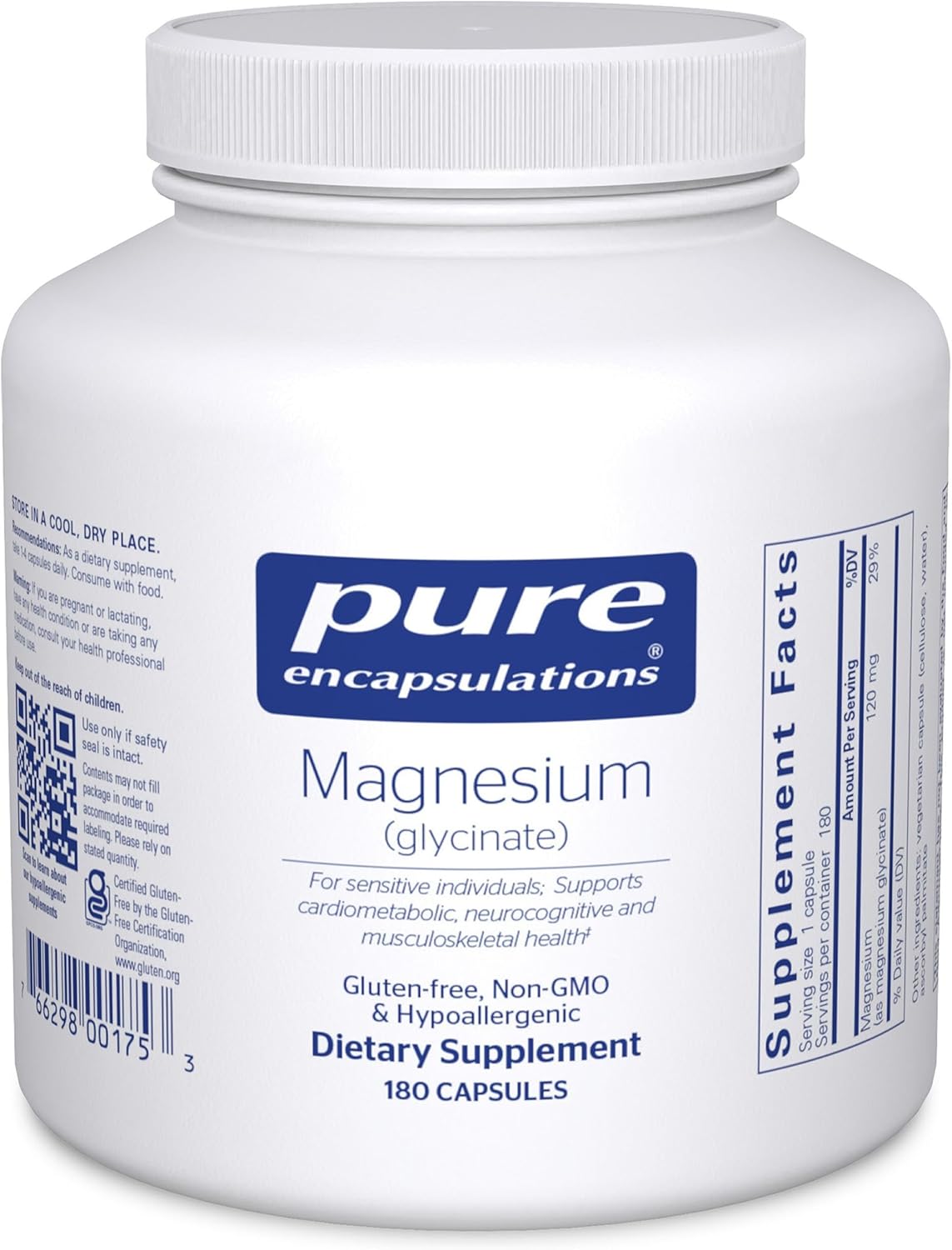
Doctor’s Best Magnesium Glycinate
Source: amazon.com
Magnesium status declines with age and depletion correlates with both brain fog AND with early dementia-pattern symptoms. 200 mg daily at bedtime, particularly important if the cognitive issue might just be deep magnesium depletion masquerading as something worse.
Check Price On Amazon
What Brain Fog (Not Dementia) Typically Responds To
If your symptoms are brain fog rather than dementia, expect significant improvement within 8-12 weeks of:
- Daily magnesium glycinate at bedtime
- Daily vitamin D3 + K2 (5000 IU)
- Daily collagen peptides for glycine support
- Addressing your dominant toxic load pattern (identified via the tool)
- 7+ hours of quality sleep nightly
- Reduced or eliminated alcohol
- Regular gentle exercise

For Further Reading
For the full 7-driver framework on brain fog, see What Is Brain Fog Causes. For heavy metal detox specifically, the protocol is in How to Detox Heavy Metals.
Disclosure: As an Amazon Associate, I earn from qualifying purchases. This article is education, not diagnosis, any concerning cognitive symptoms warrant medical evaluation.