
Tongue scraping is one of the simplest morning habits that may help with chronic bad breath. Most halitosis (around 80 to 90 percent of cases) starts on the back of the tongue, where bacteria, food particles, and dead cells settle into a soft coating overnight. A daily tongue scraper can lift that coating in seconds, and a 2014 review of mechanical tongue cleaning showed scrapers removed significantly more volatile sulfur compounds than a toothbrush alone.
If you have ever brushed your teeth, popped a mint, and still tasted something off by mid-morning, the bacteria living on the back of your tongue are likely the reason. The good news is that this is a small habit with a quick payoff, and it pairs nicely with other simple oral care upgrades like coconut oil pulling or a gentler routine for sensitive gums.
Why bad breath starts on your tongue
Your tongue is not flat. It has thousands of tiny papillae, and the spaces between them trap food residue, sloughed-off cells, and anaerobic bacteria. Anaerobic means these bacteria thrive without oxygen, which is exactly the environment a coated tongue creates.
As they feed, those bacteria release volatile sulfur compounds (VSCs) like hydrogen sulfide and methyl mercaptan. VSCs are what give morning breath its distinctive smell. Brushing the front of the tongue with a toothbrush helps a little, but it cannot reach or fully clear the deeper coating on the back.
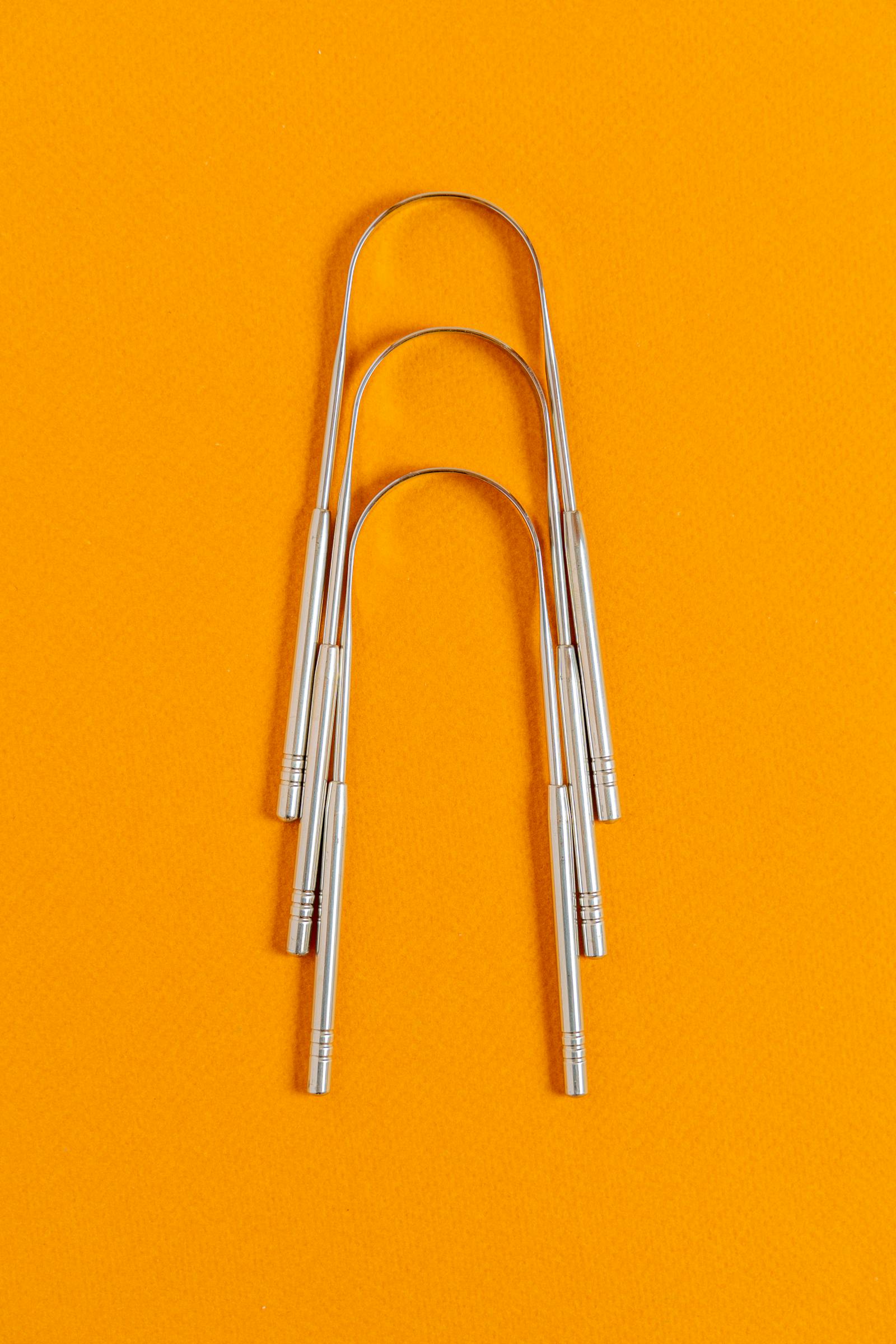
That is where a scraper earns its keep. One firm pull from back to front lifts the coating in a thin film. You can see it on the metal afterward. Most people are quietly horrified the first time, then quickly relieved.
The main tongue scraping benefits for bad breath
The science on tongue scraping is straightforward. A 2021 review on mechanical tongue cleaning found that consistent scraping reduced both tongue coating and oral malodor more effectively than brushing alone. Other smaller trials have reported around a 30 percent greater reduction in VSCs with a scraper compared to a toothbrush.
Here is what daily tongue scraping may help with:
- Fresher breath that holds longer after brushing
- A cleaner taste in the mouth, especially first thing in the morning
- Less white or yellow tongue coating over time
- A sharper sense of taste, since uncovered taste buds work better
- Fewer odor-causing bacteria reaching the back of the throat
None of this replaces brushing or flossing. Think of the scraper as the missing third tool that handles a surface your brush cannot reach.
What you will learn in this video:
- What that white or yellow film on your tongue actually is
- Why scraping reaches places your toothbrush misses
- How daily scraping links to fresher breath and better taste
- The right way to scrape so you do not gag or scratch the tongue
Copper vs. stainless steel: does the metal matter?
Most quality tongue scrapers come in two materials. Copper has a long history in Ayurveda and is naturally antimicrobial, meaning bacteria struggle to survive on its surface. Stainless steel is more durable, fully dishwasher safe, and feels a bit lighter in the hand.
For people whose primary concern is bad breath, copper has a small theoretical edge because of its antibacterial surface. Some research suggests copper ions can disrupt bacterial cell walls. The studies on copper tongue scrapers specifically are still limited, so do not pick one over the other on that fact alone.
If you are sensitive to metal taste, stainless steel is more neutral. If you like the warmer feel of copper and do not mind hand-washing, copper holds up well for years. Either material works as long as you actually use it.
MasterMedi Copper Tongue Scraper (2 Pack)

Source: amazon.com
A pure copper tongue scraper that comes with a travel case, with a flexible U-shape that reaches the back of the tongue without triggering a strong gag reflex.
The Wellthie One Review
MasterMedi Copper Tongue Scraper Attributes
- 100 percent pure copper, naturally antimicrobial surface
- Flexible U-shape with comfortable handle ends
- Comes as a 2 pack with travel case
- Easy to rinse and air dry between uses
This is a beginner-friendly pick because the curve is wide enough to clear the whole back of the tongue in one or two passes. The travel case is the small detail that actually matters. A scraper that lives in a drawer often gets skipped, but one in a case ends up in a gym bag or carry-on. Hand-wash only, since dishwashers can dull copper over time.
How to use a tongue scraper without gagging
The most common reason new scrapers quit is the gag reflex. The fix is technique, not willpower. Here is the routine that works for most people:
- Stick your tongue out as far as it will go in front of a mirror.
- Place the scraper as far back on your tongue as feels comfortable. Do not chase the very back of the throat on day one.
- With light, steady pressure, pull the scraper forward in one motion.
- Rinse the scraper under warm water to remove the coating.
- Repeat 3 to 5 times, moving slightly to cover the whole tongue surface.
- Rinse your mouth and the scraper, then store it dry.
The whole process takes about 30 seconds. Do it before brushing, not after, so the toothbrush can clear anything left behind. If you feel a gag coming, exhale through your mouth as you scrape. That alone helps your throat relax.
Common tongue scraping mistakes
A few small habits make a big difference in how the scraper feels and how quickly bad breath improves.
Pressing too hard
Light pressure is the goal. The coating lifts on its own with one or two passes. Pressing harder can scratch the tongue surface and leave it sore.
Using a toothbrush as a substitute
A brush is better than nothing, but a scraper has a wider edge that picks up the film instead of pushing it around. The two tools are not interchangeable.
Skipping the rinse between strokes
If you do not rinse, the next pull just spreads the same bacteria back across the tongue. Run the scraper under warm water after every stroke.
Quitting on day three
It can take 5 to 7 days for the tongue coating to thin out for good. The first morning after a deep scrape often feels dramatically fresher, then the coating returns slightly the next day. Stay with it. The shift becomes obvious by the end of the first week.
MasterMedi Stainless Steel Tongue Scraper (2 Pack)

Source: amazon.com
A 100 percent stainless steel option for anyone sensitive to copper or who prefers a fully dishwasher-safe tool.
The Wellthie One Review
MasterMedi Stainless Steel Scraper Attributes
- 100 percent surgical stainless steel, no metallic aftertaste
- Two travel cases in different colors, easy to tell apart in a shared bathroom
- Dishwasher safe and stain resistant
- Same flexible U-shape as the copper version
The steel feels slightly thinner against the tongue, which some readers say helps reduce the gag reflex on day one. It is a great pick for couples or roommates because the dual cases keep things hygienic. The trade-off is that you lose copper’s natural antimicrobial surface, which means rinsing well after each use matters more.
What about chronic bad breath that does not go away?
If you scrape consistently for two to three weeks and bad breath is still hanging on, the cause is probably deeper than the tongue coating. A few common drivers:
- Dry mouth from medications, mouth breathing, or low water intake
- Postnasal drip from chronic sinus issues or seasonal allergies
- Reflux that brings stomach acid (and odor) up the esophagus
- Gut imbalance where odor-causing bacteria proliferate downstream
- Cavities, gum disease, or an old cracked filling that traps food
For a gut-driven angle, working on overall digestion can help. Many readers see a difference after a few weeks of digestive bitters before meals, which support stomach acid and downstream microbial balance. For sinus and post-nasal drainage, simple steam, saline rinses, and addressing seasonal allergies can clear the airway and the smell that comes with it.
If a dental cause is on the table, a regular cleaning and exam is worth booking. Cracked fillings and pockets of plaque under the gumline can carry odor that no amount of scraping will fix.
Pairing tongue scraping with the rest of your oral routine
Scraping is most powerful as part of a layered morning routine. A simple stack:
- Drink a glass of warm water as soon as you wake up.
- Tongue scrape (3 to 5 light pulls).
- Brush teeth with a soft brush and a fluoride or hydroxyapatite paste.
- Floss or use a water flosser.
- Optional: 5 to 10 minutes of coconut oil pulling a few times a week.
- Rinse with plain water or a gentle, alcohol-free mouthwash.
For people who want to address bacterial balance from the inside out, an oral probiotic with strains like BLIS K12 or M18 is worth a look. These strains naturally crowd out odor-causing bacteria and have decent research behind them for halitosis specifically.
Hyperbiotics Pro-Dental Oral Probiotic with BLIS K12 and M18

Source: amazon.com
A chewable mint probiotic with the two strains most studied for chronic bad breath, gum support, and a healthier oral microbiome.
The Wellthie One Review
Pro-Dental Oral Probiotic Attributes
- Contains BLIS K12 and M18, the two strains with the most halitosis research
- Chewable mint tablets, no water needed
- 60 count bottle covers about a 2 month supply at one per day
- Made in the USA in a GMP-certified facility
This is the kind of product that pairs well with daily scraping rather than replacing it. Scraping clears the surface coating, while these strains compete for territory on the gums and tongue. Most readers who try this give it about 30 days, which is the timeline most users in reviews say feels meaningful.
How long until tongue scraping benefits show up
Most people notice a fresher mouth on day one. The tongue coating itself thins out over the first week. By week two, the morning film is much lighter, and that mid-afternoon stale taste tends to fade. By week three or four, taste sensitivity often improves slightly, since the taste buds are no longer covered by a layer of bacteria and debris.
The habit is small, the tools are inexpensive, and the upside is the kind of confidence that shows up in conversations. If you have been white-knuckling mints all morning, this is one of the cheapest swaps you can make.
Quick FAQ on tongue scraping for bad breath
Should I scrape my tongue every day?
Yes. Daily, ideally first thing in the morning before brushing. Skipping a day or two is fine. The benefit comes from consistency, not perfection.
Can a tongue scraper hurt my taste buds?
Light pressure does not damage the papillae. Pressing too hard or scraping with sharp metal edges can. If you feel scraping is painful, you are likely pressing too hard or using a poorly finished tool.
Will tongue scraping replace flossing?
No. Flossing handles the spaces between teeth, scraping handles the tongue surface, and brushing handles the teeth themselves. Each tool has a different job.
What if my tongue is white or yellow even after scraping?
A thin coating after scraping is normal. A thick, persistent coating that does not lift can indicate a yeast overgrowth, dehydration, or another underlying issue worth discussing with a dentist or doctor.
This post may contain affiliate links, which means we may receive a small commission, at no cost to you, if you make a purchase through a link.


