

10 warning signs of mold toxicity that doctors miss again and again. The symptoms are vague, they cross body systems, and they don’t show up on standard blood work. Mold toxicity is the slow-burn root cause behind a huge chunk of unexplained fatigue, brain fog, anxiety, sinus issues, and weight resistance. Run the free 60-second brain fog test if you want to find your dominant pattern. If three or more of the signs below describe you and they’ve persisted for more than 6 weeks, mold is worth investigating.
If multiple chronic symptoms are stacking up, the free 90-second Toxic Load Type Tool sorts you into the most likely upstream pattern (heavy metals, parasites, mold, adrenal). Mold is one of the 4 root types it identifies. And it’s the one most often missed.
Key Takeaways
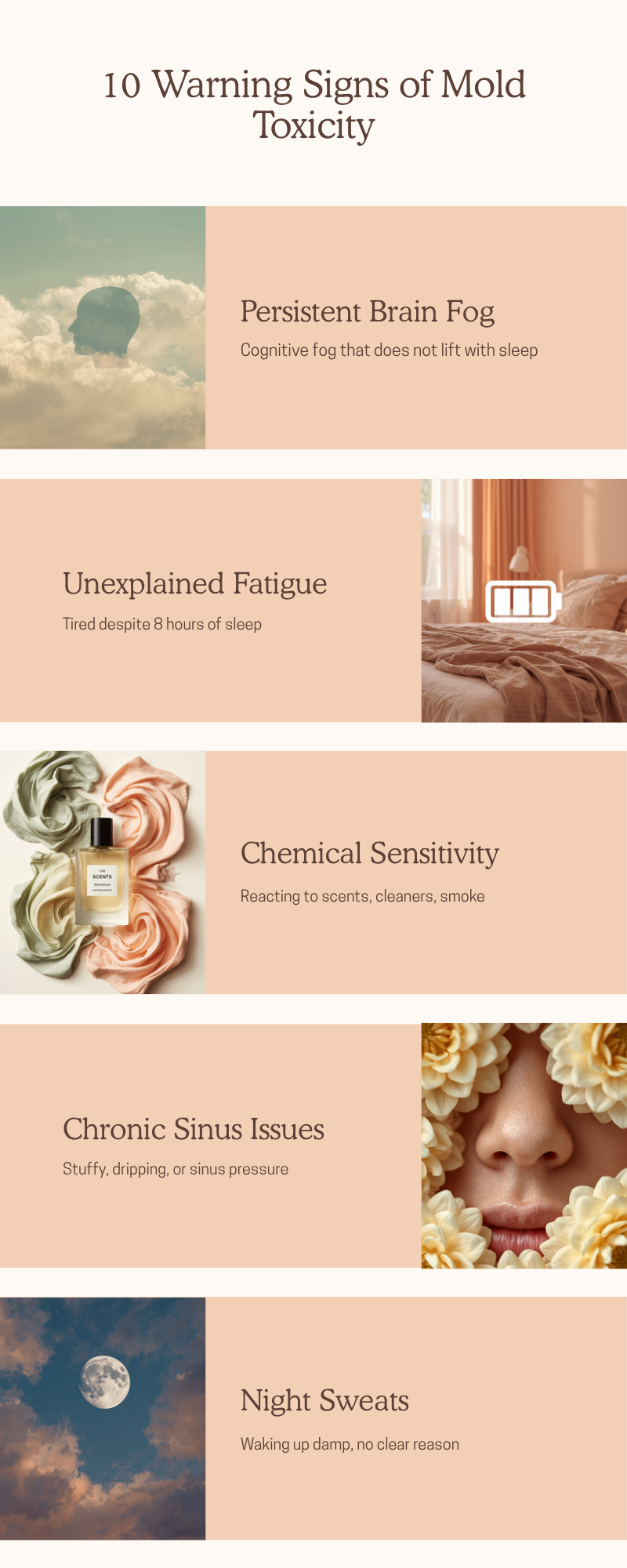
- 10 warning signs cluster across 4 body systems: neurological (brain fog, anxiety, headaches), respiratory (sinus, cough), digestive (bloating, food sensitivities), and systemic (fatigue, weight resistance, insomnia).
- Mold mycotoxins don’t show on standard blood panels. Require urine mycotoxin testing (Great Plains, RealTime Labs).
- Treatment requires removing the exposure first. Supplements alone won’t work if you’re still breathing spores.
- The “I never see mold” trap: hidden mold behind walls, under carpet, in HVAC systems, and in old water-damaged furniture is more common than visible mold.
1. Brain Fog That Won’t Lift With Sleep
Cognitive impairment is the hallmark mold symptom. People describe it as “thinking through mud,” word-finding difficulty, losing track mid-sentence, or the sensation that information just slides off the brain instead of sticking. Unlike fatigue-driven brain fog, mold brain fog persists even after 8+ hours of sleep. The mechanism: mycotoxins cross the blood-brain barrier and trigger neuroinflammation, particularly in the hippocampus and prefrontal cortex.
If brain fog is your dominant symptom AND you’ve ruled out the obvious culprits (poor sleep, dehydration, low B12), mold is a leading suspect. The Great Plains MycoTOX urine test catches it.
BEST FOR MYCOTOXIN CLEARANCE
Liposomal Glutathione Antioxidant by Quicksilver Scientific

Source: amazon.com
Glutathione is the body’s master detoxifier. Critical for clearing mycotoxins. Liposomal delivery bypasses gut breakdown for far higher absorption than capsules.
Check Price On Amazon2. Chronic Sinus Pressure, Congestion, or Post-Nasal Drip
Mold colonizes the sinuses in many chronically-exposed people. Symptoms include daily nasal congestion that doesn’t respond to antihistamines, post-nasal drip, sinus pressure behind the eyes, recurring sinus infections, and a persistent need to clear the throat. The Mayo Clinic published a landmark 1999 study finding fungus in 96% of chronic rhinosinusitis cases.
Free: Heavy Metal Detox Grocery List
A printable grocery list organized by which metal each food moves (mercury, aluminum, lead, cadmium) plus liver Phase 1 and 2 support foods, plus 7 ready-to-make meals using only foods on the list.
Delivered instantly. Premium content — your information stays with us.
If you’ve had more than 3 sinus infections in the last 12 months, or chronic sinus symptoms for over 12 weeks, mold is a high-probability driver. Nasal swab cultures often miss it because mold biofilms are sticky. They don’t release easily into a swab. ENT-supervised endoscopic culture is more accurate.
3. Fatigue That Isn’t Explained by Sleep or Workload
Profound, unexplained fatigue is sign #1 of toxic load. And mold is one of the biggest drivers. The exhaustion is qualitatively different from normal tiredness: it’s a heavy, leaden feeling, often worse on waking, that doesn’t improve with rest. The mechanism is mitochondrial. Mycotoxins damage mitochondrial membranes, reducing ATP output by up to 50% in chronic exposures.
People with mold-driven fatigue typically have normal thyroid panels, normal iron, normal B12, and yet feel like they’re dragging a weighted blanket through every day. If that describes you, this is a critical sign.
4. Headaches, Especially Pressure-Type Headaches
The first foundational support for any detox or cellular-repair protocol is glutathione. Most adults run depleted, especially during active detox when the body burns through it faster than it can produce. The liposomal form below absorbs through the gut where capsules largely do not.
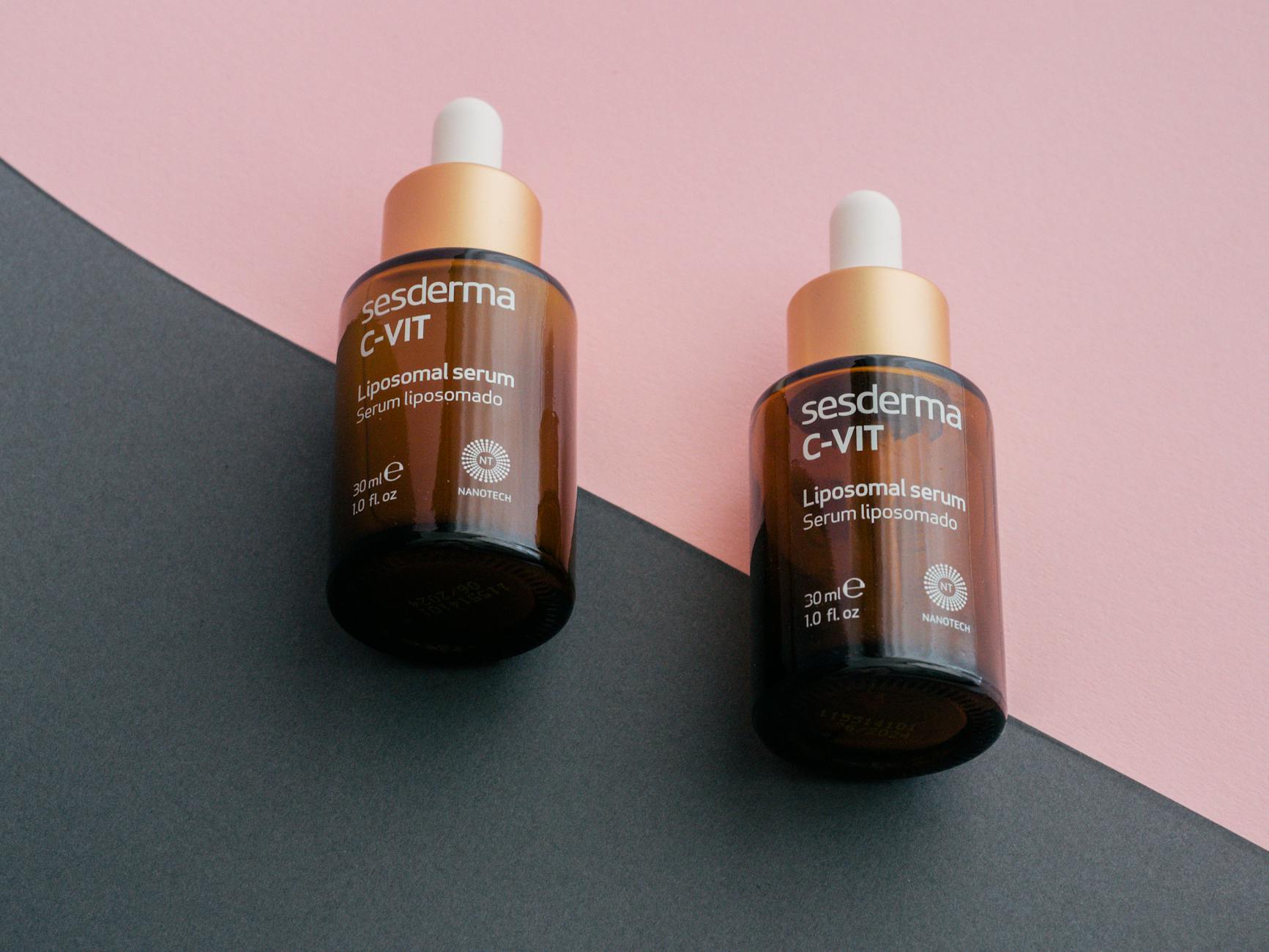
Quicksilver Scientific Liposomal Glutathione
The form Andrea uses in her own protocol. Liposomal absorption through stomach acid intact. Use morning, away from food, away from dairy.
Check Price on AmazonMold-related headaches tend to be pressure-type (a band around the head, behind the eyes) rather than migraine-type (one-sided, throbbing). They cluster on rainy or humid days and often resolve when away from the home or workplace for several days (vacation effect). If your headache pattern changes geographically. You feel better at a hotel, worse at home. This is a major mold-signal clue.

5. Unexplained Anxiety, Depression, or Mood Swings
Mycotoxins disrupt neurotransmitter balance and trigger cytokine-mediated inflammation in the limbic system. The brain region governing emotion. Mold-driven mood symptoms include new-onset anxiety with no clear trigger, depression that doesn’t respond to typical interventions, sudden tearfulness, irritability, or panic attacks. People often describe it as “feeling like a different person.”
One of the most diagnostic patterns: mood improves on vacation, returns within 48 hours of coming home. That’s the limbic system clearing out as you move away from the exposure source.
6. Insomnia or Frequent 2-4 AM Wake-Ups
Mold disrupts sleep architecture through two mechanisms: cortisol dysregulation (chronically elevated overnight cortisol from inflammation) and histamine release (mold triggers histamine, which is alerting at night). For the broader context, see allergies and brain fog. The classic pattern is falling asleep fine, then waking between 2 AM and 4 AM with a racing mind, unable to fall back asleep.
Magnesium glycinate helps but only addresses the symptom. The root fix is removing the mold exposure and supporting the body’s clearance.
BEST MYCOTOXIN BINDER
Bulletproof Activated Coconut Charcoal Capsules

Source: amazon.com
Activated charcoal binds mycotoxins in the gut and prevents reabsorption. Take between meals (2 hours from food + supplements). Critical step in any mold detox protocol.
Check Price On Amazon7. Digestive Issues. Bloating, Food Sensitivities, IBS-Type Symptoms
Mycotoxins damage the gut lining, contributing to intestinal permeability (“leaky gut”). Symptoms include daily bloating regardless of what’s eaten, new-onset food sensitivities (especially gluten, dairy, soy), bouts of diarrhea or constipation alternating, abdominal pain, and a general feeling that “nothing agrees with me anymore.”
People with mold-driven gut issues often spend years on elimination diets, gut protocols, and probiotics with minimal lasting improvement. The gut won’t heal until the upstream mycotoxin exposure is addressed.
8. Weight Resistance. Can’t Lose Weight Despite Doing Everything Right
The second foundational support is activated charcoal as a binder. Glutathione mobilizes toxins out of cells faster than your drainage pathways can clear them. Without a binder in the gut, mobilized toxins recirculate. Take charcoal 2 hours away from food, supplements, and meds.

Bulk Supplements Activated Coconut Charcoal
Coconut shell sourced, fine mesh. The binder Andrea recommends. Take on empty stomach, two hours from food.
Check Price on AmazonMold toxicity drives weight resistance through three mechanisms: cortisol dysregulation (stress chemistry promotes belly fat storage), thyroid disruption (mycotoxins inhibit T4-to-T3 conversion), and insulin resistance (inflammation impairs glucose handling). The pattern: you eat clean, you exercise, the scale doesn’t move. Or worse. Weight creeps up despite everything.
If you’ve been told by doctors “your labs are fine” but you can’t lose weight, mold (and broader toxic load) is one of the most missed root causes.

9. Skin Issues. Rashes, Eczema, Random Itching, Cystic Acne
The skin is a major elimination route, and when the body is over-burdened with mycotoxins, skin symptoms appear. Mold-related skin issues include unexplained itching (especially at night), eczema flares with no dietary trigger, recurring cystic acne in adulthood (not hormonal), random rashes that come and go, and burning sensations on the skin without visible cause.
The skin reflects the liver’s overload. When the liver can’t process the toxic load fast enough, the body pushes toxins outward through the skin.
BEST PRACTITIONER-GRADE BINDER
BioPure G.I. Detox Binder (Modified Citrus Pectin + Activated Charcoal)

Source: amazon.com
Multi-binder formula recommended by mold-literate practitioners (Shoemaker, Brewer, Klinghardt). Modified citrus pectin + activated charcoal + zeolite work synergistically.
Check Price On Amazon10. Worsening Symptoms in Specific Environments
This is the most diagnostic sign. And the easiest to track. Pay attention to whether your symptoms cluster around specific environments:
- Better on vacation, worse at home → home is the likely exposure source
- Worse on rainy/humid days → mold growth amplifies with moisture
- Worse in basements, old buildings, hotel rooms with that “musty smell” → active mold environment
- Worse in your car → HVAC system mold or interior water damage
- Symptoms improve when you stay with a friend for a few days → confirms home exposure
Track this for 2 weeks in a notes app. Symptom severity (1-10) plus location. The pattern will reveal itself.
What To Do If You Suspect Mold
The order of operations matters. Doing supplements before removing exposure is the #1 mistake.
- Identify the exposure source. Inspect bathrooms (ceiling above the shower), basements, around windows, behind washing machines and dishwashers, and any area that’s had water damage. Hire a certified mold inspector if you can. DIY tests miss hidden mold. Cost: $300-500 for an inspection.
- Remediate. Small areas (under 10 sq ft) you can address yourself with proper PPE and EPA-approved remediators. Larger areas require professional remediation. Do NOT skip this step. Cost: $500-15,000+ depending on scope.
- Test for mycotoxins in your body. Order Great Plains MycoTOX or RealTime Labs mycotoxin panel. Urine-based, $300-400. This confirms what’s actually in your system.
- Open detox pathways before mobilizing. Liver support (milk thistle, NAC), bowel regularity, hydration, sweat (sauna or exercise).
- Bind the toxins. Activated charcoal or modified citrus pectin between meals to bind mycotoxins in the gut and prevent reabsorption.
- Support repair. Glutathione (the body’s master detoxifier), NAC, omega-3, vitamin C, D3+K2.
This is the Klinghardt + Pompa 5-step detox sequence (open pathways → mobilize → bind → drain → integrate). It’s the same framework outlined in the Toxic Load Reset PDF and used across the cluster.
The Bottom Line
Mold toxicity is one of the most under-diagnosed root causes of chronic illness. Standard labs miss it. Doctors rarely ask about home environment. And the symptoms are so varied that no two cases look identical. If three or more of the 10 signs above describe you for more than 6 weeks, take this seriously.
Start with the free 90-second Toxic Load Type Tool to confirm mold is in your top likely pattern (vs. heavy metals, parasites, or adrenal burnout). Then move to environment assessment + mycotoxin testing. The whole protocol is in the Toxic Load Reset PDF for the people who want the deep dive.
You’re not making it up. Your body is telling you something the standard system isn’t built to hear.
Disclosure: As an Amazon Associate, I earn from qualifying purchases. This article is for educational purposes. Chronic symptoms warrant professional evaluation, and severe mold exposure can be a medical emergency (immune-compromised individuals especially).