
Colloidal silver is a liquid that contains silver particles suspended in water, and it can be used for a variety of purposes, such as disinfecting wounds and boosting immunity. Making homemade colloidal silver is actually quite simple, and all you need are a few pieces of equipment and some basic knowledge of chemistry.
Colloidal silver, used in short courses, is a trusted antimicrobial tool.
Silver was the go-to antimicrobial before antibiotics, and modern peer-reviewed research keeps confirming what generations already knew: it works against a wide range of bacteria, biofilms, and respiratory viruses. The key is short, targeted courses (typically 3 to 14 days for an acute issue), not endless daily tonic dosing. Used that way, silver earns its place on your home apothecary shelf.
Build My Toxic Load Score →Tap what you’re using silver for → get the typical short-course duration, dose ballpark, and what to pair it with.
Silver’s antimicrobial reputation isn’t folklore. Here’s what’s been published in peer-reviewed journals in the last few years on what silver actually does to bacteria, biofilms, and respiratory viruses.
- Bonjar et al. 2024 — Colloidal silver combats antibiotic-resistant Pseudomonas aeruginosa and MRSA in chronic rhinosinusitis. Colloids Surf B Biointerfaces. DOI
- Adriaensen et al. 2023 — Colloidal silver eradicates macrophage infections and biofilms of atypical mycobacteria (M. abscessus, MAC). Biometals. DOI
- Boroumand et al. 2025 — Silver nanoparticles demonstrate antiviral activity against H1N1 influenza virus. BMC Res Notes. DOI
- Akhtar et al. 2024 — Pulmonary delivery of silver nanoparticles prevents influenza infection by recruiting and activating lymphoid cells. Biomaterials. DOI
- Morris et al. 2019 — Antiviral and immunomodulatory activity of silver nanoparticles in experimental RSV infection. Viruses. DOI
- Chen et al. 2013 — Inhibitory effects of silver nanoparticles against adenovirus type 3 in vitro. J Virol Methods. DOI
- Akbarzadeh et al. 2024 — Nano-silver combined with photodynamic therapy eradicates multidrug-resistant Pseudomonas in burn wounds. Photodiagnosis Photodyn Ther. DOI
- Coffey et al. 2025 — Water-soluble silver(I) coumarin complexes eradicate preformed MRSA biofilms. Chembiochem. DOI
- Pereira et al. 2024 — Non-antibiotic antimicrobial agents including colloidal silver for chronic rhinosinusitis: narrative review. Braz J Otorhinolaryngol. DOI
Translation: silver’s antimicrobial activity is well-documented in peer-reviewed literature. The cited safety concern (argyria) is associated with chronic, high-dose, prolonged use over months to years of poorly-made products — not the short, targeted courses described in the planner above.
What you will need to make colloidal silver at home:
- A colloidal silver generator: This is the most important piece of equipment you’ll need, as it’s what will be used to create the silver particles.
This machine is reasonably priced and highly rated on Amazon. It also comes with the needed 99.9% silver to create the colloidal silver, which is a bonus!
Colloidal Silver Generator With 99.99% Silver Included
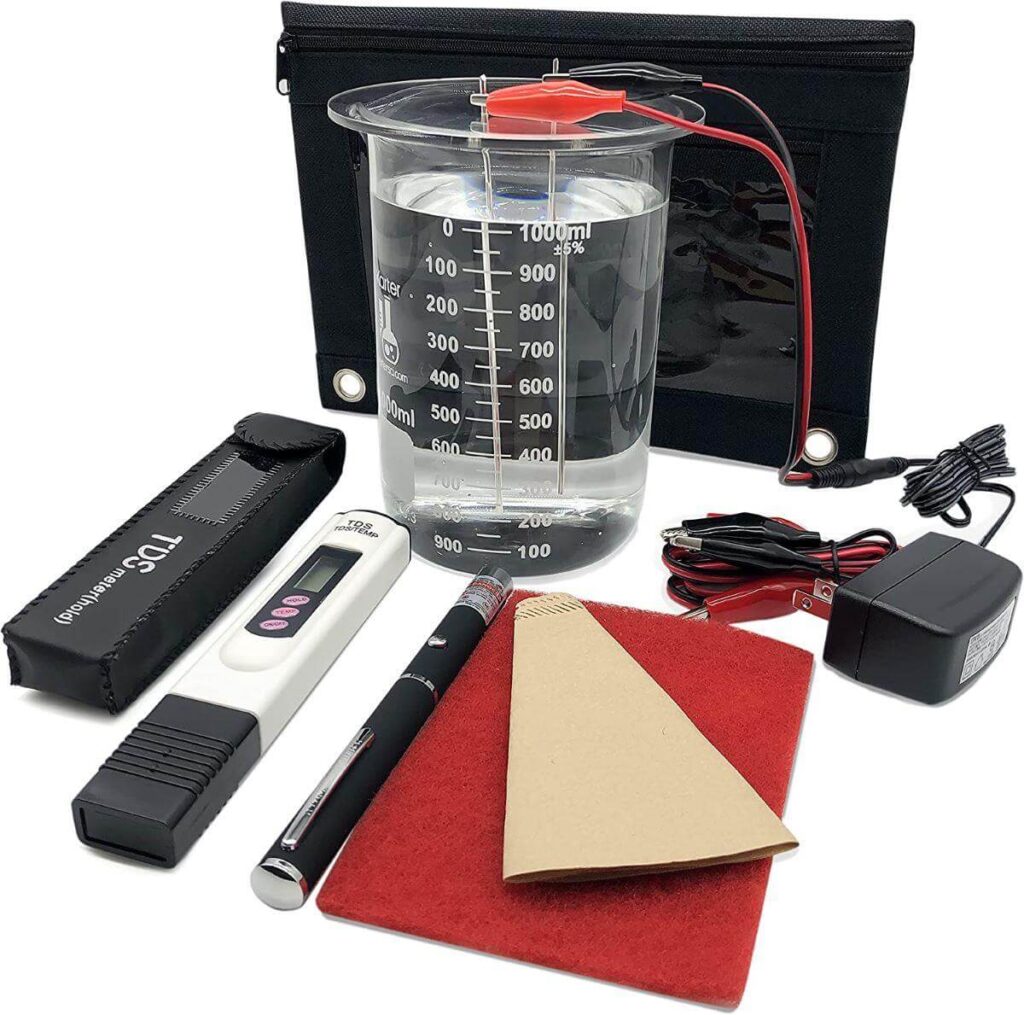
- Place the glass container on the scale and fill it with distilled water. Record the weight of the water so that you can calculate how much silver you’ll need to add later on.
- Set up your colloidal silver generator according to the manufacturer’s instructions.
- Turn on the generator and slowly add pure silver to the container until the desired concentration is reached. Remember to take note of how much silver you’re using so that you can replicate the process in future batches.
- Allow the generator to run for 2-3 hours, or until all of the silver has been used up.
- When you’re done, turn off the generator and carefully remove the glass container from beneath it. Allow the colloidal silver to cool before handling it further.
- Pour the colloidal silver into another container for storage using a funnel. Be sure to label this container clearly so that you know what it contains!
For a step-by-step demonstration with a similar apparatus, Pete Thomas shows how to make colloidal silver in this 10-minute video:
Things to keep in mind
Any time you are working with electrical current and water, there is a potential for shock. It is important to take proper precautions when using a colloidal silver generator. Always unplug the device before adding water or silver, and make sure that the electrodes are not in contact with each other. In addition, it is important to use distilled water, as impurities in tap water can react with the silver and create unwanted compounds.
Once you have prepared the solution, be sure to label it clearly and store it out of the reach of children and pets. With a little care and attention, you can easily make high-quality colloidal silver at home.
To learn more about the benefits that colloidal silver delivers for a stronger immune system:
Concluding Thoughts
You are now equipped to make your very own batch of colloidal silver at home This process may seem daunting at first, but with a little practice you’ll be able to make high-quality colloidal silver with ease. We wish you the very best on your continuing journey to find optimum health.
What the research really says about colloidal silver
Here is the , safety-first picture. Silver is a real, well-established topical antimicrobial — according to PubMed, it is used in wound care, burn dressings, and water purification, and a Cochrane review found silver-based dressings can speed burn healing (Norman et al., 2017, Cochrane Database of Systematic Reviews, DOI). The crucial caution is internal use: a dermatology review notes that chronic ingestion or inhalation of colloidal silver can deposit silver in the skin and eyes, causing argyria — a permanent blue-gray discoloration — and major health authorities have raised concerns about chronic, prolonged ingestion at high concentrations (Lansdown, 2006, Current Problems in Dermatology, DOI). Bottom line: external, topical use has a genuine basis; internal use is unproven and carries real risk — use caution and talk to your doctor.
Frequently asked questions
Is colloidal silver safe?
Topical, external use is generally low-risk and has real antimicrobial support. Used in short, targeted courses (typically 3 to 14 days for an acute issue), silver has been a trusted antimicrobial tool for over a century. Argyria — the well-known but rare blue-gray skin discoloration — is associated with chronic, high-dose, prolonged daily intake over months to years, not the short courses described in the planner above.
Does colloidal silver actually work?
For topical/wound use, silver is a genuine antimicrobial with research behind it. For colds, flu, or internal infections taken by mouth, there is no good evidence it works, and short, targeted courses keep the safety profile strong.
What is argyria?
Argyria is a permanent blue-gray discoloration of the skin and eyes caused by silver building up in the body. The reported cases overwhelmingly involve chronic daily ingestion of high-concentration, poorly-made silver products over months or years — not short, targeted courses at sensible PPM of colloidal silver. It is not reversible, which is why internal use is discouraged.
Can you use colloidal silver in your nose?
Some use a short-term nasal spray for sinus support, and modern peer-reviewed research consistently shows activity against MRSA, Pseudomonas, biofilms, and respiratory viruses including influenza and RSV. Use it in short, targeted courses at sensible PPM (10-30) rather than chronic daily dosing, and pair with saline rinses for added benefit.
Getting Sick Often? Look At Your Whole System
Safer everyday immune support: see our guides on quercetin for immunity and natural ways to support your defenses.
The links used on thewellthieone.com are affiliate links, which may provide a small commission. This does not increase the price of the goods for the consumer whatsoever. What it does is ensure that useful content like this can continue to be produced. Thank-you for enjoying our content and allowing us to continue to provide more.