
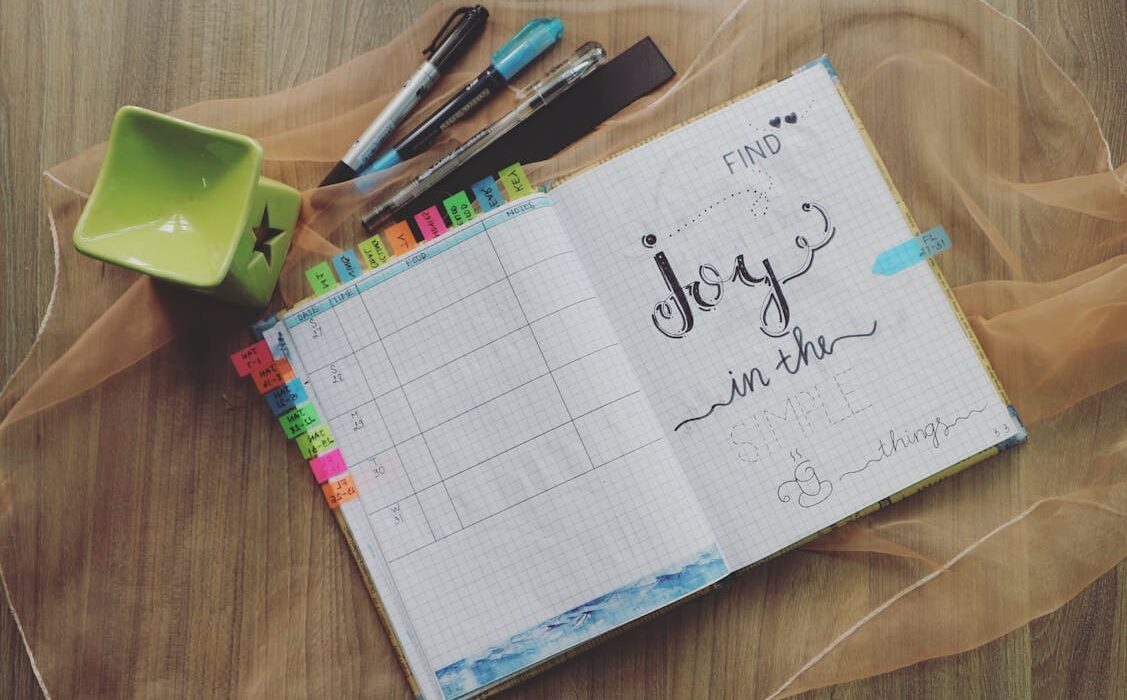
You want to start journaling. You know it can lower stress and help you sleep better. But the moment you search for the right journal, two very different options keep popping up. The Five Minute Journal, with its short structured prompts. And the bullet journal, with its blank dotted pages and endless creativity.
So which one actually helps you build a real habit? And which is better when your mind is racing and you just want to feel calmer?
This guide walks through both styles in plain language. We will compare them on time, ease, anxiety relief, and long-term value. By the end, you will know exactly which to pick first.
Key Takeaways
- The Five Minute Journal is the easier daily habit thanks to prompts and short pages.
- The bullet journal is more flexible but takes more setup time and creative energy.
- For anxiety, prompt journals like the Five Minute work faster for most beginners.
- Bullet journals are powerful for planners who like to track many areas of life.
- Many people start with a prompt journal, then move to a bullet journal later.
What Is the Five Minute Journal?
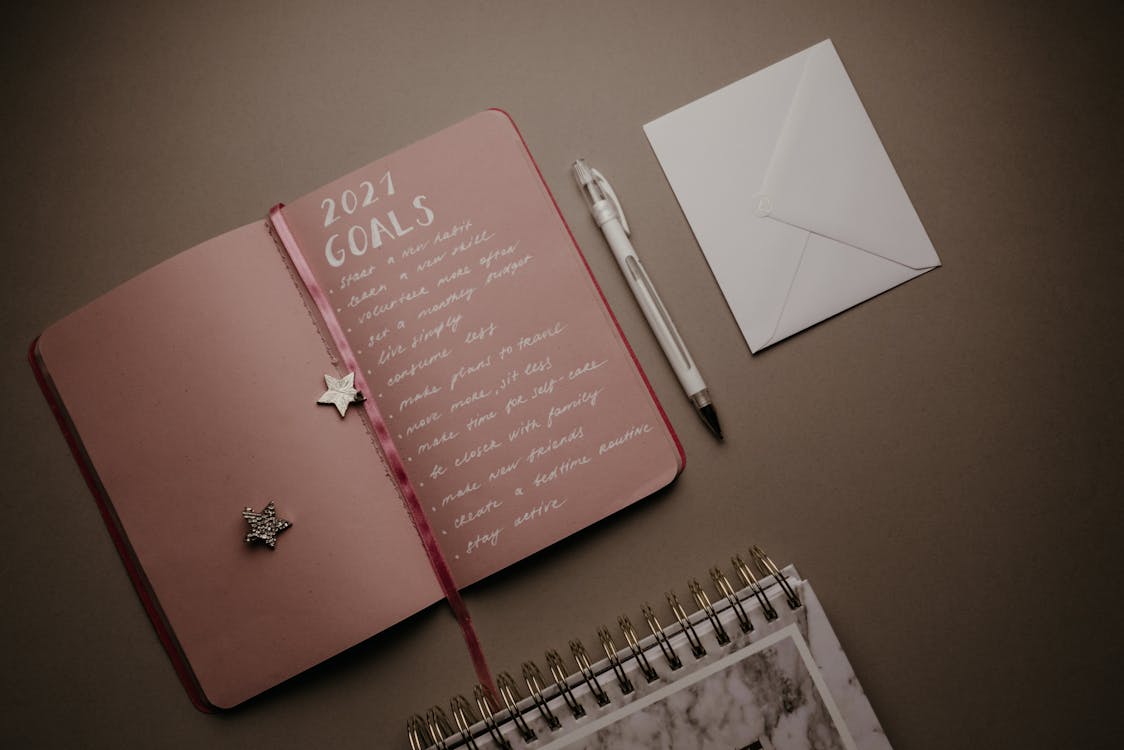
The Five Minute Journal is a structured daily journal. Each page has the same set of prompts. You fill it out once in the morning and once at night. The whole thing really does take about five minutes total.
The morning page asks you to write three things you are grateful for, what would make today great, and a daily affirmation. The night page asks for three amazing things that happened and what you could have done better. That is it. No blank stare at an empty page.
This format works well for people who like clear instructions. You always know what to write next. There is no figuring out a layout. The prompts handle the structure for you.
What you will learn in this video:
- An honest look inside the Five Minute Journal layout from a real user.
- How the morning and night prompts feel after weeks of daily use.
- The kinds of people who get the most from a structured prompt journal.
- Whether the price tag is actually worth it for a daily writer.
Why the Five Minute Journal Helps Build the Habit
The biggest reason people quit journaling is the blank page. They open a notebook, see all that empty space, and freeze. The Five Minute Journal removes that block. Every page is the same and every prompt is short.
This connects nicely with what we covered in our guide to habit stacking. Short, predictable rituals stick better than long, open ones. The Five Minute Journal is basically a habit stack in book form.
The Five Minute Journal by Intelligent Change

Source: amazon.com
A structured, undated daily journal with simple gratitude and reflection prompts.
The Wellthie One Review
This is the journal we recommend to almost anyone who has never journaled before. The prompts do all the heavy lifting. The undated pages mean you can start any day and skip a day without guilt. We love that it builds a real morning routine in under five minutes.
The Five Minute Journal Attributes
- Same prompts every day for simple habit building
- Undated pages, so you never feel behind
- Lays flat, with a built-in ribbon bookmark
- Includes weekly challenges and inspiring quotes
- Backed by years of positive reviews and research-based prompts
What Is a Bullet Journal?
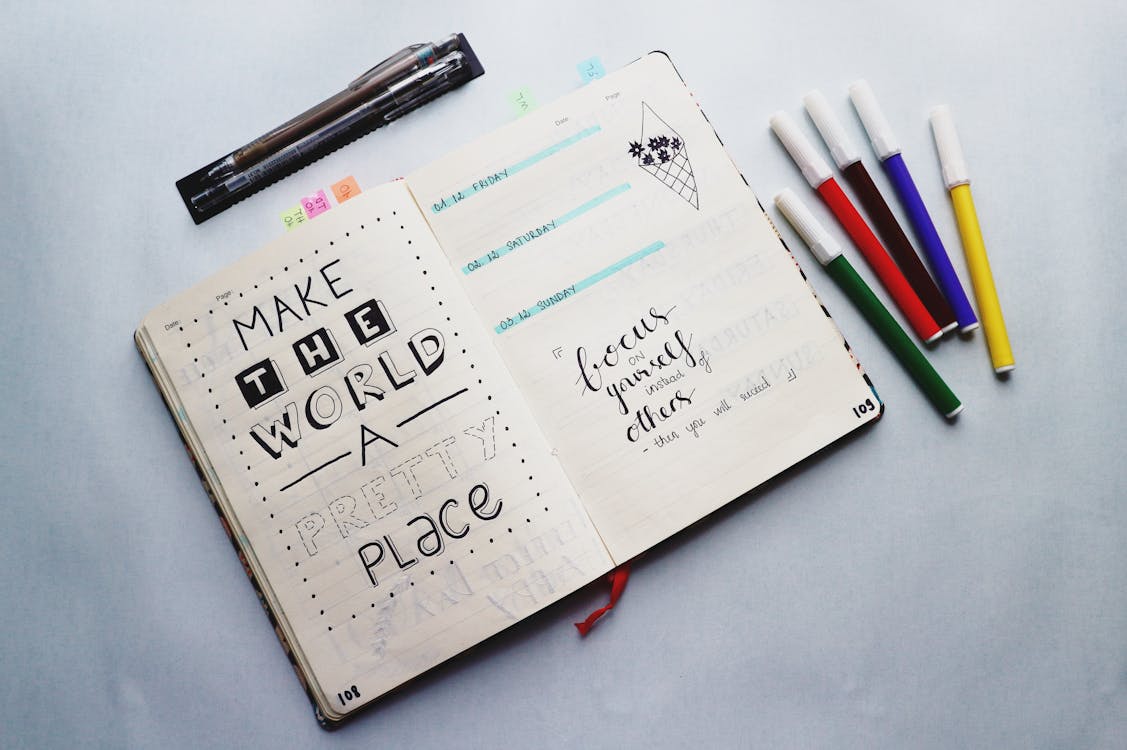
A bullet journal is a blank notebook that you turn into a custom planner. Created by Ryder Carroll, the method uses simple symbols to track tasks, events, and notes. You design every page from scratch.
That is its biggest strength and its biggest hurdle. You can build mood trackers, habit grids, monthly spreads, and reading lists. You can also burn out trying to make it look pretty. The bullet journal rewards creativity, but it asks for time.
Many bullet journalers say it eventually replaces their planner, to-do list, and journal in one notebook. If you love systems and writing, it can become a true second brain.
How the Bullet Journal System Works
The core system uses three types of entries. Tasks are written with a dot. Events get a circle. Notes use a dash. You add a key at the front of the book to remind yourself of the symbols.
Each month, you create a fresh layout. A monthly log holds events and big tasks. A daily log records what comes up that day. At the end of the month, you migrate unfinished tasks forward. This forces you to choose what is actually important.
LEUCHTTURM1917 Hardcover Notebook

Source: amazon.com
The classic numbered-page notebook that is a favorite among bullet journal users.
The Wellthie One Review
This notebook is the bullet journal community favorite for a reason. The numbered pages make indexing easy. The paper handles fountain pen and marker ink without bleeding through. The hardcover stands up to daily wear in a bag. It feels like a tool built for serious thinkers.
LEUCHTTURM1917 Notebook Attributes
- Numbered pages and built-in index pages
- Thick paper that resists ink bleed-through
- Two ribbon bookmarks for easy navigation
- Sturdy hardcover with elastic closure
- Comes in many colors and paper types
Five Minute Journal vs Bullet Journal for Anxiety
If you are journaling mainly to calm anxiety, the format you pick matters more than you might think. Anxious minds often resist open-ended writing. A blank page can feel like another demand on your energy. Prompts give the mind a soft landing.
The Five Minute Journal is especially helpful here. The gratitude prompts pull your attention to small good things. The “what would make today great” prompt creates one clear intention. Writing slowly, by hand, also engages a calming part of the brain.
Bullet journals can help with anxiety too, especially with mood trackers or worry pages. But the design demands more thought. On a hard day, you may not have the energy to build a new layout. That is when a prompt journal wins.
What Research Says About Prompted Writing
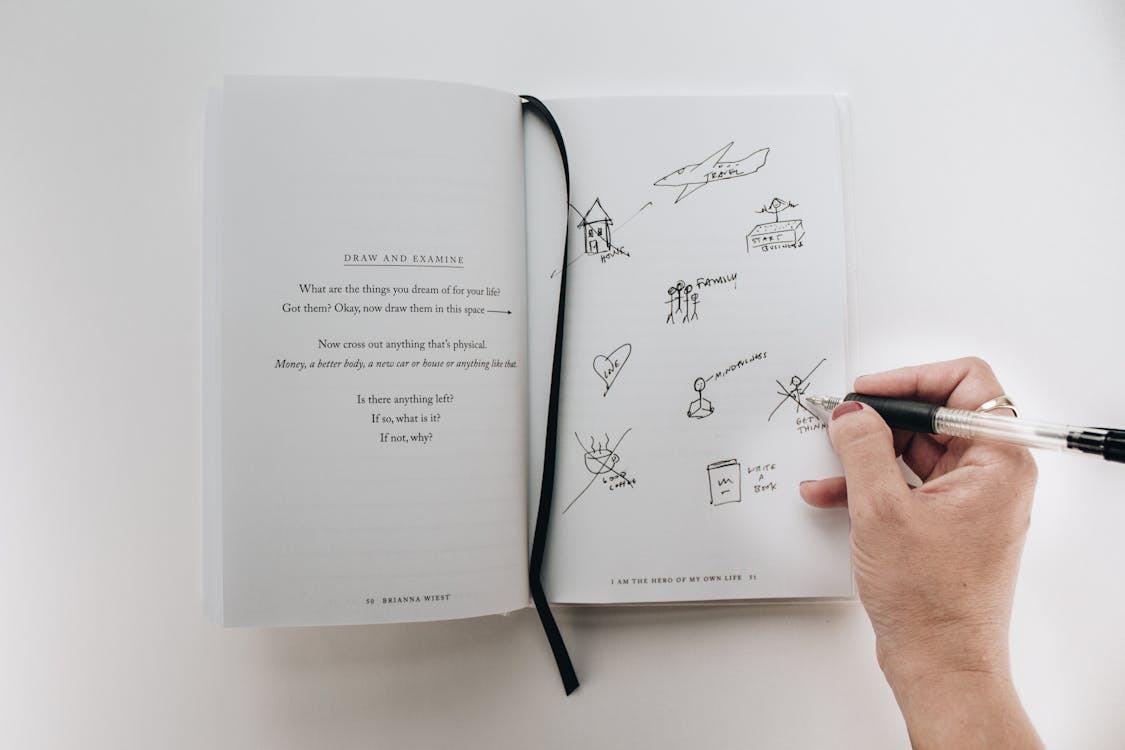
Several studies suggest that brief gratitude writing can shift mood within a few weeks. The key is regularity, not depth. A short page every day beats a long page once a week. This is also why the two-minute rule for daily productivity works so well, since it lowers the bar to start.
Five Minute Journal vs Bullet Journal Side By Side
Time per day. The Five Minute Journal takes about five minutes total. A simple bullet journal practice takes ten to fifteen minutes a day. A more decorative bullet journal can take much longer.
Learning curve. The Five Minute Journal has none. You open and write. Bullet journaling has a real learning curve. Expect a few weeks to find your style.
Flexibility. The bullet journal wins. You can build any layout you can imagine. The Five Minute Journal only does what its prompts ask.
Best for anxiety relief. The Five Minute Journal wins for most beginners. The structure removes thinking and brings you into a calmer state faster.
Papier Daily Wellness Journal

Source: amazon.com
A guided wellness journal that tracks gratitude, mood, sleep, and daily habits in one place.
The Wellthie One Review
This is a beautiful middle ground option. It is more guided than a blank bullet journal, but more flexible than the Five Minute Journal. The wellness focus is what sets it apart, with space for mood, sleep, and movement notes alongside gratitude. It feels like a soft, calm version of a habit tracker.
Papier Wellness Journal Attributes
- Guided prompts for daily wellbeing
- Trackers for mood, sleep, and habits
- Hardback cover that lays flat when open
- Lovely paper quality for fountain pens
- Compact size that fits in a tote
Can You Use Both at Once?
You can. Many readers do exactly this. They use the Five Minute Journal for morning and night reflection. Then they use a bullet journal for tasks, projects, and brain dumps during the day.
This combo plays to the strengths of both. The prompt journal keeps your mood steady. The bullet journal keeps your life organized. Together, they cover the inside and outside of your day.
A Simple Daily Combo Routine
Morning. Open the Five Minute Journal. Write gratitudes, daily intention, and an affirmation. Five minutes total.
Workday. Open the bullet journal. Make a short daily log with today’s tasks, meetings, and notes. Cross things off as you go.
Evening. Reopen the Five Minute Journal. Note three good things from the day and one thing you could improve. Close both books and breathe.

Common Mistakes to Avoid
Do not aim for perfect handwriting. Both styles work better when the focus is on writing, not looks. Do not skip days and quit. If you miss a day, just write the next one. Do not buy supplies you do not need. A basic pen and your chosen notebook are enough to start.
Also, do not copy other peoples bullet journal layouts straight from social media. Most of those are art projects, not real daily systems. Start simple. Add complexity only if it earns its place.
Which Should You Start With?
If you have never journaled before, start with the Five Minute Journal. It will build the habit fastest. Once you have written for a few months and want more control, try a bullet journal. Use what you learned about consistency, and apply it to a custom system.
If you already love planners and want one system for your whole life, jump straight into a bullet journal. Just keep your first layouts very simple to protect the habit.
Final Thoughts on Five Minute Journal vs Bullet Journal
There is no single winner here. The Five Minute Journal is the gentler, faster, easier path to a daily writing habit. The bullet journal is the deeper, more flexible system for people who want to organize their entire life on paper.
Pick the one that feels like the smallest possible first step. Then write. The journal that gets opened every day is the one that changes your life.
For more on building tiny systems that stick, our guide on keeping a decision journal pairs beautifully with either choice above.
This post may contain affiliate links, which means we may receive a small commission, at no cost to you, if you make a purchase through a link.


