
Brain fog can creep in for all sorts of reasons — and the frustrating part is that what actually clears it depends entirely on why yours is happening.
Use the quick decoder below to find your most likely root pattern and the steps that lift it, then read on for the full picture.
Brain fog is a signal, not a flaw


Why do my eyes always look tired. Quick test below to see your current cognitive sharpness and which of four toxic load patterns might be driving your fog. Then the article unpacks what is happening and what to do.
Free: 21-Day Brain Fog Reset Calendar
A printable day-by-day calendar showing exactly what to do morning, midday, and evening for 21 days to clear brain fog at the source. The same protocol Andrea has used with her family.
Delivered instantly. Premium content — your information stays with us.
The Organ Map of Tired Eyes

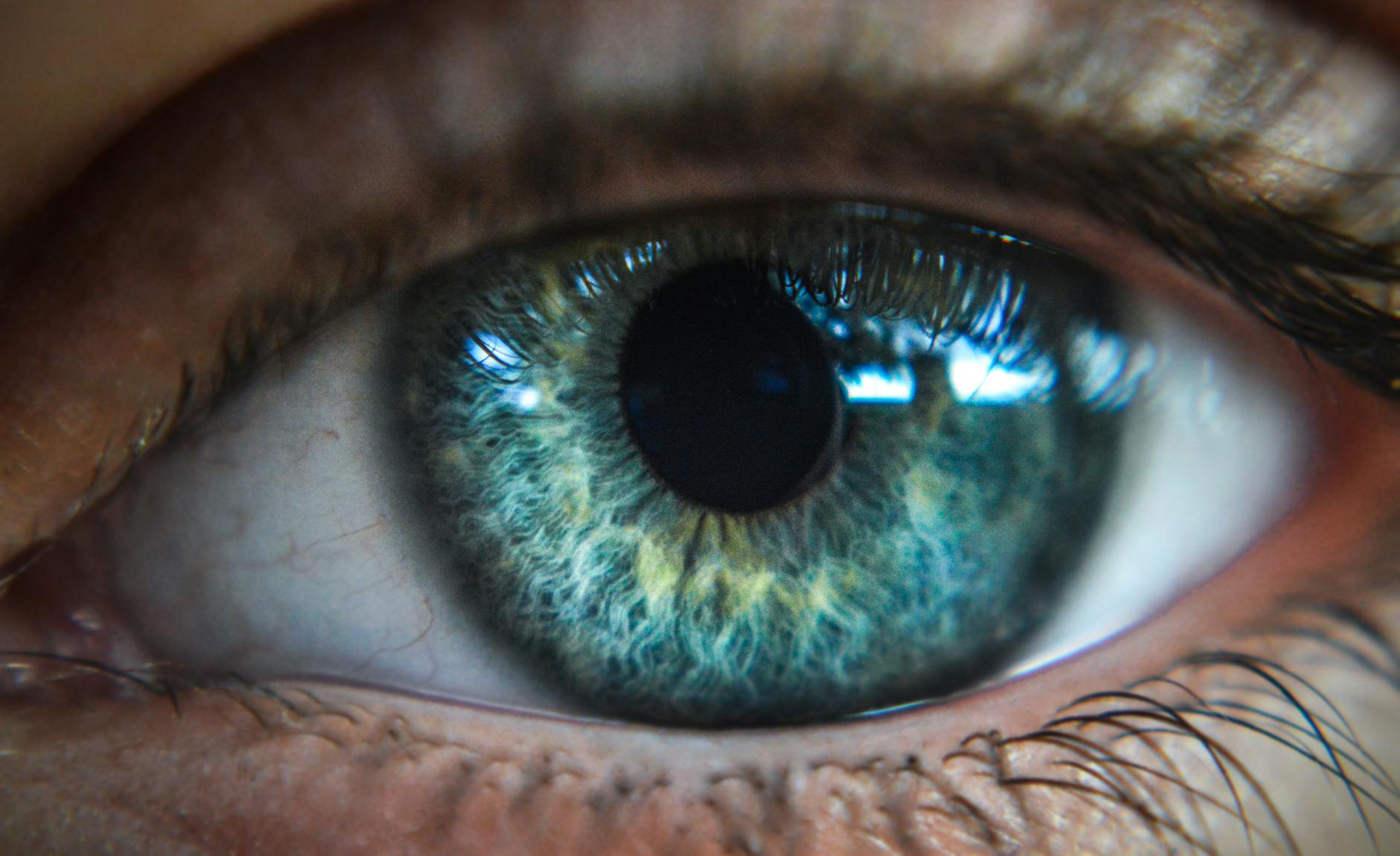
Different parts of the eye signal different organ systems. Knowing the map lets you target the actual driver:
Dark circles under the eyes. Blue or purple shadows signal slowed lymphatic drainage and venous pooling, often from liver overload or chronic dehydration. Different from brown pigmentation (genetic) or hollowness (volume loss).
Puffy upper or lower lids. Morning puffiness is a kidney signal. The kidneys filter overnight; sluggish filtration means fluid pools in the thinnest-skin areas, which are the eyelids. Salty dinner or late-night alcohol amplifies it.
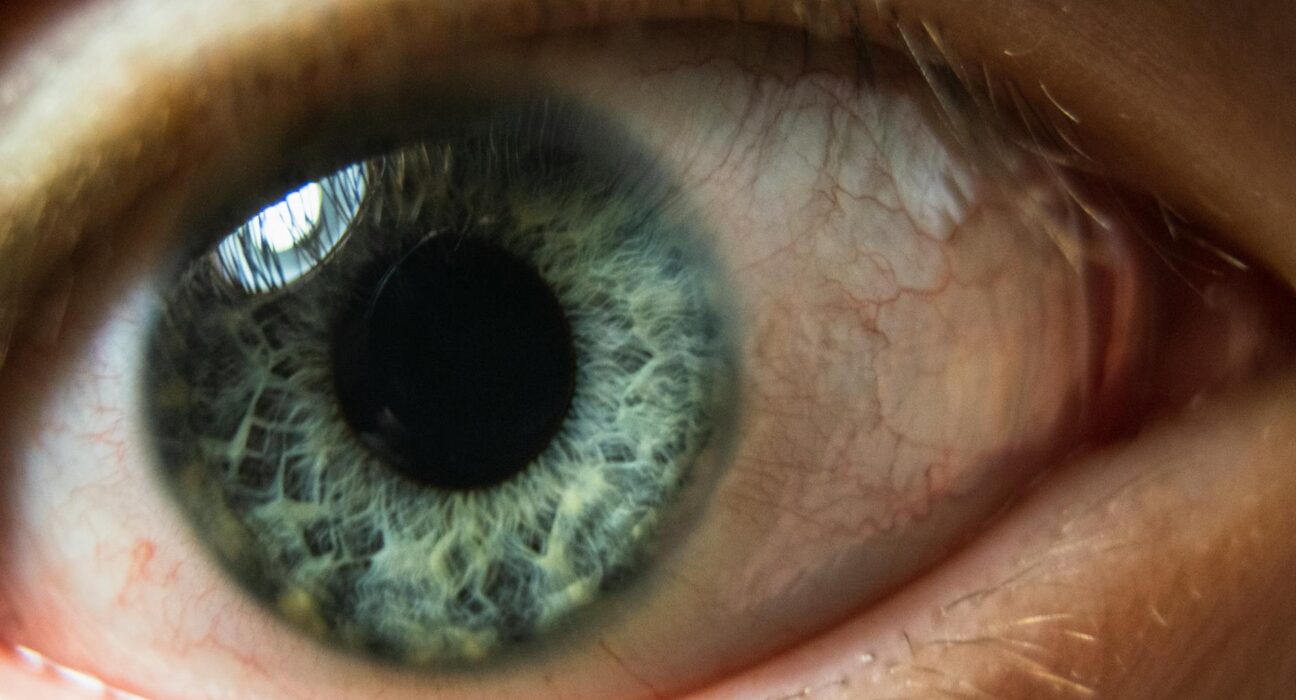
Redness in the whites (sclera). Persistent bloodshot eyes without irritation signal liver-driven inflammation. The liver processes alcohol, food, and environmental toxins; backed-up liver shows in the sclera.
Yellowish sclera. Off-white toward yellow signals elevated bilirubin. Get bloodwork. Even mild bilirubin elevation makes eyes look chronically tired.
Dull or cloudy iris appearance. The iris loses some clarity with inflammation and oxidative stress. Less common, more advanced.
Dropping upper eyelid. Mild ptosis (lid droop) can come from B vitamin deficiency, muscle fatigue, or neurological signals. If sudden, see a doctor. If gradual, look at B12, thiamine, and sleep.
Twitching lower lid. Magnesium deficiency, stress, or caffeine excess. The eye muscles are very magnesium-sensitive.
What Causes Each Pattern
Sort yourself into the dominant pattern:
- Dark circles dominant: Liver and lymph stagnation. Address with castor oil packs, dandelion, daily walking, and reduced alcohol.
- Puffiness dominant: Kidney load and sodium imbalance. Address with reduced evening salt, alcohol, and water-quality improvements.
- Redness dominant: Inflammation and liver. Address with omega-3, reduced refined oils, and alcohol removal for 30 days.
- Yellow sclera: Bloodwork for bilirubin, ALT, AST, ALP. Possible early liver pattern.
- Twitching: Magnesium glycinate 400-600mg at night. Resolves within 2-3 weeks if magnesium is the cause.
The Sleep Versus Liver Test
To know if your tired eyes are from sleep or from the liver, run this self-test for 5 days:
- Track sleep hours and quality (8+ hours, no alcohol, no late screens)
- If after 5 nights of excellent sleep your eyes still look tired, sleep is not the issue
- The driver is upstream (liver, lymph, kidney, or systemic inflammation)
Most people fail this test. They sleep more and look exactly the same. That is when the liver and lymph picture becomes the real conversation.
What Actually Brightens Eyes
- Castor oil packs over the liver. Indirect but reliably visible in 4-6 weeks.
- Lutein and zeaxanthin. 20mg daily for ocular inflammation reduction.
- Magnesium glycinate at night. 400mg. Reduces eye muscle tension and twitching.
- Cold compress in the morning. 2 minutes. Constricts vessels and reduces visible puffiness.
- Lymphatic eye massage. Light pressure under the brow bone and across the cheekbone, 60 seconds each side morning and night.
- Hydrate with electrolytes. Pure water without minerals can actually worsen the appearance. Add a pinch of Redmond Real Salt to water.

Take The Toxic Load Tool Right Now ↓
Counting calories alone rarely fixes stuck weight or chronic symptoms. The tool sorts you into one of four root patterns — heavy metals, parasites, mold, adrenal — so you commit to a protocol that actually matches what’s draining your body.
What's Draining Your Brain? Find Your Toxic Load Type
10 quick questions to find your toxic-load type — heavy metals, parasites, mold, or burned-out adrenals. Takes about 90 seconds. Includes a free First-Step Detox Cheat Sheet with five habits anyone can start tomorrow.
What NOT To Do
- Do not use Visine for chronic redness. It vasoconstricts short-term and worsens long-term with rebound redness.
- Do not assume more sleep alone will fix it. Run the 5-night test first.
- Do not use heavy eye cream over puffiness. Heavy occlusive products can worsen morning puffiness by blocking overnight lymph drainage.
- Do not ignore yellow sclera. Get bloodwork.
Related reading in the brain fog cluster:
Disclosure. As an Amazon Associate, I earn from qualifying purchases. Educational content; not medical advice. Persistent cognitive symptoms warrant evaluation by a qualified practitioner.