
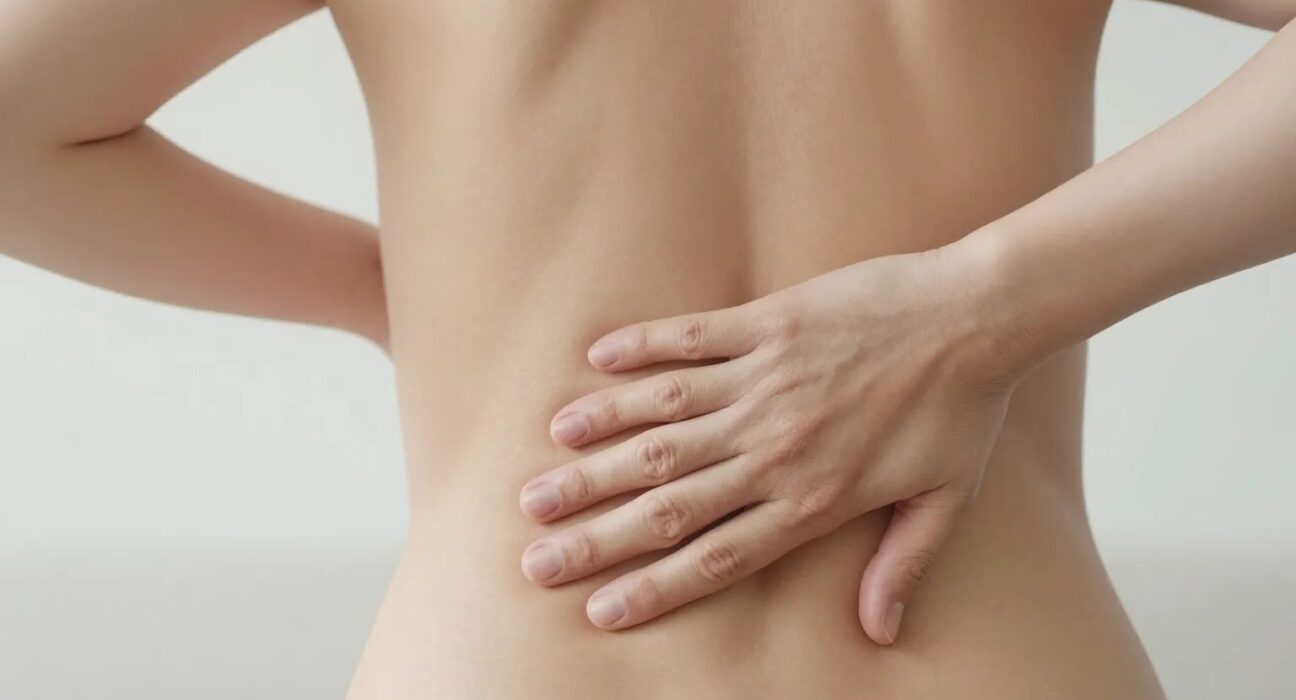
Pain that sits on the lower right side of your back is usually muscular — a strained muscle, a tight hip, or the way you’ve been sitting and sleeping. But because several organs sit on the right side, one-sided back pain occasionally points to the kidney, the bowel, or an irritated nerve. Knowing which is which tells you whether to treat it at home or get it checked.
Use the decoder to sort a simple muscle strain from the patterns that deserve a doctor’s look, then read on for the common causes and natural relief.
Back pain is often a signal, not just a strain


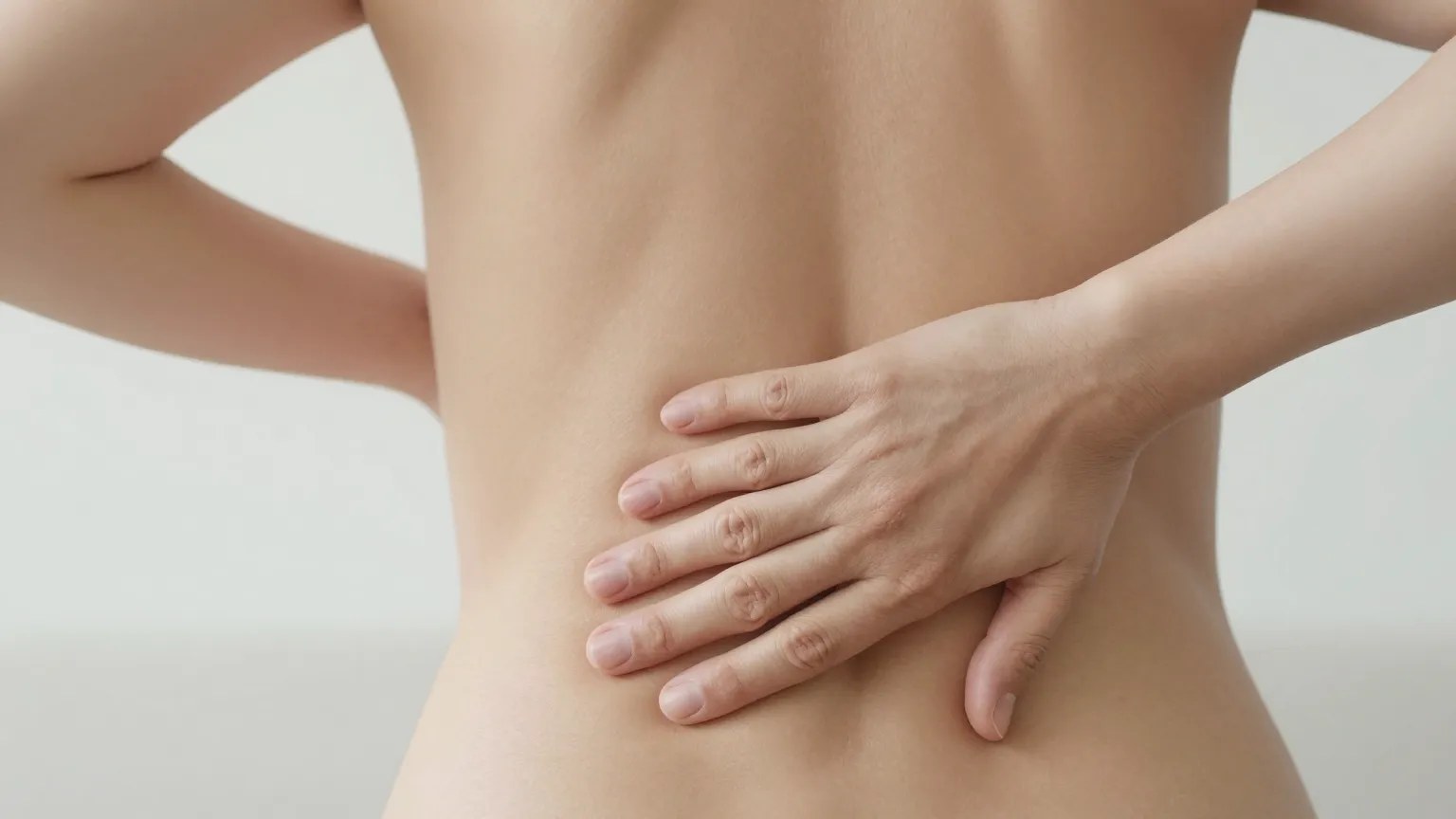
What causes pain in the lower right back
Most often it’s a muscle strain or spasm on that side, or posture and sitting habits that overload one side. Sciatica can send pain from the right lower back down into the buttock and leg. On the right specifically, a kidney stone or infection causes sharp flank pain, often with fever or urinary changes, and constipation can refer aching to the lower right. Right-sided pain that wraps from the back toward the front, especially with abdominal symptoms, should be evaluated to rule out the appendix or gallbladder.
Most people in detox or chronic-symptom work eventually hit the same problem: the same symptoms — fatigue, brain fog, gut issues, poor sleep — can come from completely different root causes, and the wrong protocol can run for months before that becomes obvious. The 2-minute What's Draining Your Brain Tool sorts you into one of four toxic load types so the next thing you try has a real chance of actually working.
How to relieve lower right back pain naturally
Once the red-flag causes are off the table, treat it like the muscle strain it usually is. Apply a heating pad to relax the muscle, keep moving gently, and stretch the right hip and lower back. Self-massage on the tight band of muscle helps release it, and if constipation is part of the picture, magnesium citrate gets the bowel moving and relaxes the muscle at the same time.

When lower right back pain is serious
Get prompt care for sharp flank pain with fever, nausea, or burning/bloody urine (possible kidney stone or infection), right-sided pain with abdominal pain, especially near the navel or lower right belly (to rule out the appendix), pain after an injury, or any leg weakness, numbness, or loss of bladder or bowel control.

What the research actually says
Heat is the home remedy with the strongest backing for everyday muscular back pain. Based on a clinical trial summarized via PubMed:
Continuous low-level heat eased muscular low-back pain
In a randomized workplace trial, a continuous low-level heat wrap significantly reduced pain and disability from acute muscular low-back pain compared with control (Tao & Bernacki, Journal of Occupational and Environmental Medicine 2005; DOI: 10.1097/01.jom.0000184877.01691.a3).
Why it helps
Heat increases local blood flow, relaxes tight muscles, and calms the pain signals from a strained lower back — which is why a heating pad so often takes the edge off within minutes.
Why the same back pain keeps coming back
Frequently asked questions
What causes pain in the lower right side of the back?
Most often a muscle strain or posture on that side. It can also be sciatica radiating down the right leg, a kidney stone or infection (sharp flank pain, fever, urinary changes), or constipation. Right-sided pain with abdominal symptoms should be checked to rule out the appendix or gallbladder.
How do I know if my back pain is kidney-related?
Kidney pain tends to sit higher in the flank (between the lower ribs and hip), is often sharp or comes in waves, and usually comes with fever, nausea, or burning or bloody urine. Muscular pain changes with movement and position; kidney pain usually doesn’t. When in doubt, get it checked.
How can I relieve lower right back pain at home?
If it’s muscular, use a heating pad, keep gently moving, stretch the right hip and lower back, and try self-massage. Address constipation if present. Most muscular back pain eases within a couple of weeks.
Should I worry about lower right back pain?
See a doctor for flank pain with fever or urinary changes, pain with abdominal symptoms, pain after an injury, or any leg weakness, numbness, or loss of bladder or bowel control.
This article is general education, not medical advice, and does not replace seeing a clinician. Natural measures ease everyday muscular and tension-related back pain; they do not treat infections, kidney problems, fractures, or nerve damage. Seek prompt care for the red-flag signs listed above.


